
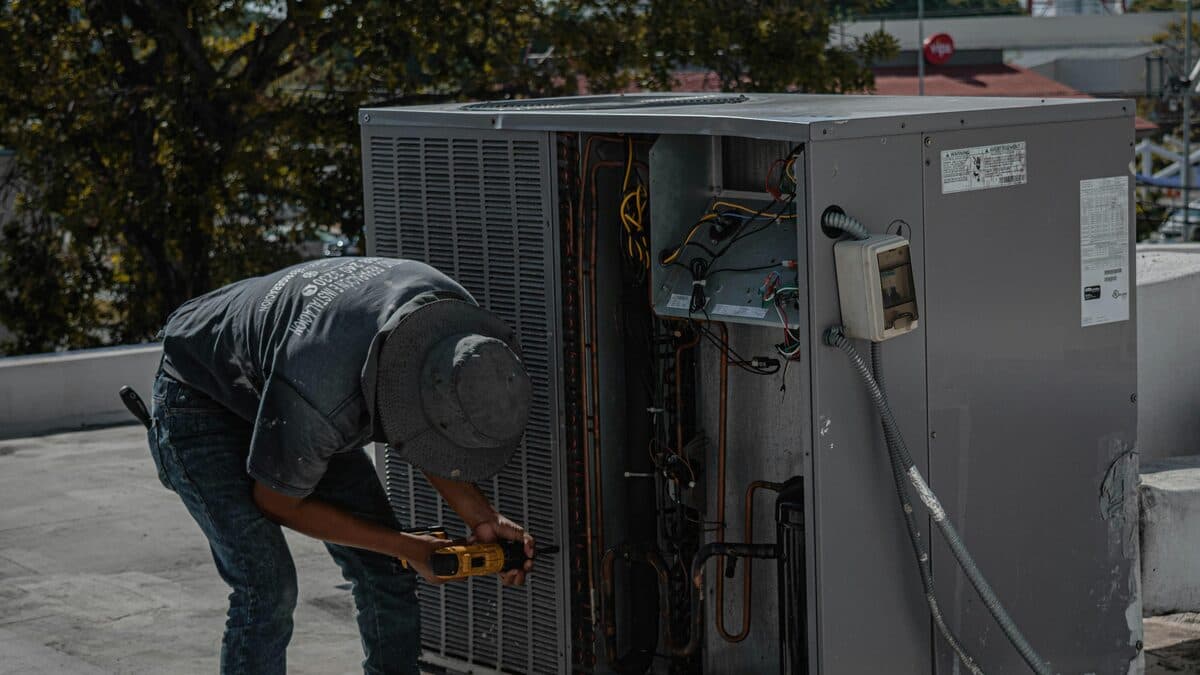
Reviewed by Alex J., Lead HVAC Technician, NATE Certified
The Bill Doesn't Lie—But Neither Does Your AC
It's May, and Sacramento is already pushing into the 90s on the warmer afternoons. You've had your AC running for a few weeks now, and you've noticed something unsettling: it never seems to turn off. The unit just runs and runs, and when your utility bill arrives, you're staring at a number that doesn't make sense.
Here's the frustrating part—a constantly running AC doesn't always mean the house is staying cool. In fact, for a lot of homeowners in Carmichael, Folsom, and Rancho Cordova, the system is working overtime and still losing ground. That combination of endless runtime and rising costs almost always points to an efficiency problem. The good news is that most of these problems have a clear cause, and many of them are fixable.
What "Running Constantly" Actually Means
Air conditioners are designed to cycle. They run for a while, bring your home to the set temperature, and shut off. Then they start again when the house warms back up. On a 95-degree Sacramento afternoon, longer cycles are normal—but the system should still be cycling off at some point.
If your AC runs for hours without shutting off, one of two things is happening: either the system can't keep up with the heat load, or it's working inefficiently enough that it takes dramatically more energy than it should to do the same job. Both situations show up on your energy bill, and both deserve attention before we hit the real heat in June and July.
Dirty Filters and Coils: The Most Common Culprit
A clogged air filter is the single most common reason an AC system loses efficiency and runs longer than it should. When airflow is restricted, the system can't move enough conditioned air through the house, so it just keeps running trying to hit the thermostat setpoint. Meanwhile, the evaporator coil—the indoor component that actually removes heat from the air—can ice over or get coated in dust, which kills its ability to transfer heat.
Check your filter first. If it's gray and packed with debris, replace it. For most Sacramento homes with pets or dusty conditions, filters should be changed every 30 to 60 days during heavy-use months.
Coil cleaning is a separate issue and usually requires a technician, but it's worth mentioning because dirty coils are often overlooked until efficiency has dropped significantly.
Refrigerant Issues
Low refrigerant is another major cause of a system that runs constantly but can't cool effectively. Refrigerant doesn't get "used up"—if your levels are low, it means there's a leak somewhere. A system with low refrigerant loses its ability to absorb heat efficiently, so it runs longer and harder for the same (or worse) result.
Signs beyond constant running include ice forming on the refrigerant lines, warm air blowing from vents even when the system is working hard, or a hissing sound near the outdoor unit. Refrigerant work requires a licensed technician—this isn't a DIY fix—but identifying it early can prevent compressor damage, which gets expensive fast.
An Oversized or Undersized System
This one surprises a lot of homeowners. An AC that's too large for the home will short-cycle—it cools the space too quickly, shuts off before properly dehumidifying, then kicks back on. An undersized system will run constantly because it simply can't keep up with the heat load in a larger home.
Either scenario results in higher bills. In both cases, the root cause is a system that was never properly matched to the home in the first place. This is especially common in older homes in areas like Citrus Heights and Fair Oaks where the original equipment may have been swapped out without a proper load calculation.
If your system is more than 10 to 12 years old and you've always had this problem, sizing may be worth reviewing.
Duct Leaks and Attic Heat Gain
Sacramento attics can hit 140 to 160 degrees in peak summer. If your ductwork runs through the attic—and in most Sacramento-area homes, it does—any gaps, disconnected sections, or deteriorating duct sealing means you're cooling your attic instead of your living space.
Duct leakage is one of the sneakiest efficiency killers because the system is technically running fine. It's just losing 20 to 30 percent of the conditioned air before it reaches the rooms you're trying to cool. Homes in Elk Grove and Roseville with older flexible ductwork are especially prone to this.
A duct inspection or blower door test can confirm whether leakage is part of the problem.
Thermostat Placement and Settings
Sometimes the issue isn't the equipment at all—it's where the thermostat is located. A thermostat sitting in direct sunlight, near a west-facing window, or close to a kitchen will read a higher temperature than the rest of the house and keep the system running longer than necessary.
Also worth checking: if someone has set the fan to "on" instead of "auto" in your thermostat settings, the air handler runs continuously regardless of whether the compressor is actively cooling. This inflates your runtime numbers and your bill.
When to Call PULSE HVAC
Some of these issues—like a filter swap or a thermostat setting—you can handle yourself in five minutes. Others require a professional eye. You should call a technician when:
- Your system has been running constantly for more than a day or two without cycling off
- You notice ice forming anywhere on the system or refrigerant lines
- Your energy bills have jumped significantly month-over-month without a change in usage habits
- The air coming from your vents doesn't feel as cold as it should, even with the system maxed out
- You hear unusual sounds—hissing, grinding, or clicking—during operation
- It's been more than a year since your last maintenance visit
Catching these issues in May is significantly better than discovering them mid-July when Sacramento temperatures are regularly hitting 105 and technician schedules fill up fast.
Don't Let Summer Catch You Off Guard
A constantly running AC isn't just an annoyance—it's a system telling you something is wrong. Left alone, the underlying problems tend to get worse, and the efficiency losses compound every day you let them go. A refrigerant leak stresses the compressor. Dirty coils reduce capacity further. Duct leaks send your cooling straight into the attic.
The good news is that most of these problems are fixable, and catching them in spring—before peak demand—means faster service, lower stress, and a system that's actually ready for what Sacramento summers require.
If your AC is running constantly and your bill is climbing, PULSE HVAC can diagnose the problem and get it corrected before the real heat arrives. Call us at (916) 850-2221 or book an appointment online at /book. We serve homeowners throughout Sacramento, Carmichael, Roseville, Citrus Heights, Folsom, Elk Grove, Rancho Cordova, Fair Oaks, and surrounding communities.
Sources
Need HVAC help in Sacramento?
Same-day service · Free estimates · Licensed & insured