
Reviewed by Boris L., Commercial HVAC Tech, NATE Certified
Before you call
Common signs you may need commercial rooftop unit repair
Cooling problems usually start as comfort or performance issues before the system stops working altogether.
- Warm air, weak airflow, or a system that runs without cooling the house properly.
- Frequent cycling, loud noises, leaks, or rising energy bills without a clear reason.
- A sudden breakdown during Sacramento heat when fast service matters most.
Heads up: If your commercial system is completely down, calling is usually the fastest way to get help.
Service details
The overview below explains how this service works, common problems we see, and what Sacramento homeowners should expect before scheduling.
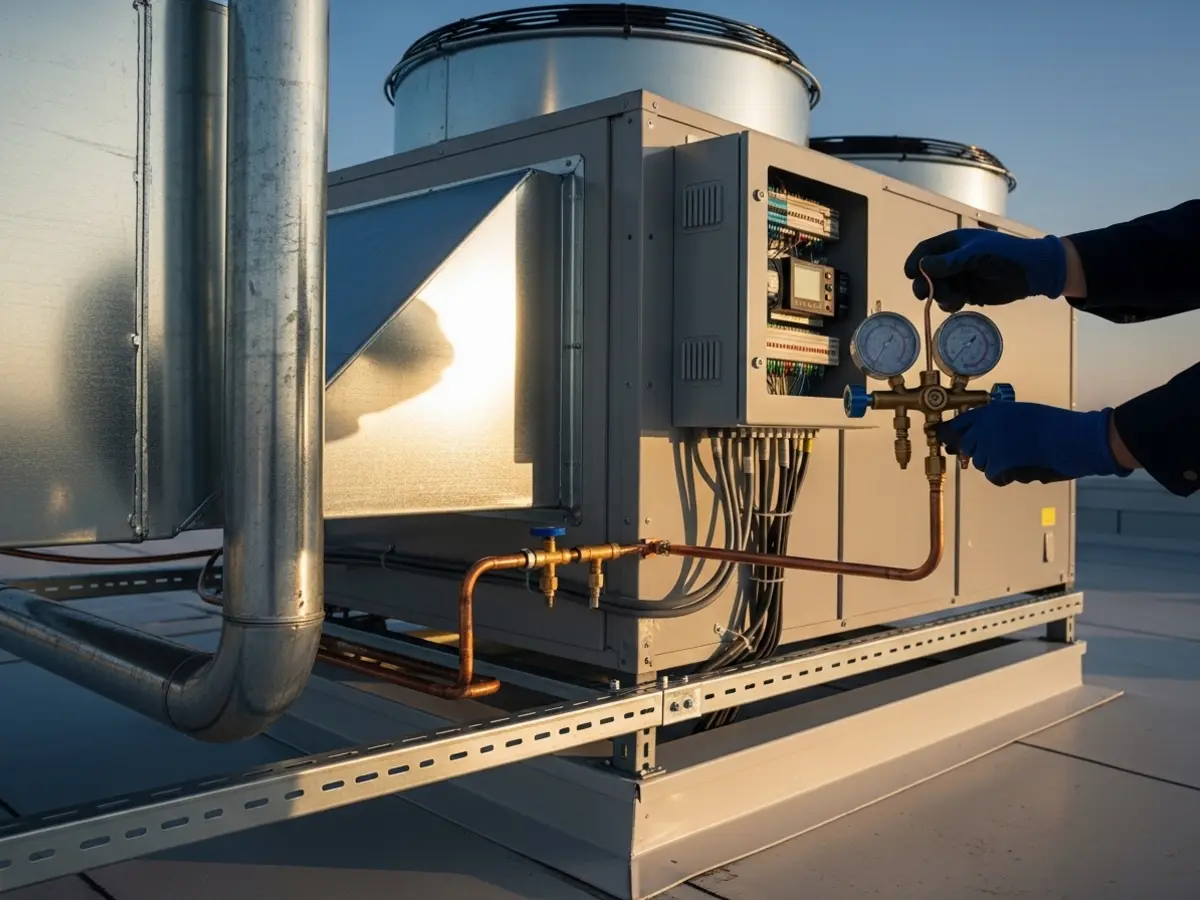
Rooftop package units are the backbone of commercial HVAC in Sacramento. They're reliable workhorses — but when they fail during Sacramento's peak summer heat, every hour of downtime costs your business in comfort, productivity, and sometimes perishable inventory. PULSE HVAC provides fast, professional RTU repair service with technicians who understand commercial rooftop systems.
Rooftop Units We Service
We service all major commercial RTU brands and most models:
| Manufacturer | Common Models |
|---|---|
| Carrier | WeatherMaker, 48/50 Series |
| Trane | Precedent, Voyager, Intellipak |
| Lennox | LGH/LGA/LCH Series, Strategos |
| York | Predator, ZJ/ZH/ZF/ZD Series |
| Daikin | DPS, DCC, Rebel Series |
| Rheem/Ruud | Commercial Packaged, Classic Series |
| Goodman/Amana | CPG, CPLE, CPLJ Series |
| McQuay/Daikin | Commercial packaged series |
Common RTU Problems We Diagnose and Repair
Cooling System Failures
Compressor failure — The most serious and expensive failure. We test compressor health (amp draw, megohm resistance, compression ratio) to determine if the compressor can be replaced or if the unit has reached end of life. Compressor replacement in an older RTU is often not cost-effective — we provide an honest assessment.
Low refrigerant charge — Gradual refrigerant loss causes reduced cooling capacity, ice formation, and eventually compressor damage. We locate and repair the leak before recharging.
Condenser coil restriction — Sacramento's cottonwood, dust, and agricultural debris clog condenser fins, causing high head pressure and reduced capacity. Coil cleaning restores performance.
Expansion valve failure — TXVs can fail closed (no refrigerant flow, no cooling) or open (flooded evaporator, ice formation). We test and replace defective metering devices.
Electrical Failures
Capacitor failure — Run and start capacitors fail frequently in Sacramento's summer heat. Symptoms include hard-starting or non-starting compressor and condenser fan. Capacitors are a common same-visit repair.
Contactor burnout — High-current switching devices that fail from heat stress and arcing. Causes intermittent or failed compressor operation.
Control board failure — Modern RTUs use sophisticated control boards for staging, fault detection, and economizer management. Board failures cause a range of symptoms from complete shutdown to specific mode failures.
Economizer problems — Actuator failures, damper binding, and sensor faults are common in Sacramento because economizers are active for much of the year. A stuck-open economizer introduces hot outdoor air during summer — a common cause of inability to maintain setpoints.
Heating System Failures
Igniter failure — Hot surface igniters have a limited service life and are a common fall service call.
Gas valve failure — Causes no heat or intermittent heat.
Heat exchanger cracks — Critical safety issue; cracked heat exchangers in RTUs can mix combustion gases with supply air. We red-tag and immediately report any heat exchanger concerns.
Flame sensor contamination — Causes ignition lockout.
Our Diagnostic Process
We don't guess — we diagnose. Every service call starts with a systematic refrigerant system analysis (pressures, superheat, subcooling), electrical system check (voltage, amp draws, component testing), and controls evaluation. This approach finds the actual failure rather than shotgunning parts until something works.