
Reviewed by Paul R., CEO & Installer
Before you call
Common signs your home may need air-quality help
Indoor air problems are usually felt before they are measured. The fastest way to improve the result is to identify the source first, then choose the right upgrade.
- Dust buildup, stale air, or odors returning quickly after cleaning.
- Allergy, smoke, or humidity issues that seem worse inside than outside.
- Uneven airflow, dirty vents, or comfort problems tied to specific rooms.
Service details
The overview below explains how this service works, common problems we see, and what Sacramento homeowners should expect before scheduling.
Most Sacramento homes have leaky ductwork. Studies by the California Energy Commission have found that the average California home loses 25–30% of heating and cooling energy through duct leaks. In a home spending $1,500/year on HVAC energy, that's $375–$450 literally going into the attic or crawlspace.
Where Ducts Leak
Air handler connections — The joints where supply and return ducts connect to the air handler are often poorly sealed, especially on older systems.
Trunk-to-branch takeoffs — Where the main trunk duct connects to individual room branches, joints may be improperly sealed or never sealed at all.
Register boots — The metal boxes behind supply registers often have gaps where they meet drywall — allowing conditioned air to leak into wall cavities.
Duct joints — Individual duct sections connect with slip joints or flanges that develop leaks over time as duct tape dries and falls off.
Flexible duct connections — Flex duct connects to metal with clamps; these connections loosen with age and vibration.
The Duct Sealing Process
- Duct leakage test — We use a duct blaster or pressure pan tests to identify where air is escaping and quantify total leakage
- Access the ductwork — Typically through the attic; we use drop cloths and take care not to damage insulation
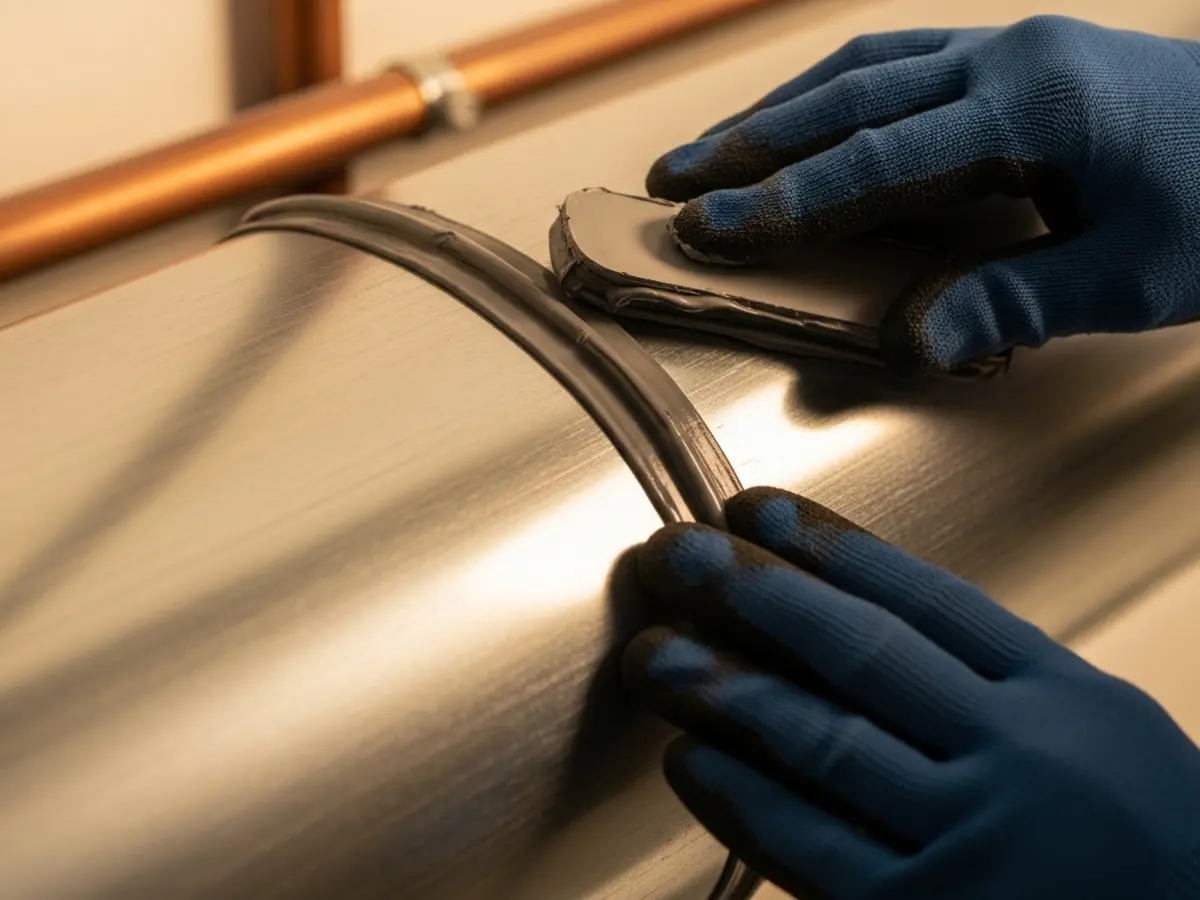
- Mastic application — UL 181 mastic sealant applied at all connections, joints, and seams
- Re-insulation — Disturbed duct insulation replaced or repaired
- Post-seal verification — We verify the improvement in duct tightness after sealing
Energy Savings in Sacramento
With Sacramento's extreme summer cooling loads, sealing duct leaks typically yields $150–$400 per year in energy savings. SMUD's Home Performance Program sometimes bundles incentives for duct improvements — see SMUD's rebates page for current offerings.
Aeroseal vs. Manual Duct Sealing
For hard-to-access ductwork, Aeroseal is a newer technology that injects sealant particles into the pressurized duct system — the particles deposit and seal leaks from the inside without requiring physical access to every joint. It's effective for duct leaks that would otherwise require cutting into walls or ceilings.
For most Sacramento homes with accessible attic ductwork, manual mastic sealing is sufficient, less expensive, and provides excellent long-term results. We'll assess your specific situation and recommend the most appropriate approach.
What to Expect From a Duct Sealing Visit
A standard duct sealing visit for a 1,500–2,000 sq ft Sacramento home takes 2–4 hours. Here's the process:
- Initial inspection: We assess ductwork condition and identify major leak points
- Pressure testing (optional): A duct blaster test quantifies total leakage before sealing
- Sealing: Mastic applied at all accessible joints, connections, and boots
- Insulation repair: Any disturbed duct insulation re-secured or replaced
- Verification: We recheck pressure or use smoke pencil to confirm major leaks are sealed
We provide before-and-after documentation. For SMUD and PG&E rebate programs that require duct tightness verification, we can provide the test results needed for your application — see SMUD rebates.