Reviewed by Paul R., CEO & Installer
What's Actually Happening When Your AC Trips the Breaker
Your air conditioner shares something important with every other appliance in your home: it has limits. When your AC draws more electrical current than the circuit is designed to handle, the breaker trips as a safety measure. That's the breaker doing its job—protecting your wiring from overheating and potentially causing a fire.
The tricky part is figuring out why it's happening. Sometimes it's a minor issue that's easy to address. Other times, it's a sign that something inside the system is working too hard—or failing altogether. Knowing the difference matters a lot, especially here in Sacramento where we're heading into the kind of spring and summer heat that puts real demands on residential HVAC systems.
Common Reasons an AC Trips the Circuit Breaker
A dirty air filter or blocked airflow This is the most overlooked cause, and it's also the easiest fix. When airflow is restricted—either by a clogged filter or blocked return vents—the system has to work harder to move air. That extra strain means higher electrical draw, which can push the circuit past its limit. Check your filter first. If it's gray and packed with dust, replace it before you do anything else.
A dirty condenser coil Your outdoor unit pulls heat out of your home and releases it outside. If the condenser coils are covered in dirt, debris, or cottonwood fluff (which is everywhere in the Sacramento area this time of year), the system can't shed heat efficiently. Again, the compressor compensates by working harder and drawing more power.
A failing capacitor Capacitors help start and run the motors in your AC system. When a capacitor starts to weaken, the motor it supports has to work harder to start up, which causes a brief surge in current draw. That surge is sometimes enough to trip the breaker—especially on hot days when the system is already under load. Capacitor failure is one of the most common service calls we see in late spring and early summer across Folsom, Roseville, and Elk Grove.
A refrigerant leak Low refrigerant forces the compressor to run longer and work harder to reach the target temperature. That extended, high-effort operation increases electrical demand. If your AC is running constantly but barely cooling, low refrigerant may be the issue—and it's not something you can diagnose or fix yourself.
A hard-starting compressor The compressor is the most power-hungry component in your system. As compressors age, they sometimes struggle to start, drawing a large spike of current before settling into normal operation. Over time, those spikes trip the breaker with increasing frequency. This is a serious symptom that usually means the compressor is near the end of its life.
An aging or oversized breaker Sometimes the problem isn't the AC at all—it's the breaker itself. Breakers wear out over time and can start tripping at current levels they used to handle without issue. This is less common but worth having an electrician evaluate if the AC system checks out fine.
Is It Safe to Reset the Breaker?
Once is usually fine. If your AC tripped the breaker during the hottest part of the day, you can try this:
- Turn the AC off at the thermostat
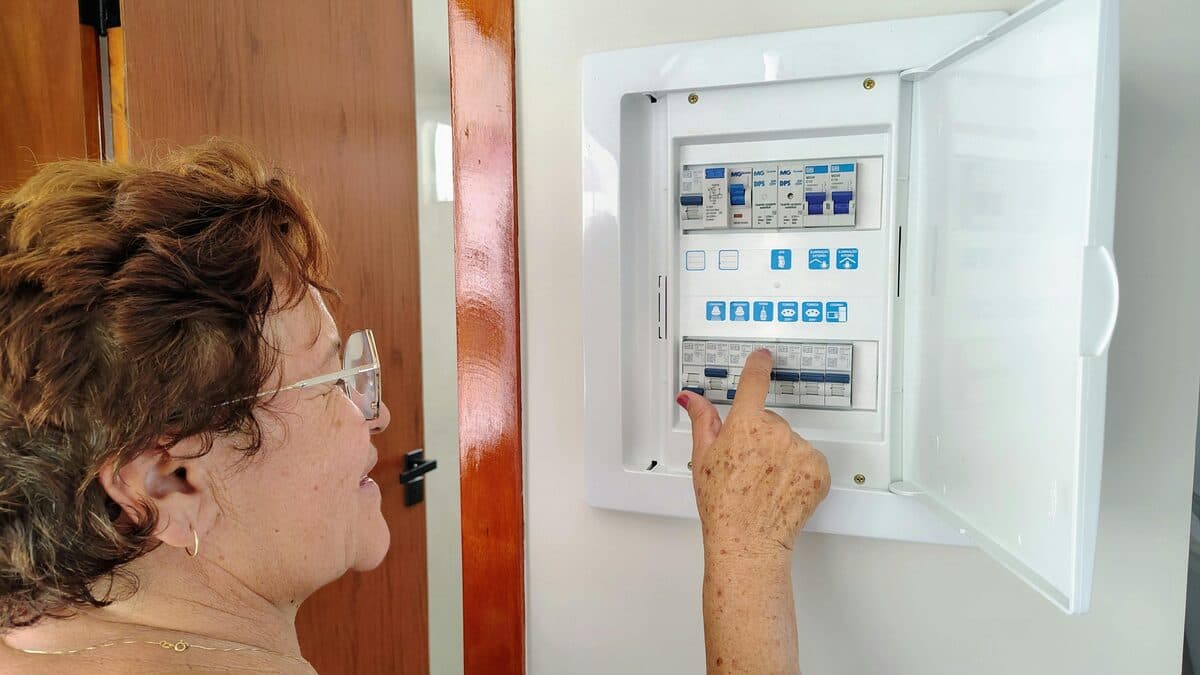
- Go to your electrical panel and flip the tripped breaker fully to the OFF position, then back to ON
- Wait 30 minutes before turning the AC back on—this gives the compressor time to equalize pressure
- Set the thermostat and see if the system runs normally
If it runs without issue, monitor it over the next day or two. A one-time trip during extreme heat isn't necessarily alarming.
What you should not do is keep resetting the breaker every time it trips. If the breaker trips again within a short period—same day, or every time the AC runs—you have a real problem. Repeated resets when something is wrong can damage your compressor, overheat wiring, or create a fire hazard. At that point, you need a professional.
Signs the Problem Is More Serious
Stop resetting the breaker and call for service if:
- The breaker trips every time the AC runs
- You smell something burning near the air handler or outdoor unit
- The breaker feels warm or shows any scorch marks
- Your AC is running but not cooling the house
- You hear grinding, clanking, or buzzing from the outdoor unit
- The system is more than 10–12 years old and this is a new behavior
Any of these signs, especially in combination, suggest that continuing to run the system could cause more expensive damage—or create a safety risk.
When to Call PULSE HVAC
If your AC has tripped the breaker more than once, or if it trips every time the system tries to start, it's time to call PULSE HVAC. This isn't a wait-and-see situation.
Here's what a professional diagnostic visit will typically cover:
- Checking refrigerant levels and looking for signs of a leak
- Testing the capacitor and contactors
- Measuring amp draw on the compressor and fan motors to see if they're operating within spec
- Inspecting electrical connections for signs of heat damage or corrosion
- Evaluating the condition of the condenser coils and overall system cleanliness
We serve homeowners throughout the Sacramento area, including Carmichael, Citrus Heights, Rancho Cordova, Fair Oaks, and surrounding communities. April is actually a great time to get this looked at—before triple-digit days arrive and service schedules fill up fast.
One thing worth noting: a compressor that's hard-starting or drawing too much current sometimes needs a hard-start kit installed, which reduces the startup amp draw and extends the compressor's life. It's a relatively inexpensive fix that can buy you several more years from an aging system. We can assess whether it's appropriate for your situation during the diagnostic visit.
Don't Ignore a Breaker That Keeps Tripping
A circuit breaker is a safety device, not an inconvenience. When your AC trips it once, it's a warning. When it trips it repeatedly, it's telling you something is wrong and getting worse.
In Sacramento's climate, your AC isn't optional—it's essential from roughly May through October. Getting ahead of electrical and mechanical issues now, before the heat arrives, is almost always cheaper and less stressful than an emergency breakdown mid-summer.
If your AC is tripping the breaker and you're not sure what's causing it, give PULSE HVAC a call at (916) 850-2221 or book an appointment online at /book. We'll diagnose the problem, give you a straight answer about what's needed, and get your system ready for the season.
Sources
Need HVAC help in Sacramento?
Same-day service · Free estimates · Licensed & insured