
Reviewed by Alex J., Lead HVAC Technician, NATE Certified
The Problem Isn't Always What You Think
You glance at your thermostat. It reads 72°F. You set it to 72°F. So why are you sitting on your couch in shorts, sweating through a Sacramento afternoon?
This is one of the most frustrating HVAC situations a homeowner can run into—because on paper, everything looks fine. The system appears to be working. The number matches. But your body tells a completely different story.
The good news: this problem almost always has a traceable cause. The bad news: it could be coming from several different places, and misreading it means you might try to fix the wrong thing first.
Here's how to actually think through it.
Your Thermostat Might Be Reading the Wrong Temperature
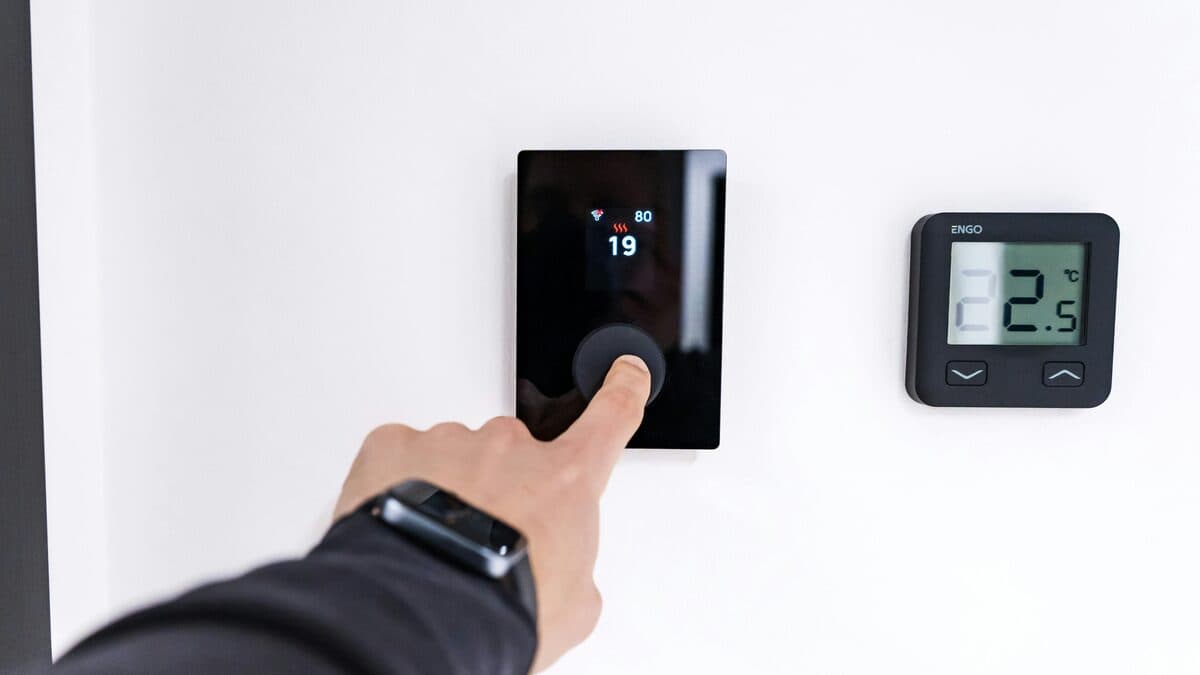
The thermostat only knows what the air feels like right where it's mounted. If that location is slightly warmer or cooler than the rest of your home, every reading it gives you is off from the start.
Common placement problems include:
- Direct sunlight exposure during part of the day, which artificially warms the sensor
- Proximity to supply vents, where cool air blows directly across the unit
- Location in a hallway or unused room that doesn't represent where you actually live
- Near heat-generating appliances like a lamp or TV that runs for hours nearby
If your thermostat thinks the house is at 72°F because it's sitting in a cool hallway, it'll shut off the AC—even while your living room or master bedroom is still sweltering.
A quick test: grab a basic thermometer and check the temperature in different rooms while the thermostat reads your set point. If you're seeing 78°F or 80°F in the rooms you actually use, you've found your first clue.
The AC Is Running But Not Keeping Up
There's a difference between an AC that's functioning and an AC that's functioning well enough. Especially once we hit the real Sacramento heat—triple-digit days in Elk Grove, Rancho Cordova, and Citrus Heights that can sustain from June through September—a system with any underlying weakness starts showing cracks.
Possible reasons your system is running but losing the battle:
Low refrigerant. This is more common than people realize, and it doesn't always announce itself loudly. When refrigerant levels drop, your system loses its ability to pull heat out of your indoor air effectively. It runs longer, works harder, and still can't hit your target temperature.
Dirty evaporator or condenser coils. Coils caked with dust or debris can't transfer heat properly. If your system hasn't been serviced in a year or more, this is worth investigating.
A failing or undersized system. If your unit is 12-15 years old, or if your home was re-roofed, remodeled, or had a room added since installation, it may simply not have the capacity to handle your current cooling load.
Duct leaks. This is one of the most underdiagnosed problems in Sacramento-area homes. If your ducts run through an unconditioned attic—which most do—and they're leaking, you're pumping cold air into a 130°F attic space instead of into your rooms. The thermostat might still see a cooler pocket of air near its sensor while the rest of the house stays warm.
Airflow Problems Create Hot and Cold Zones
Sometimes the issue isn't that your whole house is hot—it's that specific rooms won't cool down no matter what you do. You set 72°F, the main living area feels fine, but the back bedroom or the second floor stays 10 degrees warmer.
This is an airflow problem, and it has several potential sources:
- Closed or blocked vents in certain rooms restrict circulation without fixing the underlying imbalance
- Zoning issues in two-story homes where heat naturally rises and the system isn't compensating
- Undersized return air that doesn't pull enough warm air back to the air handler for cooling
- Collapsed or disconnected ductwork in the attic, which may be completely undetectable from inside the house
Folsom and Fair Oaks homes built in the 80s and 90s tend to have duct systems that were sized for the original floor plan and original windows. If you've added insulation, replaced windows, or changed the layout, your duct design may no longer match your home's actual needs.
The Thermostat Itself Might Be Faulty
After ruling out the above, consider the device itself. Thermostats can fail in ways that aren't obvious. The display might show accurate numbers while the internal sensor is drifting. Or the thermostat may be sending the wrong signals to your system—telling it to shut off before the house actually reaches the set temperature.
Smart thermostats add another layer of complexity. If yours is connected to a scheduling app, it might be entering an energy-saving mode without you realizing it. Some models also use "feels like" algorithms that factor in humidity—which sounds helpful but can confuse things when the readings don't match your expectations.
If your thermostat is more than 10 years old and you've ruled out other causes, replacement is often the most straightforward fix and one of the more affordable ones.
What You Can Check Before Calling Anyone
Before picking up the phone, run through these basics:
- Check your air filter. A clogged filter restricts airflow dramatically. If it's gray and dense, replace it and give the system 24 hours to recover.
- Check your outdoor unit. Make sure it's not blocked by debris, overgrown shrubs, or anything restricting airflow around the condenser.
- Look at your vents. Confirm they're open in the rooms that aren't cooling. Also check that furniture isn't blocking return vents.
- Verify your thermostat settings. Make sure it's set to COOL, not just FAN ON, and that the schedule isn't overriding your manual adjustments.
These steps take about 10 minutes and occasionally solve the problem entirely. If they don't, you're looking at something that requires a technician.
When to Call PULSE HVAC
You've changed the filter, the vents are clear, the settings look right—and the house still doesn't match the thermostat. That's the point to call a professional.
Some of these problems—refrigerant levels, coil condition, duct leaks, electrical faults in the thermostat wiring—can't be diagnosed or fixed without equipment and training. Trying to service refrigerant without certification is illegal. And guessing wrong about the cause means you might spend money on a thermostat replacement when the real issue is a refrigerant leak.
PULSE HVAC works with homeowners across Sacramento, Carmichael, Roseville, Citrus Heights, Folsom, Elk Grove, Rancho Cordova, and Fair Oaks. If your system is heading into summer with this kind of unresolved mismatch, now—in April—is the right time to figure it out. A diagnostic visit in spring is always better than an emergency call in July.
Get This Sorted Before Summer Arrives
Sacramento summers don't ease you in. They show up fast and they test everything. If your thermostat and your comfort level are already out of sync in April, that gap is going to get a lot more noticeable in three months.
Call PULSE HVAC at (916) 850-2221 or book online at /book. We'll figure out what's actually going on—not just what the display says.
Sources
Need HVAC help in Sacramento?
Same-day service · Free estimates · Licensed & insured