
Reviewed by Paul R., CEO & Installer
Before you call
Why homeowners schedule heat pump maintenance
Maintenance is most valuable before peak demand, when small wear items can still be caught cheaply and early.
- You want to reduce the chance of a surprise mid-season breakdown.
- The system still runs, but efficiency, airflow, or comfort has slipped.
- You want a professional read on system condition before spending on repairs or upgrades.
Service details
The overview below explains how this service works, common problems we see, and what Sacramento homeowners should expect before scheduling.
Because your heat pump is working year-round — heating in winter, cooling in summer — it accumulates twice the wear of a conventional AC unit. Annual (or ideally semi-annual) maintenance by a NATE-certified technician keeps your system efficient, reliable, and under warranty.
Full Heat Pump Maintenance Checklist
Refrigerant System
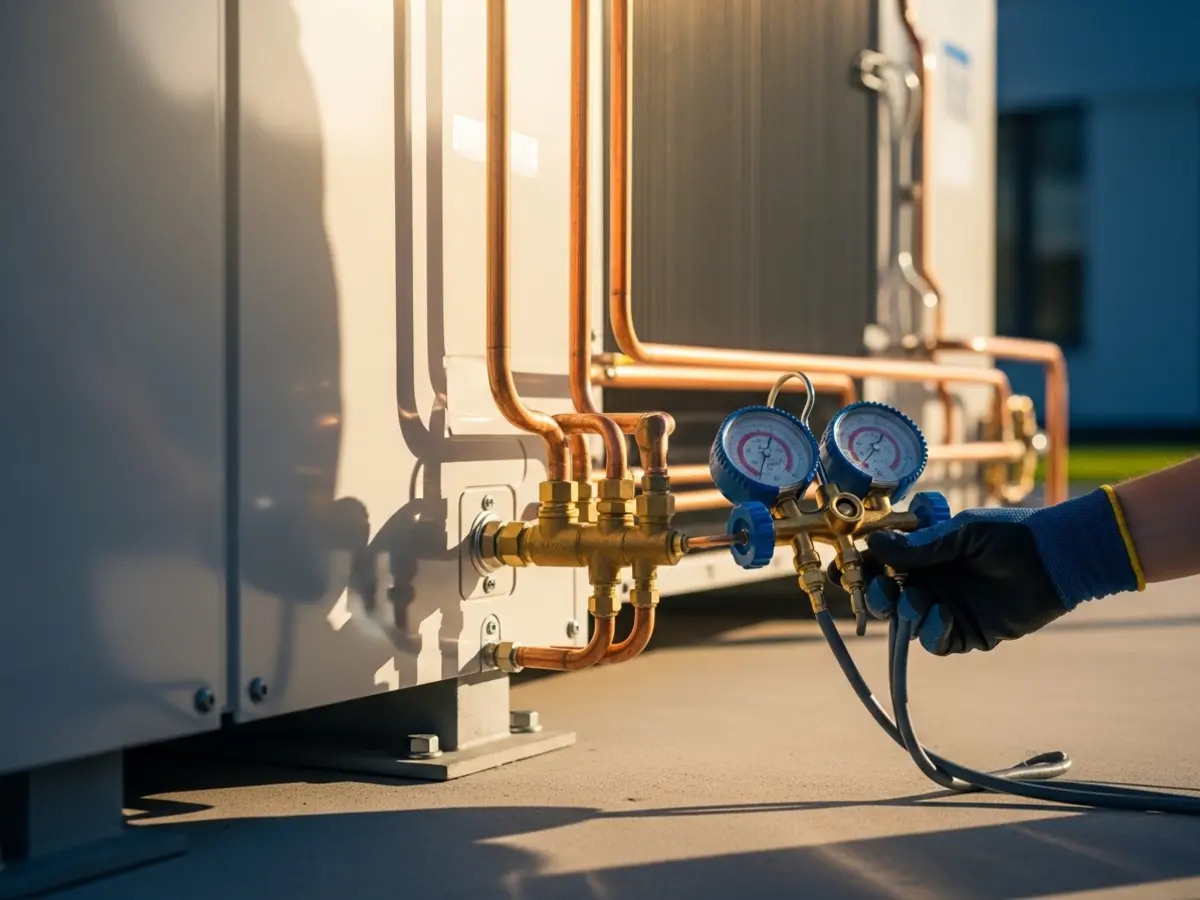
- Check refrigerant pressure and temperature (both heating and cooling mode)
- Inspect for refrigerant leaks at service ports, coil connections, and line sets
- Verify subcooling and superheat within manufacturer spec
Coils and Airflow
- Clean outdoor condenser coil (remove debris, straighten fins)
- Clean indoor evaporator coil if accessible
- Check and replace air filter
- Verify indoor airflow (static pressure and CFM)
- Clear condensate drain line
Electrical and Controls
- Test capacitors (start and run) with capacitance meter
- Inspect contactors for pitting and wear
- Check all electrical connections for tightness and corrosion
- Test defrost board and defrost cycle operation
- Verify reversing valve operation in both modes
- Test thermostat calibration and operation
Mechanical
- Inspect and lubricate fan motor bearings
- Check fan blade for balance and damage
- Inspect refrigerant lines and insulation
- Verify proper unit clearance and drainage
Best Timing for Sacramento
Spring (March–April): Before cooling season begins — ideal for a cooling-focused check Fall (September–October): Before heating season — verify defrost controls and heating operation
Pair with our annual furnace or indoor air quality inspection for whole-home comfort coverage.
What Happens Without Maintenance
A neglected heat pump costs more to run and fails sooner. Specifically:
Dirty coils reduce heat transfer efficiency by 10–25%. Your system runs longer to achieve the same result — directly adding to your electric bill.
Low refrigerant (from a slow leak that goes undetected) forces the compressor to work harder. Left uncorrected, it leads to compressor failure — the most expensive heat pump repair.
Failed capacitors cause hard-starts that stress the compressor. They're an inexpensive replacement during maintenance; compressor damage from repeated hard-starts is far more expensive.
Dirty outdoor coils from cottonwood — a Sacramento spring problem — block airflow and send head pressure skyward during summer. A 20-minute coil cleaning during a spring tune-up prevents months of reduced performance.
Rebate and Warranty Compliance
SMUD and PG&E heat pump rebates sometimes require documentation of professional installation and maintenance. See current SMUD rebates for program details. Manufacturer warranties (including Carrier, Lennox, Trane, and Daikin) typically require annual documented maintenance to remain valid.
We provide a written maintenance report after every visit — keep it with your system documentation in case you need it for a warranty claim or utility rebate audit.