
Before you call
Common signs you may need ac condenser repair
Cooling problems usually start as comfort or performance issues before the system stops working altogether.
- Warm air, weak airflow, or a system that runs without cooling the house properly.
- Frequent cycling, loud noises, leaks, or rising energy bills without a clear reason.
- A sudden breakdown during Sacramento heat when fast service matters most.
Heads up: If your cooling system is completely down, calling is usually the fastest way to get help.
Service details
The overview below explains how this service works, common problems we see, and what Sacramento homeowners should expect before scheduling.
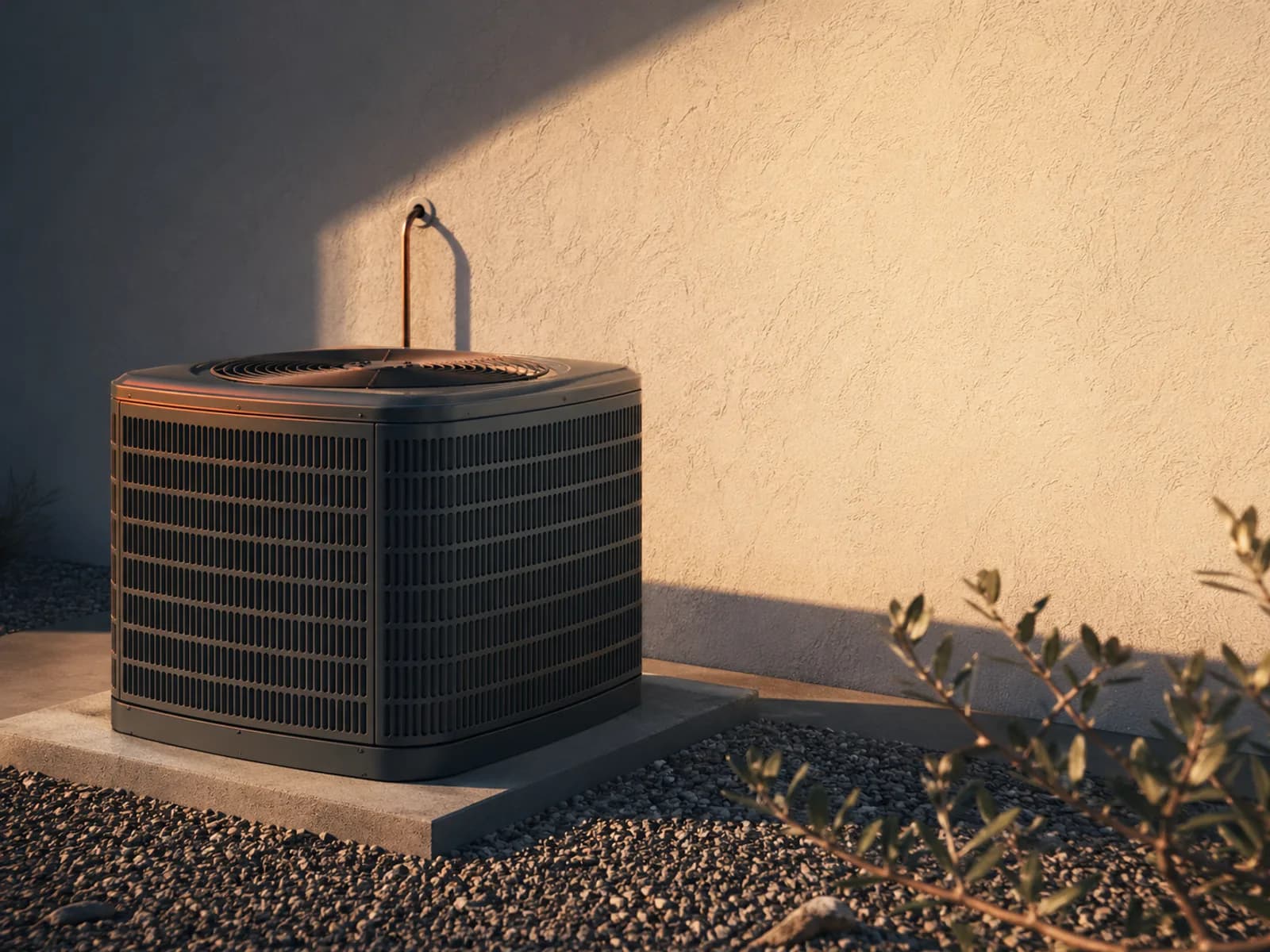
The condenser unit — the outdoor part of your AC system — works hard in Sacramento's summer heat, often running for 12+ hours a day during heat waves. The electrical components and coil take significant abuse from UV exposure, heat cycling, and airborne debris.
Components We Repair in Outdoor Condenser Units
Capacitors
The most common outdoor unit repair. Start and run capacitors charge and store electricity to start the compressor and outdoor fan motor. They fail gradually from heat cycling — a weak capacitor won't immediately stop the system, but it stresses motors and eventually causes failure.
Symptoms: Compressor hums but doesn't start; outdoor fan spins slowly or not at all
Contactors
The electrical relay that powers the compressor and outdoor fan. Contacts develop burn pitting with age, causing hesitant starts, chatter, or complete failure.
Symptoms: AC won't turn on; burning smell; visible burn marks on contactor
Fan Motors
The outdoor fan (condenser fan) exhausts heat from the coil. Motor bearings wear out, especially in direct Sacramento sun. Some motors can be repaired; most are replaced.
Symptoms: Fan doesn't spin; loud grinding or rattling noise; AC shuts off on high-pressure protection
Condenser Coil
The heat exchanger that rejects heat from the refrigerant into the outdoor air. Coils can develop refrigerant leaks, physical damage, or severe fouling from cottonwood and debris.
Symptoms: Reduced cooling capacity; refrigerant leak detection; visible damage or fouling
Refrigerant Lines and Connections
The service ports, line set connections, and flare fittings at the outdoor unit are common leak sites — especially at service valve cores.
Outdoor Unit Protection Tips
- Keep at least 2 feet of clearance around the unit
- Don't allow landscaping to grow into or over the unit
- Keep pets away — pet urine corrodes condenser fins
- Never pressure-wash the coil — the fins are delicate; we use low-pressure coil cleaner