
Reviewed by Alex J., Lead HVAC Technician, NATE Certified
Before you call
Common signs you may need AC refrigerant recharge
Cooling problems usually start as comfort or performance issues before the system stops working altogether.
- Warm air, weak airflow, or a system that runs without cooling the house properly.
- Frequent cycling, loud noises, leaks, or rising energy bills without a clear reason.
- A sudden breakdown during Sacramento heat when fast service matters most.
Heads up: If your cooling system is completely down, calling is usually the fastest way to get help.
Service details
The overview below explains how this service works, common problems we see, and what Sacramento homeowners should expect before scheduling.
Adding refrigerant to a leaking AC system without repairing the leak is like putting gas in a car with a hole in the tank. It works temporarily — but the refrigerant will leak out again, and you'll be paying for another recharge in a year.
PULSE HVAC always finds and fixes the leak first.
How We Handle Low-Refrigerant Calls
Step 1: Verify Low Charge
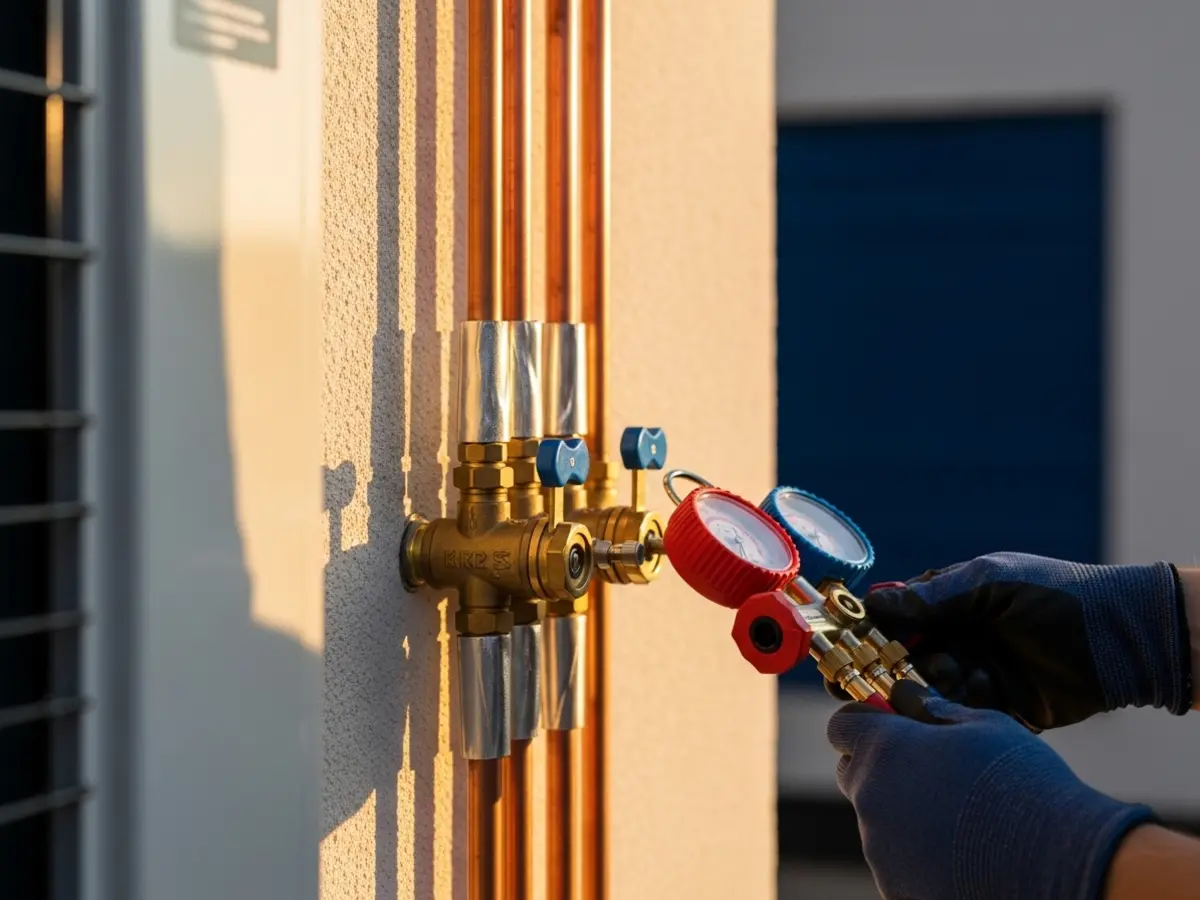
We connect manifold gauges to measure suction and liquid pressures. Abnormal pressure readings, along with checking the temperature split at the supply registers, confirm low refrigerant.
Step 2: Locate the Leak
We use electronic refrigerant detectors and UV dye to locate the leak point. Common locations:
- Schrader valve cores (easy fix)
- Evaporator coil pinhole leaks (requires coil cleaning and sealant, or coil replacement)
- Condensate drain pan coil contact (common on older systems)
- Line set connections or joints
- Outdoor condenser coil
Step 3: Repair the Leak
Small leaks at valve cores and accessible fittings can be fixed on the spot. Evaporator coil leaks may require a coil sealant injection or coil replacement depending on severity.
Step 4: Recharge
After verifying the repair, we pull a vacuum on the refrigerant circuit (to remove air and moisture), then add refrigerant to the precise charge specified by the manufacturer — not just "until the gauges look right."
R-22 vs. R-410A
If your system uses R-22 (installed before 2010), we have an honest conversation about repair vs. replacement. R-22 is expensive and becoming scarce — that cost is often better applied toward a new, efficient R-410A or R-32 system.
We always quote leak repair before adding refrigerant. You know the full cost before we proceed.
Common Leak Locations
Quick fixes:
- Schrader valve cores — Same type as tire stems; quick to tighten or replace
- Accessible brazed fittings — Pinhole leaks at service valves or line set connections that can be re-brazed on-site
More significant repairs:
- Evaporator coil pinhole leaks — Formicary corrosion (copper oxidation from formic acid in building materials) creates small leaks that develop over years. Coil sealant injection works for small leaks; coil replacement for larger ones
- Condenser coil damage — Fin damage from debris impacts; may require section or full coil replacement
- Line set junction failures — Poorly brazed original connections that fail after years of thermal cycling
R-32: The Next Refrigerant Generation
New HVAC equipment is transitioning from R-410A to R-32, which has 70% lower global warming potential and slightly better efficiency. If your R-410A system is approaching the end of its service life, this is a good reason to consider replacement over recharging — new systems are more efficient and use the more environmentally responsible refrigerant.