Reviewed by Paul R., CEO & Installer
Before you call
Common signs you may need gas furnace repair
Heating problems usually start as comfort or safety concerns before they become a full no-heat failure.
- No heat, weak airflow, or rooms that stay cold even with the thermostat turned up.
- The system starts and stops repeatedly, makes unusual noises, or gives off a burning smell.
- You are dealing with a sudden failure during cold weather or a safety-related concern.
Heads up: If your heating system is completely down, calling is usually the fastest way to get help.
Service details
The overview below explains how this service works, common problems we see, and what Sacramento homeowners should expect before scheduling.
Most Sacramento homes with forced-air heating run a natural gas furnace. Gas furnaces are efficient, reliable, and familiar — but when they fail, they need a technician with both HVAC certification and gas appliance experience. PULSE technicians hold all required California licensing for gas appliance work.
Gas Heater Repair: Which Appliance Do You Mean?
"Gas heater repair" and "natural gas heater repair" get used for three different appliances, and the repair is not the same for each:
- A gas furnace — a central, ducted system that heats the whole house through registers. That is this page, and it is what most Sacramento homes have.
- A gas wall heater (properly, a wall furnace) — a single recessed unit heating one room or hallway, with no ducts. See wall heater repair.
- A gas water heater — heats water, not air. We do not service water heaters; a plumber handles those.
If you are not sure which you have, heater repair walks through identifying the system in a couple of sentences.
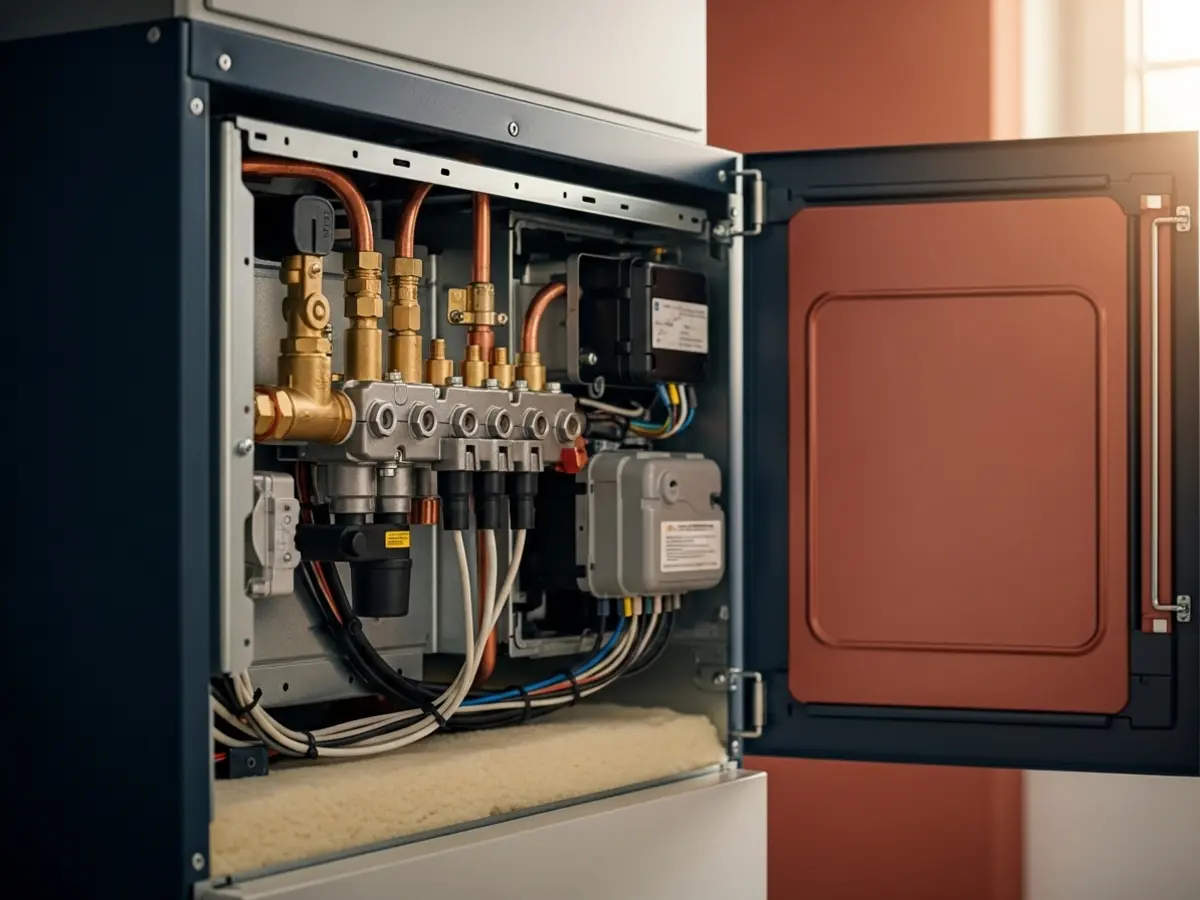
Gas Furnace Components We Repair
Ignition System
- Hot surface ignitor — The most common failure point on modern furnaces; ceramic ignitors crack with age and heat cycling
- Flame sensor — Coats with residue over time; cleaning or replacement restores reliable ignition
- Standing pilot light — Common on older furnaces; thermocouple and thermopile replacement
Gas Valves and Combustion
- Gas valve — Controls gas flow to burners; replacement needed when valve fails to open or close properly
- Burner assembly — Cleaning and adjustment for proper combustion and efficiency
- Inducer motor — Draws combustion gases through the heat exchanger and out the flue
Heat Exchanger
The heat exchanger is the most critical safety component in your gas furnace — it separates combustion gases from the air circulated through your home. A cracked heat exchanger can allow carbon monoxide to enter your living space.
We use combustion analysis tools and visual inspection to evaluate heat exchanger condition during every service call on systems older than 10 years.
Electrical and Controls
- Control board failures
- Limit switch replacement
- Transformer and relay issues
- Draft pressure switch
Carbon Monoxide Safety
Every gas furnace service call includes a CO check. If we find elevated CO levels in your home's air supply, we'll immediately identify the source and recommend the safest course of action.
Gas Furnace Brands We Repair
Our technicians are trained on all major gas furnace brands:
- Carrier — Infinity, Performance, and Comfort series
- Lennox — XC, SLP, and Merit series
- Trane — S9X2, S8X1, and XR series
- Rheem / Ruud — Classic Plus, Prestige, and Value series
- Goodman / Amana — GMSS96, AMSS96, and related models
- Bryant — Evolution and Preferred series
- York — TM9Y, LX series
- American Standard — Gold and Silver series
We service all ages of equipment — from current variable-speed inverter-driven systems to older single-stage units from the 1990s.
What to Expect From a Service Call
We perform a full system check before diagnosing the specific complaint. This catches multiple issues in a single visit rather than fixing one problem only to have another appear. After the diagnostic, we explain what we found in plain language and give you an upfront quote before starting any work.