
Reviewed by Paul R., CEO & Installer
Fall is the best time for AC installation in the Sacramento area. Installers have openings after the summer rush, you can compare bids and rebates without a heat wave forcing a fast decision, and the permit and inspection fit into a calm schedule. If your air conditioner struggled through this summer, replacing it in October or November means the new system is installed, tested and ready long before the first 100°F afternoon.
The decision is worth making carefully. ENERGY STAR notes that as much as half of the energy used in a home goes to heating and cooling, so the system you choose shows up on every SMUD bill for the next 15 years or so.
Why Fall Beats Waiting for a Breakdown
Replacing a system on your own schedule gives you far more control than replacing it in an emergency. When an aging AC quits in July, the choice is made for you: the first available crew, the equipment that is in stock, and a hot house until it is done.
In fall, the trade-offs flip in your favor:
- Scheduling. Installers are past the summer peak, so you can pick a day rather than take the first opening.
- Time to compare. You can get two or three bids, read them side by side and ask questions.
- Rebates. You have time to confirm what SMUD's heating and cooling rebates cover before you commit, instead of finding out afterward.
- A real test run. A system installed in fall gets weeks of use, plus the final inspection, before summer puts it under full load.
Our position: if your AC is in its late teens, needed refrigerant again this year, or ran nonstop to keep up in the heat, replace it this fall rather than nursing it through one more summer. If it is younger and only needed a capacitor or a cleaning, keep it.
AC or Heat Pump?
Price both. A heat pump uses the same kind of outdoor unit as an air conditioner but also heats, so it replaces the AC and handles most or all of your heating.
A heat pump makes the most sense when your gas furnace is also aging, because one installation covers both. SMUD offers rebates for qualifying heat pumps, so check the current program before you choose. If your furnace is only a few years old, a straight AC replacement with a matching indoor coil can still be the better value.
Either way, newly manufactured systems use a newer refrigerant than the one in most existing units. Our post on 454B refrigerant explains what that means for a replacement.
What to Settle Before the Crew Arrives
A good bid answers these questions in writing:
- Sizing. Was the system sized with a load calculation for your house, or matched to the old unit's size? Old systems were often oversized.
- Matched equipment. Are the outdoor unit and indoor coil a matched, rated pair, and does the furnace or air handler match too?
- Ducts. Will the ducts be inspected and tested, and what happens if they fail?
- Line set. Will the existing copper lines be reused or replaced, and why?
- Permit and verification. Is the permit included, along with the third-party HERS verification that California's energy code usually requires on a replacement?
- Rebates and warranty. Who files the rebate paperwork, and who registers the manufacturer warranty?
What Installation Day Looks Like
A typical replacement of the outdoor unit and indoor coil takes about one day. A heat pump conversion that also replaces the furnace or air handler, or a job with new ducts or a new line set, can take two.
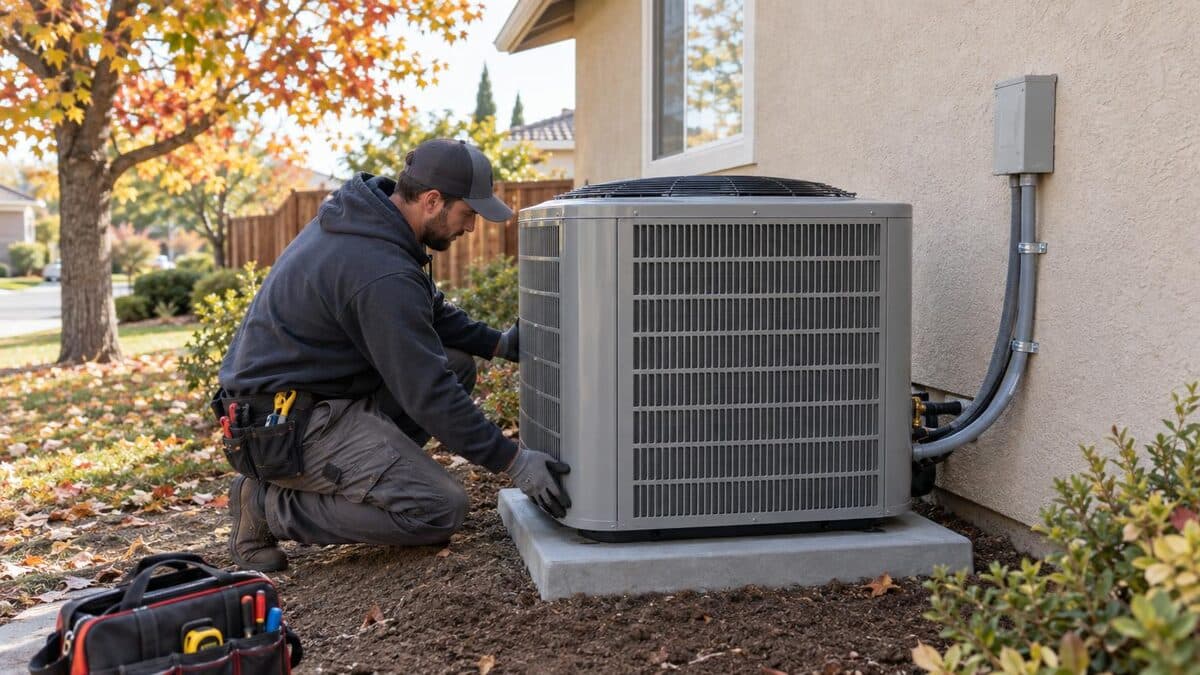
On the day, the crew recovers the refrigerant from the old system, removes the old outdoor unit and coil, sets the new outdoor unit on its pad and installs the new coil at the furnace or air handler. They connect or replace the line set, pressure test the connections, pull a deep vacuum to remove moisture and air, then release or adjust the refrigerant charge to the manufacturer's specification. Startup checks follow: airflow, temperatures, thermostat setup and a walkthrough with you.
Then come the paperwork steps. The HERS rater visits to verify duct leakage and system performance, and the city or county inspector signs off on the permit, usually within a few weeks.
A Typical Fall Replacement
Here is how it often goes: a Folsom two-story with a 2007 AC that needed refrigerant in July and ran all afternoon in August. The owner gets bids in October, compares a straight AC against a heat pump that would also retire the aging furnace, and picks a date two weeks out. The system goes in on a mild day, the ducts get sealed where the test found leaks, and by Thanksgiving the permit is closed and the heat pump is heating the house.
When to Call PULSE HVAC
Call us if your AC struggled this summer, needed refrigerant more than once, or is old enough that you are planning around it. We will give you a written bid with the load calculation, matched equipment, duct plan, permit and rebate steps spelled out, and price an AC and a heat pump side by side.
PULSE HVAC installs air conditioners and heat pumps across the Sacramento area. Call (916) 850-2221 or book online to schedule an estimate.
Sources
Need HVAC help in Sacramento?
Same-day service · Free estimates · Licensed & insured