
Reviewed by Paul R., CEO & Installer
Sacramento summers don't ease into heat — they arrive fast and hard. By the time June turns into July, outdoor temperatures in Folsom, Elk Grove, and Rancho Cordova regularly climb past 100°F, and your AC system runs nearly without pause. That's exactly when a struggling condenser fan motor becomes a serious problem. Knowing the AC condenser fan motor failing signs before the system quits entirely is the difference between a straightforward repair and an emergency breakdown on the hottest day of the year.
What the Condenser Fan Motor Actually Does
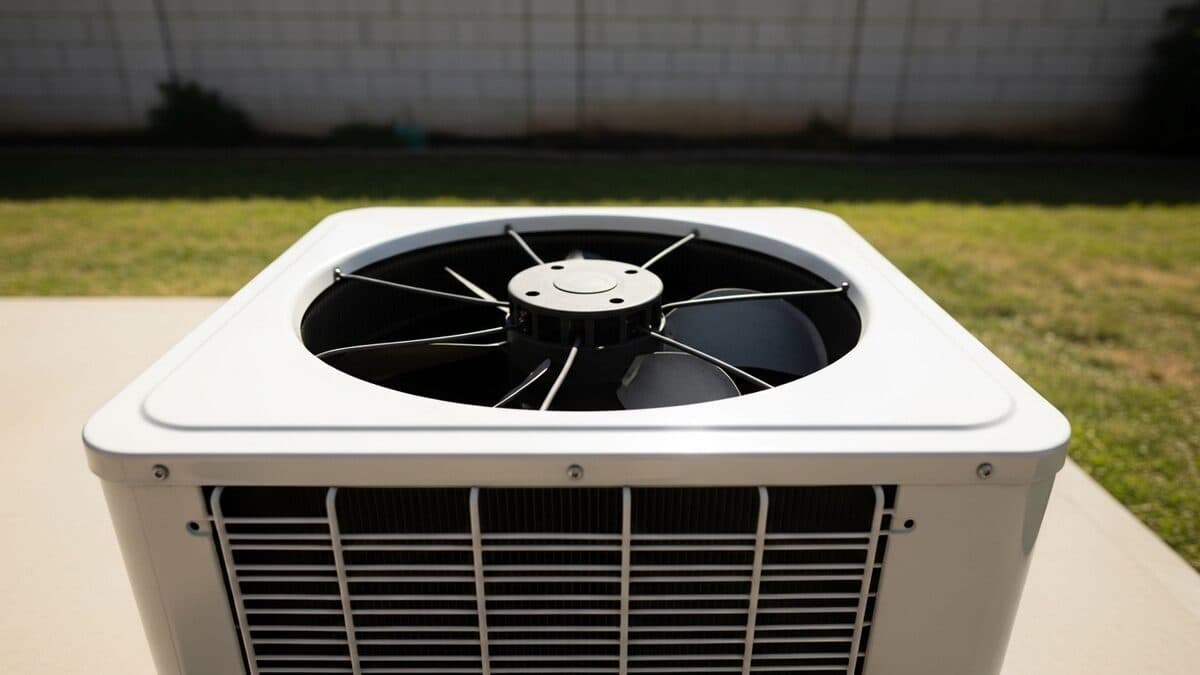
The outdoor unit of your AC system contains two main working parts: the compressor and the condenser fan. The fan pulls air across the condenser coil to push heat out of the refrigerant. Without that airflow, heat has nowhere to go. The refrigerant stays warm, the compressor overheats, and eventually the whole system shuts down — or fails outright.
In Sacramento's climate, that fan motor runs harder and longer than it would almost anywhere else. That workload accelerates wear, which is why condenser fan motor failures are one of the most common AC repairs technicians see every summer across Carmichael, Citrus Heights, and Fair Oaks.
Early Warning Signs You Shouldn't Ignore
1. The fan starts slowly or hesitates
Watch the outdoor unit when your AC kicks on. The fan blade should reach full speed within a few seconds. If you notice a sluggish startup — the blade spinning slowly before gradually building speed, or stopping and restarting — that points to a weakening run capacitor or a motor with failing bearings. A slow-starting fan strains the motor with every cycle and often leads to complete failure within days or weeks during peak heat.
2. Grinding, rattling, or humming from the outdoor unit
Unusual noises from the condenser are worth taking seriously. A grinding or squealing sound usually means motor bearings are wearing down. A rattling may indicate a blade that's come loose or warped from heat cycling. A low electrical hum with little or no blade movement often signals a failed capacitor — the motor is getting power but can't generate enough torque to spin. Any of these sounds tends to worsen in hot weather when the motor runs longer and harder.
3. Warm air indoors with the compressor running
If your AC is running — you can hear the compressor cycling and feel airflow at the vents — but the air coming out isn't cold, a failed condenser fan motor is a strong possibility. Without the fan moving heat away from the outdoor coil, the refrigerant circuit can't function correctly, and the system delivers warm or barely cooled air instead. Homeowners in Sacramento often search "why is my AC not blowing cold air" during summer, and this is one of the most common mechanical reasons behind that problem.
4. The outdoor unit feels extremely hot to the touch
Some warmth on the outdoor unit is normal — it's designed to expel heat. But if the top or sides of the unit feel unusually hot, or if you notice heat radiating off it more intensely than usual, the condenser fan likely isn't moving enough air. That trapped heat stresses every component inside, including the compressor.
5. Frequent short-cycling or unexpected shutdowns
When the condenser fan motor struggles or stops entirely, internal temperatures spike quickly. Safety switches — including thermal overload protectors on the compressor — can trigger a shutdown to prevent permanent damage. If your system runs briefly then cuts off, or if it won't start at all after a hot afternoon, a compromised fan motor may have already tripped one of those protective limits.
6. A burning smell from the outdoor unit
An electrical or burning odor near the condenser is a sign to shut the system off immediately. It can indicate that the fan motor windings are overheating, insulation is burning, or a seized motor is pulling too much current. Left running, an overheating motor can damage the capacitor, the contactor, and in worst cases, the compressor.
The Capacitor Connection
Most condenser fan motor failures don't start with the motor itself — they start with the run capacitor. The capacitor stores and delivers the electrical charge that starts and sustains the fan motor. As capacitors age (they typically last 5–10 years), they lose their ability to hold a full charge. The result: a fan that starts slowly, stops mid-cycle, or won't start at all.
Sacramento summers accelerate capacitor wear because heat is hard on the component's internal materials. Replacing a failing capacitor is a quick, relatively inexpensive repair. Ignoring it means the weakened capacitor keeps forcing the motor to work harder than it should — eventually burning out the motor itself, which costs significantly more to replace.
If your system is more than five years old and you're seeing any of the early symptoms above, a capacitor check should be part of any service call.
Fan Motor vs. Full Condenser Replacement
A condenser fan motor failure in a system that's otherwise in good condition — typically under 12–15 years old, using R-410A refrigerant, and without a history of repeated seasonal repairs — almost never justifies replacing the entire outdoor unit. A motor swap is usually the appropriate and cost-effective repair.
Replacement becomes worth discussing if the condenser is aging past that 12–15-year range, has already needed significant repairs this season, or still runs on R-22 refrigerant, which is no longer manufactured and increasingly difficult to service. A technician can give you an honest picture of where your system stands.
When to Call PULSE HVAC
If you've noticed any of the warning signs above — slow fan startup, unusual noises from the outdoor unit, warm air with the system running, burning smells, or unexplained shutdowns — don't wait to see if the problem resolves on its own. In Sacramento's summer heat, a marginal fan motor can fail completely within days, and a compressor that overheats repeatedly is at risk of permanent damage that no motor swap can fix.
PULSE HVAC serves Sacramento, Carmichael, Roseville, Citrus Heights, Folsom, Elk Grove, Rancho Cordova, and Fair Oaks. Our technicians diagnose condenser fan issues quickly and carry the parts to complete most repairs the same day.
Call us at (916) 850-2221 or schedule online at /book before the next heat wave turns a simple motor repair into an emergency.
Sources
Need HVAC help in Sacramento?
Same-day service · Free estimates · Licensed & insured