
Reviewed by Paul R., CEO & Installer
Attic duct insulation in the Sacramento area should be R-8 whenever ducts are replaced or added. That is the level California's energy code sets for ducts in unconditioned attics in our climate. Many older homes fall well short of it, with thin, torn or missing duct jackets, and those ducts lose heat on winter nights and pick it up on summer afternoons before the air ever reaches a room.
That loss adds up because the ducts run through the harshest space in the house. ENERGY STAR estimates that homeowners save an average of 15% on heating and cooling costs by sealing air leaks and adding insulation. Attic ducts are part of the same picture: every foot of under-insulated duct is heating or cooling the attic along with your rooms.
What R-8 Means and Why It Matters Here
R-value is the insulation's resistance to heat flow, and a higher number means less heat crosses the duct wall. The California Energy Commission publishes the Building Energy Efficiency Standards, known as Title 24, which call for R-8 duct insulation in attics across most of the state, including the Sacramento valley, when ducts are installed or replaced.
The reason is the attic itself. On a July afternoon a Sacramento attic runs far hotter than the outdoor air, and the cool air in your ducts is crossing that heat for 20 or 30 feet. On a January night the attic sits near the outdoor temperature, and warm air from the furnace or heat pump crosses it the other way. Thin duct insulation lets a meaningful share of that heating and cooling leak into the attic both seasons.
Heat pumps feel it the most in winter. Their supply air is warm rather than hot, so the same heat loss through a duct wall is a bigger share of what they deliver.
How to Tell What You Have
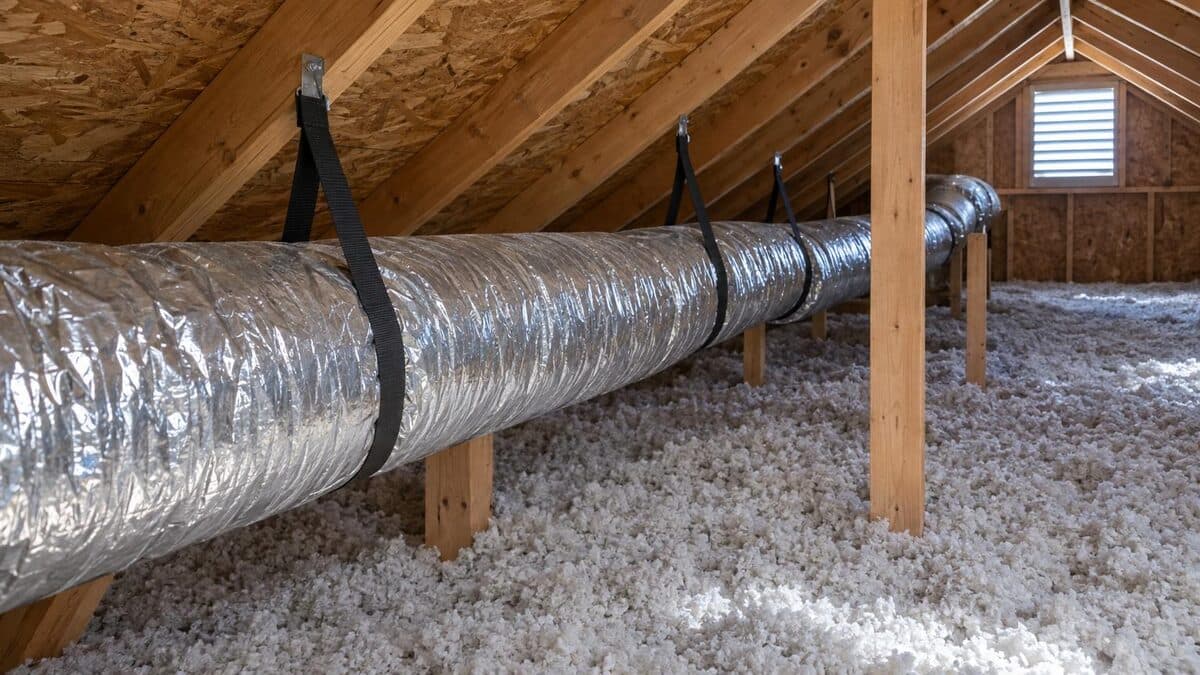
Most attic ducts in Sacramento-area homes are flex duct: a plastic inner core, a fiberglass blanket and a silver or black outer jacket. The R-value is usually printed on that outer jacket every few feet.
Look for three things on a trip into the attic, or ask your technician to check during a visit:
- The printed rating. Ducts from the 1980s and 1990s often show a much lower number than R-8, and some older jackets have no readable rating at all.
- The jacket condition. Tears, brittle sections, missing pieces and fiberglass hanging out all mean the insulation is no longer doing its job, whatever the label says.
- The shape of the duct. Flex duct that is crushed, kinked or sagging between supports is losing airflow as well as insulation.
Metal duct trunks in older homes are often wrapped in a separate blanket. Check whether that wrap is continuous or has slipped, split or come loose at the seams.
Wrap or Replace?
Wrap ducts that are sound and sealed but under-insulated. Replace flex duct that is damaged. That is the short version, and most older flex ends up in the second group.
Wrapping makes sense for a metal trunk line or newer flex that is the right size, well supported and sealed at every joint. A foil-faced duct insulation blanket wrapped and taped over it brings the insulation up without disturbing the duct.
Replacement makes sense for flex that is torn, crushed, sagging or leaking at its connections. Wrapping that kind of duct insulates a duct that is still leaking air and still choking airflow. New R-8 flex, properly sized, sealed with mastic at each connection and strapped so it runs straight, fixes all three problems in one job.
Our position: if you are going to send someone into the attic to deal with the ducts at all, replace the bad flex rather than wrap it. The labor of getting into the attic is the same, and the result is a duct system that actually performs. If your ducts also need sealing, our post on mastic versus aerosol duct sealing covers that side.
Upgrading Duct Insulation During a System Replacement
Duct insulation usually gets upgraded as part of bigger work. Replacing a furnace, air conditioner or heat pump typically triggers duct testing and sealing under Title 24, and the ducts that are actually replaced go in at R-8. If a system replacement is a year or two out, it can make sense to plan the duct work alongside it rather than doing it twice.
A Typical Older Attic
Here is the pattern in a lot of 1970s Carmichael ranch homes: the original metal trunk is wrapped in a thin blanket that has slipped off in places, and the branch runs were replaced with flex decades ago. That flex is printed with a low rating, two runs are crushed under old storage boxes, and one has a torn jacket. The trunk gets a new wrap, the damaged branch runs get new R-8 flex, and the far bedrooms stop running colder than the rest of the house.
When to Call PULSE HVAC
Call us if your attic ducts have torn jackets or no visible rating, if some rooms run much colder in winter or warmer in summer than others, or if you are planning a system replacement and want the ducts done right at the same time. We will check the ducts and tell you which runs to wrap and which to replace.
PULSE HVAC repairs and replaces ductwork across the Sacramento area. Call (916) 850-2221 or book online to schedule a duct inspection.
Sources
Need HVAC help in Sacramento?
Same-day service · Free estimates · Licensed & insured