
Reviewed by Paul R., CEO & Installer
A wall heater that lights and then goes out is a failed thermocouple, a draft killing the pilot, or a dirty burner — not a thermostat that “needs a minute.” Inspectors call the same appliance a wall furnace. Homeowners and landlords in Sacramento say wall heater. Either way, the heat for a lot of pre-1970 houses lives in that recessed box, and when the pilot will not hold, the house goes cold.
People searching wall heater repair, wall furnace repair, or gas heater repair are usually holding a pilot knob that will not stay down. That is this symptom, not another city page.
If you smell gas, this article is not your next step
Leave with everyone in the building. Do not touch light switches, the thermostat, or the heater. From outside, call 911 or your gas utility's emergency line. They find and stop a leak. We do not. Call PULSE for wall heater repair only after the property is cleared.
Why the pilot lights, then dies
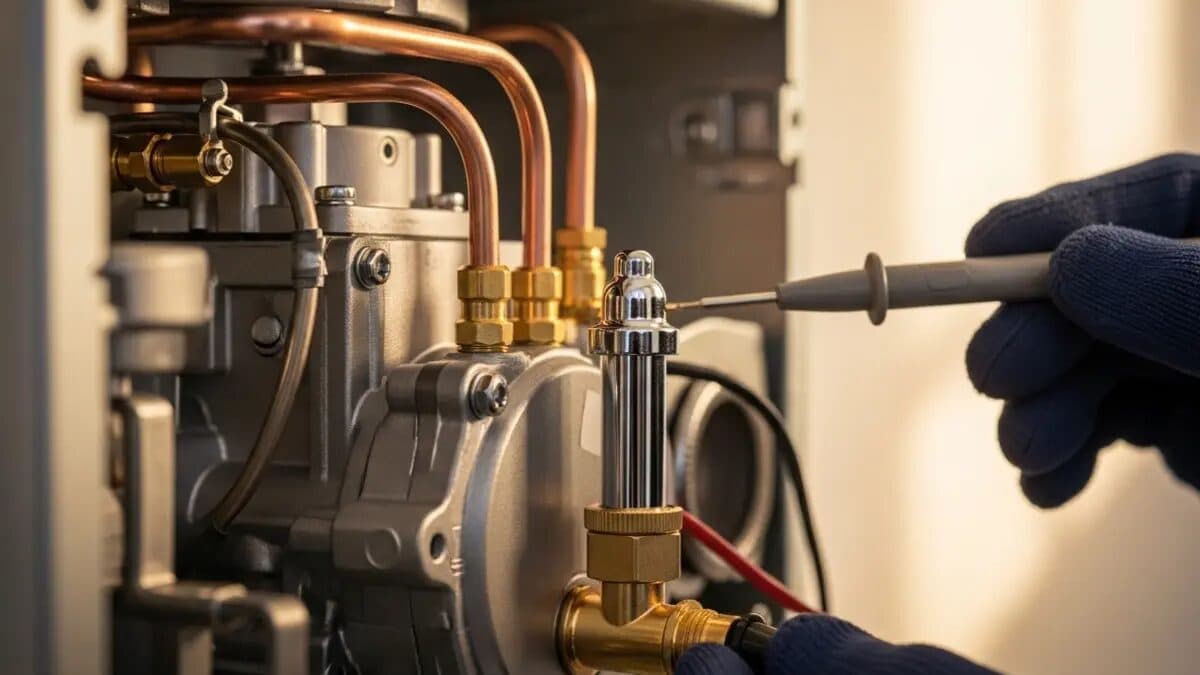
Thermocouple. It is a safety probe that has to stay hot or the gas valve closes. Age, soot, and a weak pilot take it out. The pilot lights while you hold the knob, then dies when you let go. Replacement is a short licensed job, usually one visit.
Draft. Older Sacramento wall furnaces vent through the roof or the back wall. A cold down-draft on a Tule-fog night, or a dryer pulling air from the same room, blows the pilot out after it looks fine.
Dirty burner. Lint, dust, and spider webs turn a blue flame yellow and lazy. The thermocouple never stays hot enough. Lighting it again dumps unburned gas into the room.
Williams, Empire, Cozy, and Cadet units in Midtown bungalows and Arden apartments fail in that order. The part is small. The appliance is still live gas.
What you can check — once
Only if there is no gas odor and the lighting instructions are on the door. Hold the pilot for the time on the label, usually 30 to 60 seconds. One attempt. If it dies when you release the knob, stop. Repeated clicks are how unburned gas accumulates.
A healthy pilot is a small, steady blue. Yellow, lifting, or sooty means stop and book a tech. Do not “clean it with a wire” on a gas valve you can still smell.
Repair versus a mini-split
A thermocouple or igniter on a unit under about 15 years is worth repairing. A cracked heat exchanger, an unvented unit that fails current bedroom code, or a third no-heat call this winter is when a ductless heat pump is the safer long-term heat — and the first cooling those houses have ever had. We will run that comparison at the estimate. We will not upsell it on a part that still has life.
Last February we replaced a thermocouple on a Williams wall furnace in a 1948 East Sacramento rental. The landlord had already bought a space heater. The pilot held after the probe swap, we leak-tested the valve, and the tenant had heat the same afternoon. The heat exchanger was intact. Replacement would have been the wrong job.
When to call PULSE HVAC
Call if the pilot will not hold after one careful attempt, the flame is yellow or sooty, or a tenant reports no heat in a wall-furnace unit. Same-day in the Sacramento area during posted hours, 8 AM to 8 PM. We stock thermocouples, thermopiles, and common igniters, and we leak-test before we leave.
Book online or call (916) 850-2221. If you smell gas, you still call 911 first.
Sources
Need HVAC help in Sacramento?
Same-day service · Free estimates · Licensed & insured