
Reviewed by Paul R., CEO & Installer
A house AC taking so long to cool after an overnight setback is pulling stored heat out of walls, furniture, and ducts before rooms feel right. On September mornings in the Sacramento area, that catch-up can run for hours, then slam into SMUD peak pricing while the sun is already on the roof. Cooler nights near 55°F do not cancel heat sitting in building mass. A modest overnight bump, then recovery started well before peak, keeps Elk Grove and Roseville homes comfortable without a wide swing that the equipment cannot finish in time.
ENERGY STAR lists programmable and connected thermostats among certified products; confirm listings before you buy. Pair any schedule with a simple homeowners monthly maintenance checklist: filter, outdoor coil, and clear returns. Dirty media and blocked airflow stretch recovery even when the compressor is healthy.
Why recovery lags after a nighttime setback
A large overnight setback lets walls, furniture, and ducts warm up, so the system must pull that stored heat out before rooms feel cool. On September mornings in the Sacramento area, that recovery can last hours, especially if filters are dirty or airflow is restricted. A smaller setback shortens the catch-up.
Valley houses hold heat in slab, stucco, and attic. The Delta breeze can drop outdoor air, but indoor surfaces stay warm. When the thermostat jumps several degrees at once, the unit runs hard while supply air fights that mass. Restricted return grilles and a packed outdoor coil make it worse. That is different from a failed compressor. If the unit is running but indoor temperatures barely drop, recovery from a deep setback may be colliding with outdoor heat and SMUD peak. Check the filter, outdoor airflow, and whether the setpoint jumped too far; if rooms still lag, schedule service rather than widening the setback.
Last September a technician opened a 1970s tract house with a 2009 condenser. The overnight drop had been aggressive. Nobody had changed the filter since the last owner. The blower was starving, the coil was matted with cottonwood, and the living room stayed sticky until late morning. After a filter, a coil rinse, and a smaller overnight bump, recovery finished before peak. Skip annual duct cleaning unless you have had rodents or a remodel, because it rarely changes airflow enough to notice. Fix the filter and the outdoor coil first.
How Sacramento homeowners should schedule September setbacks
Use a modest overnight bump, not a wide swing, then start recovery well before SMUD peak so homes are already comfortable. Cooler nights do not cancel daytime heat in the building mass. Pair the schedule with a simple homeowners monthly maintenance checklist: filter, outdoor coil, and clear returns.
Set the overnight target only a few degrees above the daytime comfort point. Program the morning recovery to begin early enough that the house is at setpoint before the utility’s peak window. Check current peak hours on the SMUD site; schedules change, and you want the catch-up done first. Leave the fan on auto unless you have a reason to circulate continuously. Do not chase 55°F outdoor air with a 10-degree indoor jump. The equipment still has to unload the slab and the furniture.
Walk the outdoor unit once a month in September. Pull weeds, keep discharge clear, and confirm the filter date on a piece of tape on the furnace door. Restricted airflow is the most common reason recovery drags after a setback that used to feel fine in June.
When a thermostat change beats a bigger AC
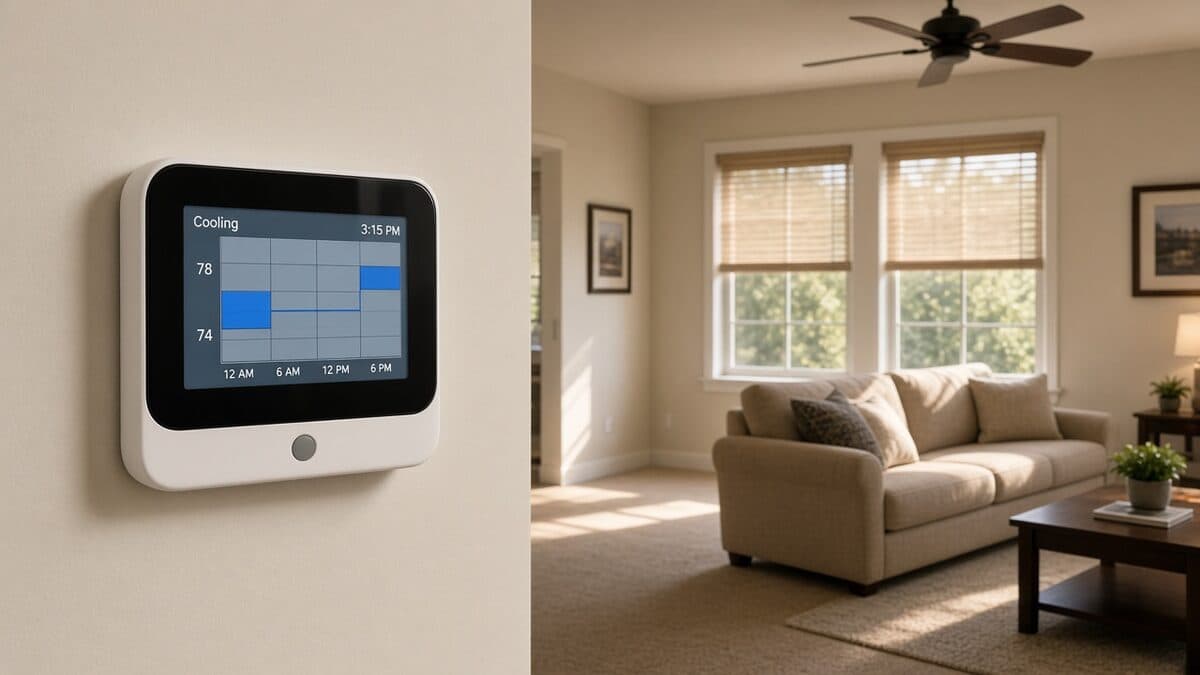
Replace the thermostat when it cannot hold a multi-period schedule, drifts, or lacks recovery or occupancy features that keep setbacks modest. If mornings stay hot until peak, a programmable or connected model is often the fix, not a bigger AC.
Device prices for a typical house thermostat usually land in the low hundreds of dollars before professional installation, which varies by wiring and location. Factor thermostat cost for a house as hardware plus labor, and confirm ENERGY STAR listings. Rebates from the utility, when available, can offset part of the purchase; check the current SMUD pages rather than assuming an amount.
A thermostat that only offers one setpoint, or that loses the clock after a blink, will keep teaching you to overshoot. Recovery or occupancy features help you keep the overnight bump modest so the morning pull-down is short. The U.S. Department of Energy discusses thermostat scheduling as an efficiency practice; the local win in September is finishing cool-down before peak, not hunting a colder night set point.
Do not size up the condenser to paper over a schedule that dumps hours of stored heat onto a hot afternoon. If rooms still lag after filter, coil, and a modest setback, that is a service call, not a reason to drop the overnight temperature further.
When to Call PULSE HVAC
Call when recovery still runs into peak after you shortened the setback, changed the filter, and cleared the outdoor coil. Call when the thermostat cannot hold a multi-period schedule or drifts off the clock. Call when the unit runs and rooms barely drop, so someone can separate a deep-setback collision from a real refrigerant or airflow failure.
PULSE HVAC serves the Sacramento area with that kind of diagnosis. Book online at /book or call (916) 850-2221 and describe the overnight set point, when recovery starts, and how long rooms stay warm. Bring the filter size if you have it. A short, early recovery beats a deep September setback every time.
Sources
Need HVAC help in Sacramento?
Same-day service · Free estimates · Licensed & insured