
Reviewed by Paul R., CEO & Installer
On SMUD time-of-day rates, the cheapest way to heat with a heat pump in winter is to warm the house a degree or two before the weekday evening peak, let it coast gently through the peak, and avoid any big temperature recovery in that window. Do not turn the heat off at 5 p.m. The catch-up afterward can cost more than the peak hours you skipped, and the house gets uncomfortable on the coldest evenings of the year.
The rate itself sets the pattern. SMUD's residential rate is a time-of-day plan for most customers, with its highest price on weekday evenings from 5 to 8 p.m. That window lines up with exactly when a Sacramento household comes home on a cold January evening and wants the heat on, which is why the timing of your heating matters more than it used to.
How the Peak Window Works
Electricity costs more during the weekday evening peak and less at other times, including weekends and holidays. Summer adds its own pricing structure, but in the heating season the evening peak is the one that matters for a heat pump.
The exact hours, seasons and prices can change, and some customers are on other plans, so check SMUD's rate page or your bill before you build a schedule around it.
A heat pump uses electricity for all of its heating, so every hour it runs during the peak costs more than the same hour later in the evening. A gas furnace home feels this much less, because the furnace burns gas and only the blower runs on electricity.
Pre-Heat a Little Before 5 P.M.
Warming the house slightly before the peak shifts some heating into cheaper hours. Raise the thermostat a degree or two above your usual evening setting starting around 3 or 4 p.m. When the peak starts, the house already holds that extra warmth.
Keep the bump small. A house warmer than usual loses heat faster through windows and walls, so pre-heating far above your normal setting wastes energy in the cheap hours too. One or two degrees is the sweet spot for most Sacramento homes.
Coast Through the Peak, Gently
During the peak, set the thermostat back to your normal evening temperature or a degree below it. The house drifts down slowly on the warmth it stored, and the heat pump runs less during the expensive hours.
Our position: a small, steady setback through the peak beats shutting the heat off. A house that drops five or six degrees by 8 p.m. forces a long recovery afterward, and a big recovery on a cold night is exactly what brings on a heat pump's backup heat strips. Those strips cost more to run than the heat pump itself. Our post on heat pump setbacks and AUX heat explains why.
After 8 P.M., Go Back to Normal
Once the peak ends, let the thermostat return to your regular evening and sleep schedule. Overnight and morning heating happens at lower rates, so there is no reason to cut deep there for rate reasons alone. Our post on a programmable thermostat schedule for winter has starting temperatures for the rest of the day.
Let a Smart Thermostat Do the Timing
A smart thermostat makes this easy, and many can be scheduled around a rate plan directly. ENERGY STAR estimates that a certified smart thermostat saves about 8% on heating and cooling bills, and a schedule that respects the peak window builds on that.
A simple weekday schedule for a heat pump home looks like this:
- 3:30 p.m. Raise to one or two degrees above your usual evening setting.
- 5:00 p.m. Return to your usual evening setting, or one degree below.
- 8:00 p.m. Normal evening setting.
- Bedtime. Your usual small overnight setback.
Weekends and holidays can follow your normal schedule, since they are not in the peak window.
A Typical Rate-Plan Pattern
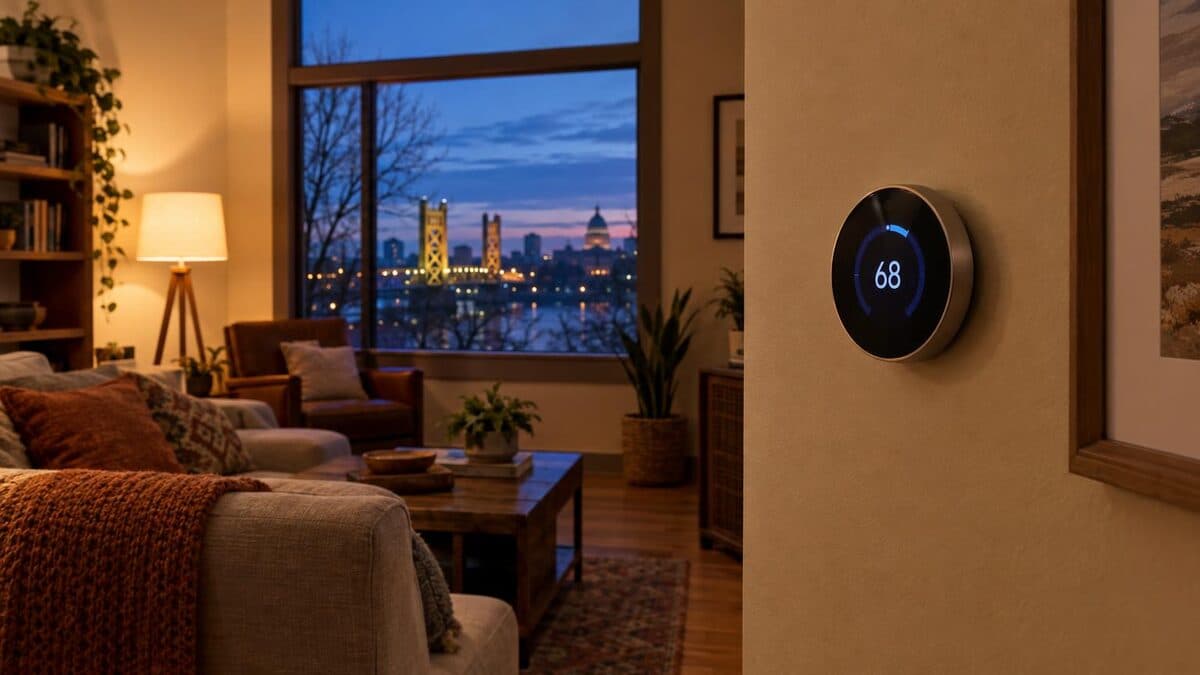
Here is how it usually looks: a Rancho Cordova single-story with a heat pump, two working adults and a thermostat that jumps from 64°F to 70°F at 5:15 p.m. every weekday, right when they get home. The heat pump runs hard through the peak, often with the backup strips on. Moving the warm-up to 3:30 p.m., holding 68°F through the peak and smoothing the jump usually takes the edge off the winter bills without anyone noticing a colder evening.
When to Call PULSE HVAC
Call us if your heat pump runs its backup heat most evenings, if you want a smart thermostat set up around your SMUD rate, or if the house cannot hold temperature through the evening without a long recovery. That last one is often an insulation, duct or system issue we can track down.
PULSE HVAC installs and services heat pumps and thermostats across the Sacramento area. Call (916) 850-2221 or book online to schedule a visit.
Sources
Need HVAC help in Sacramento?
Same-day service · Free estimates · Licensed & insured