
Reviewed by Paul R., CEO & Installer
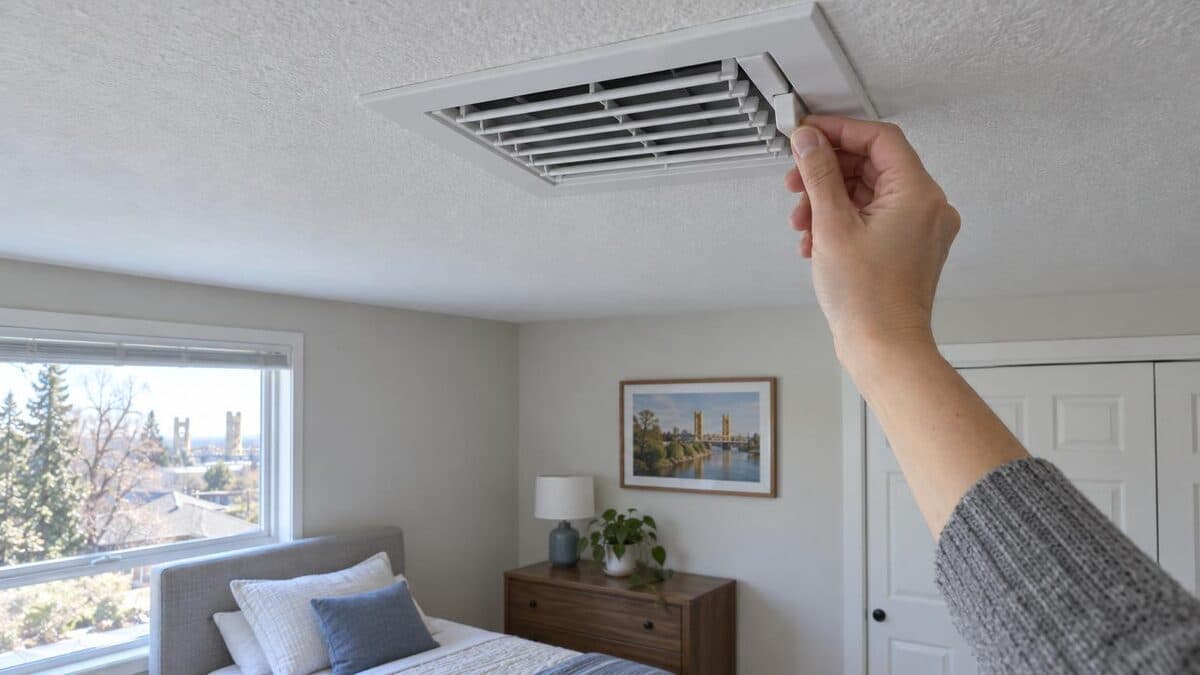
Closing vents in unused rooms rarely saves energy on a central heating and cooling system. The blower keeps moving about the same amount of air whether a register is open or shut, so closing vents mostly pushes that air harder through the rest of the ducts and out of any leaks. Close enough of them and you start starving the equipment of the airflow it needs. Partly closing one or two registers is fine. For real savings, fix the ducts or control the schedule instead.
It is worth getting right because heating and cooling are the biggest energy users in most homes. ENERGY STAR notes that as much as half of the energy used in a home goes to heating and cooling, which is exactly why closing vents feels like an easy win.
Why Closing Vents Does Not Cut the Bill
A central system does not deliver heat by the room. The furnace or heat pump runs until the thermostat is satisfied, and the blower pushes a set volume of air into the duct system the whole time. Closing a register does not turn down the equipment. It just changes where that air goes.
Three things happen instead:
- More pressure in the ducts. With fewer open outlets, pressure rises, and more air is forced out of every gap and loose joint. In a home with attic ducts, that heated air ends up in the attic.
- Heat flows back into the closed rooms anyway. An unheated spare room still shares walls, a ceiling and a door with heated rooms, so it pulls heat out of them.
- The thermostat does not notice. If the thermostat is in a hallway, the system runs about as long as before.
The result is usually small savings or none, and sometimes a higher bill if the ducts are leaky.
How It Strains the System
Every furnace, heat pump and air conditioner is designed to move a certain amount of air across its heat exchanger or coil. Closing many registers cuts that airflow.
In heating, a furnace with too little airflow runs hotter and can shut itself off early on its limit control, then restart, over and over. A heat pump in heating mode runs at higher pressure and works harder. In summer, an air conditioner coil with too little airflow can drop below freezing and ice over.
You can often hear the warning sign. If the open registers and the return grille get noticeably louder after you close vents, airflow is already being restricted. Our post on return vent whistling covers what restricted airflow sounds like.
When Partly Closing a Vent Is Fine
Partly closing one or two registers to balance a house is normal. Turning down the register in a sunny room that overheats, or in a room right next to the furnace that gets too much air, nudges more air toward the rooms that need it.
The trouble starts when several registers are fully closed, especially in a home whose ducts are already small or leaky. Many Sacramento-area tract homes have a single central return and modest duct sizing, so they have less room to absorb closed vents than a home with generous ducts.
Our position: treat register dampers as fine-tuning, not as an on-off switch for whole rooms.
What Saves Energy Instead
If you want to stop paying to heat or cool space you do not use, these do more than closing vents:
- Seal and insulate the ducts. Attic ducts that leak or have thin insulation waste energy on every room. Our posts on duct sealing and attic duct insulation cover both.
- Use the thermostat schedule. Lowering the whole house a few degrees while it is empty or overnight saves more than closing a few rooms off.
- Consider zoning for big houses. A zoned system uses motorized dampers and a thermostat per area, and it is designed so the equipment still gets the airflow it needs.
- Keep doors cracked. If a closed room has no return of its own, a closed door traps air. Our post on closing bedroom doors explains why.
The U.S. Department of Energy rates central systems on how efficiently they heat and cool, and those ratings assume the system is moving the air it was designed to move.
A Typical Empty-Nest Pattern
Here is how it usually looks: a Roseville two-story where the kids have moved out and three upstairs bedrooms sit empty. The owners close all three registers to save on heating. The bill barely changes, the hallway return gets louder, and the downstairs rooms take longer to warm up. Reopening the registers partway and lowering the thermostat schedule a couple of degrees overnight usually does more for the bill.
When to Call PULSE HVAC
Call us if closing vents made the system louder or the rooms you use less comfortable, if a room is always too hot or too cold no matter how you set its register, or if you want to know whether zoning makes sense for your house. We can measure the airflow and duct pressure and tell you what will actually help.
PULSE HVAC services heating, cooling and ductwork across the Sacramento area. Call (916) 850-2221 or book online to schedule a visit.
Sources
Need HVAC help in Sacramento?
Same-day service · Free estimates · Licensed & insured