
Reviewed by Alex J., Lead HVAC Technician, NATE Certified
Insulating attic pull-down stairs is the first fix when a loose hatch dumps hot, smoky attic air into the hall every time the air conditioner starts. The EPA notes that people spend about 90 percent of their time indoors, so a hallway that smells like the attic is not a small comfort issue. It is the air you breathe for hours after sunset.
On a 100° Sacramento-area afternoon the attic is the hottest, least filtered space in the house. A pull-down opening is often two or three feet on a side. Leave a gap around that panel and the return side of the system will use it.
Why does the hall smell like smoke only after the AC starts?
The fan creates a slight suction on the return side, and a loose attic pull down door is a large unfiltered opening into that suction. Supply air leaves the registers. Replacement air has to come from somewhere. If the hatch does not sit tight, attic air is easier to pull than outdoor air through a closed window.
That air bypasses the filter. On a warm afternoon it is hot. During late-summer smoke, when a valley inversion holds haze over the Sacramento area, it smells smoky even when the ducts are sealed and the filter is new. The hatch is not a fresh-air intake. It is a hole into the attic.
In many 1970s ranches the stairs drop into a central hall, so a gap at the hatch is easy to notice once the AC starts. Typical gaps are a panel that does not sit on the stops, crushed foam, a latch that does not pull the door square, or a cover left off after storage. With the system running, warm air at the trim is a hatch clue. That pattern does not, by itself, prove the ducts are the path.
How do you stop the leak without replacing the ladder?
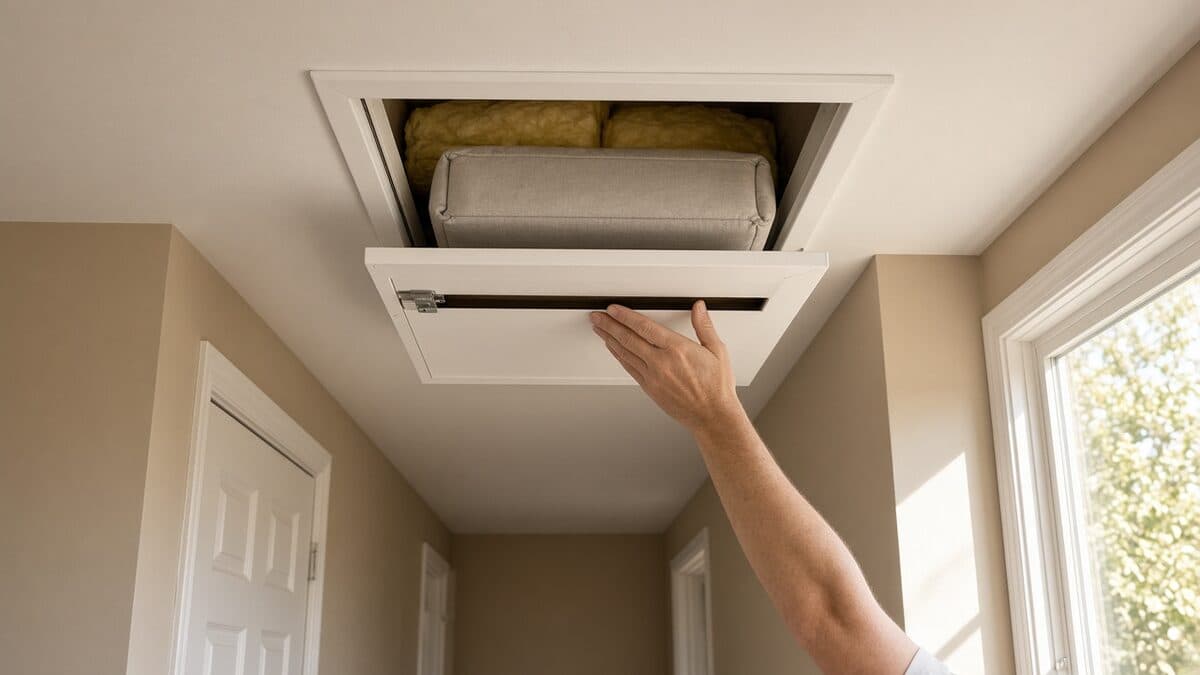
Weatherstrip the frame, make the latch pull the panel tight, and add a cover from the attic side. That sequence fixes most leaking hatches. A new attic pull down ladder is the wrong first purchase if the door still closes square.
Start with the door, not the ladder sections.
- Open the stairs and look at the stop. Old foam that has turned to dust will not seal. Peel it off and wipe the wood.
- Apply closed-cell weatherstripping to the frame where the panel lands, in one continuous run per side. Butt the corners. Do not stretch the tape so thin that it rebounds off the wood.
- Close the hatch and check the latch. It should pull the panel down until the gasket compresses all the way around. If one corner stays proud, the frame is out of square or the panel is warped. Do not twist a bent ladder to fake a seal. That leaves a gap at the opposite corner and stresses the hinges.
- From the attic, set a rigid or zippered attic pull down stairs insulation cover on the floor around the opening, not balanced on the moving door. The skirt has to sit flat. A loose batt tossed over the panel slides off the first time someone uses the stairs.
- On the next warm afternoon, run the AC and feel the hallway trim. A sealed hatch feels still. A leaking one feels like a warm thread of air.
Skip the extra layers of tape if that draft is still strong. More foam on a warped panel does not fix house pressure or a duct leak. Those need a test, not another trip to the hardware aisle.
Does the cover matter in September, or only in winter?
Yes. An attic pull down stairs insulation cover cuts heat and air leakage on hot afternoons, not only on cold nights. September in this valley still means long AC runtimes. Attics stay hot well after the Delta breeze cools the yard. The cover sits on the attic floor around the rough opening and works with the weatherstripping. It does not replace a tight latch.
Two jobs, two parts. The gasket stops the air path at the door. The cover slows heat moving through a thin plywood panel and blocks air that would otherwise slip past a tired seal. In smoke season that second barrier is what keeps attic air out of the hall when the system runs through the late afternoon.
A zippered fabric cover is easier to live with if you use the stairs often. A rigid foam box seals well if you build or buy one that actually fits the framing, not the nominal stair size. Either one fails if it rests on the door and lifts when the panel opens. Put it on the attic floor.
Skip a cheap reflective bubble kit as your only seal. It does little once the edges gap, and it gives a false sense that the hatch is done.
How to fix attic pull down stairs that still will not seal?
Repair the door and the weatherstripping before you replace the attic pull down ladder. Check three things: the panel closes square, the latch draws it tight, and the foam is not already crushed flat. Replace worn weatherstripping and add the cover from above.
Replace the unit when the door is warped, the frame is split, or no gasket can make contact all the way around. A new stair still needs a gasket and an insulation cover. The factory seal on many units is thin and flattens in one hot season. Treat the new door the same way you treat the old one: weatherstrip, latch tension, cover on the attic floor.
If you have done that carefully and the hall still smells like smoke with the AC on, stop adding tape. The next step is a duct leakage or pressure test. The hatch was the obvious hole. It is not always the only one.
When to Call PULSE HVAC
Call when a careful seal does not stop the draft or the smoke smell. Weatherstripping and a cover are homeowner work. A remaining leak means we need to measure where the system is pulling air, not guess at another roll of foam.
PULSE HVAC can pressure-test the house and check the ducts so you are not chasing a hallway smell that starts in a disconnected return. Book online at /book or call (916) 850-2221. We will tell you if the hatch is the whole job or if the test needs to come first.
Sources
Need HVAC help in Sacramento?
Same-day service · Free estimates · Licensed & insured