
Reviewed by Paul R., CEO & Installer
Leaves packed around an outdoor AC unit choke the air it needs to pull through its coil, and in the Sacramento area that matters more in fall than most people expect. A summer-only air conditioner can sit with a few leaves on it until the trees are bare. A heat pump cannot, because the same outdoor unit is now heating your house every cold morning. ENERGY STAR estimates that as much as half of the energy used in a typical home goes to heating and cooling, so a unit that runs longer against a mat of wet leaves shows up on the bill.
Why Leaves Matter to an Outdoor AC Unit
Leaves matter because the outdoor unit is a heat exchanger that only works when air moves freely through its fins. The big fan on top pulls air in through the coil on all four sides and pushes it out the top. Anything that sits against those sides cuts the airflow.
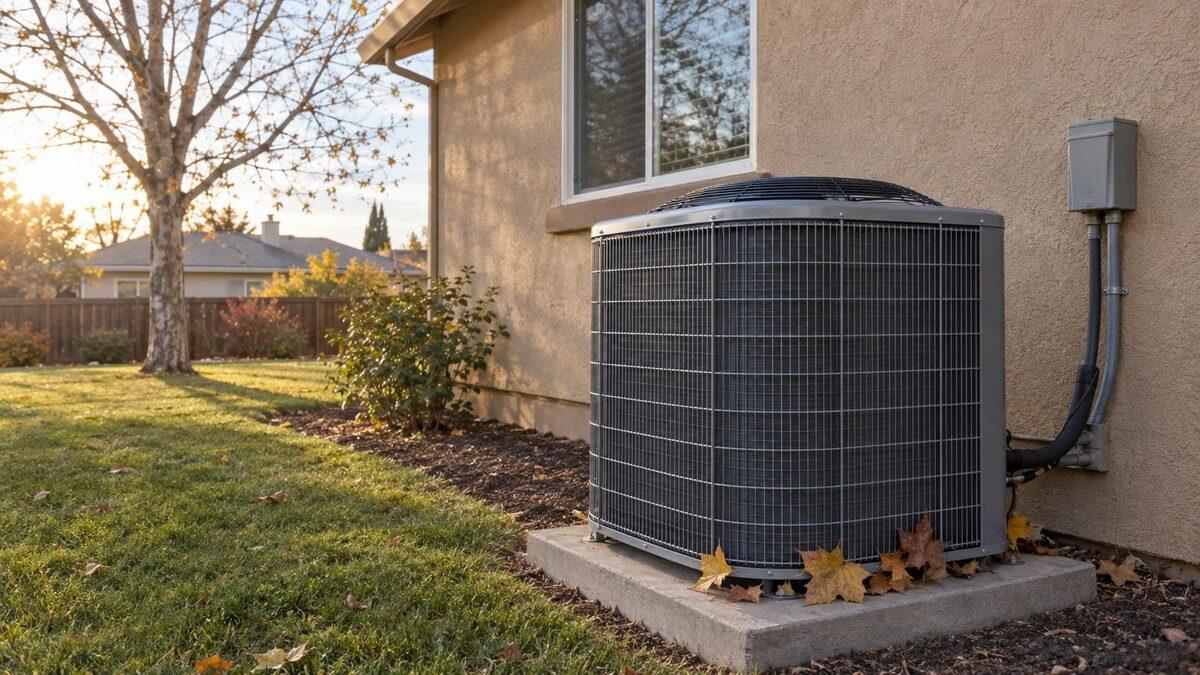
Dry leaves drift against the coil and hold there while the fan runs. Rain turns them into a flat, wet layer that seals off the bottom few inches of fins. Leaves that drop through the top grille collect on the base pan inside the cabinet, where they hold water and rot.
In summer, a blocked coil cannot dump heat, so the system runs longer and works harder. In winter, a heat pump runs the same process in reverse. The U.S. Department of Energy describes heat pumps as moving heat rather than making it, and in heating mode that heat comes out of the outdoor air through that same coil. Block the coil and there is less air to take heat from.
What a Heat Pump Does With a Coil Full of Leaves
A heat pump with a leaf-covered coil puts out less heat, runs longer and frosts up faster. On a damp 37°F morning, frost forms on the outdoor coil as part of normal operation, and the unit runs a defrost cycle to clear it. Less airflow means a colder coil, which means frost builds sooner and defrost runs more often. During defrost, many systems bring on backup electric heat to keep the house from blowing cool air.
Here is how it usually looks on a typical November call. A heat pump sits in a side yard under a big sycamore or a Chinese pistache, two of the most common street and yard trees around Sacramento. The homeowner notices the house takes longer to warm up and the thermostat shows auxiliary heat more often than last year. Outside, the bottom third of the coil is plastered with wet leaves, and the base pan holds a dark, soggy layer nobody can see from the yard. Clearing it takes ten minutes. The heat comes back the same afternoon.
That is why we tell heat pump owners to check the unit every week or two while the leaves are coming down, not once at the end of the season.
When to Clean the Outdoor AC Unit in Fall
The right time to clean leaves from an outdoor AC unit is after the main leaf drop, which usually lands in late November or early December around here. If you clear it in early October, the trees will cover it again within a week.
The timing depends on what the unit does in winter:
- Air conditioner only, gas furnace inside. Clear it once after the trees are mostly bare, and again before the first warm spell of spring. The unit is idle all winter, so a few leaves in between do no harm.
- Heat pump. Check it every week or two through the fall. Clear the sides whenever leaves are matted against the fins, and look through the top grille for leaves collecting inside.
Check again after a storm; wind and rain do most of the packing.
How to Clear Leaves Without Damaging the Fins
Clear leaves from the outside of the unit by hand or with a soft brush, and leave the inside to a technician. Turn the system off at the thermostat and at the outdoor disconnect before you start, and never reach into the cabinet or through the fan grille.
- Rake the ground around the unit first, so you are not pulling more leaves back against it.
- Lift dry leaves off the coil by hand, working from the top down.
- For leaves stuck in the fins, use a soft brush and stroke in the same direction as the fins, never across them. The aluminum bends easily, and bent fins block air just like leaves do.
- Skip the garden hose for this job. Water turns loose leaves into paste in the fins.
- If you see a layer of leaves on the base pan through the top grille, book a visit. Getting it out means removing the fan, and a heat pump should not run on a soggy pan until spring.
A coil wash is a different task. It uses a coil cleaner and controlled water pressure from the inside out, and it belongs in the yearly tune-up.
How Much Clearance the Unit Needs
An outdoor unit needs about two feet of open space around its sides and nothing over the top. That ring is where its air comes from, and in fall it fills with leaf piles, yard bins, firewood and overgrown shrubs.
Your unit's installation manual lists the exact clearances for that model, and those numbers win over any rule of thumb. If a hedge has grown into the ring, trim it back now, while the plant is dormant.
Covers come up every fall. Most air conditioners here do not need one, and a full wrap traps moisture against the coil. A breathable top-only cover can help an idle AC under a heavy-dropping tree. A heat pump must stay uncovered all winter because it is running. Our AC unit cover guide goes through that choice in detail.
When to Call PULSE HVAC
Call us if the coil stays dirty after you clear the leaves, if fins are badly bent, or if you can see leaves and debris piled on the base pan inside the cabinet. Call too if your heat pump still runs auxiliary heat more often than it used to once the coil is clear. A fall tune-up cleans the coil from the inside, clears the base pan and checks the defrost controls.
PULSE HVAC services outdoor AC units and heat pumps across the Sacramento area. Call (916) 850-2221 or book a visit online.
Sources
Need HVAC help in Sacramento?
Same-day service · Free estimates · Licensed & insured