
Reviewed by Paul R., CEO & Installer
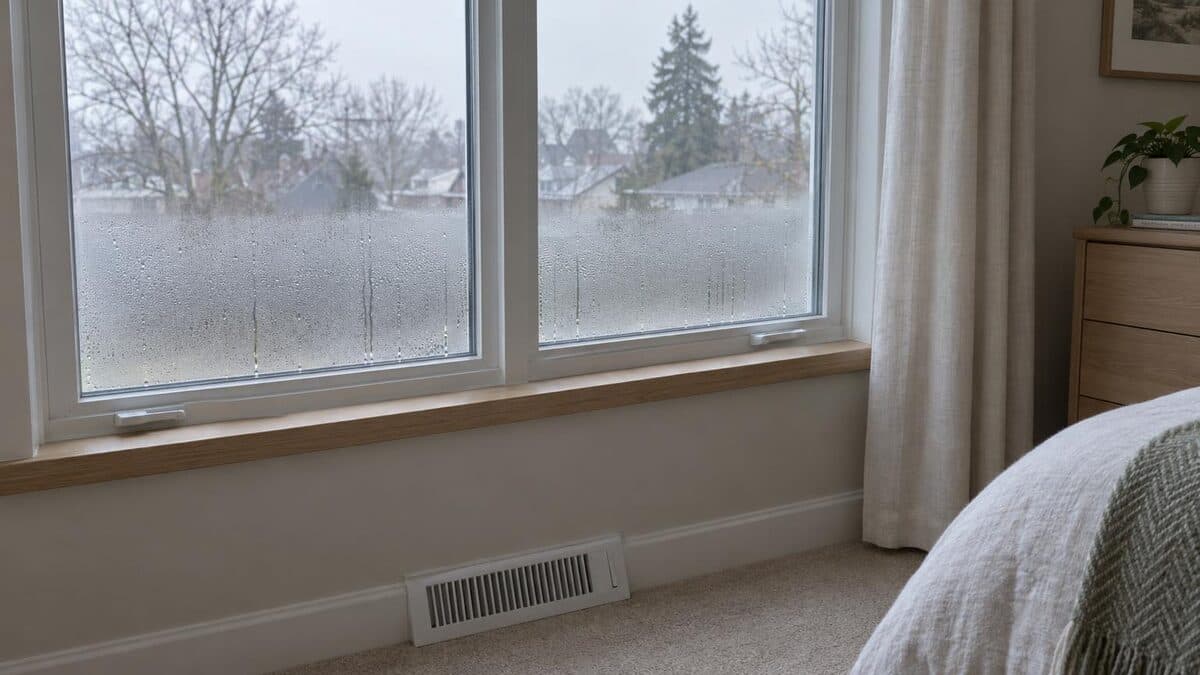
Window condensation in winter means the air inside your house is carrying more moisture than it can keep once it cools against the glass, so the extra water lands on the pane. A thin band of fog at the bottom of a bedroom window on a 38°F Sacramento morning is normal. Water that runs down to the sill every day is not. The EPA recommends keeping indoor humidity below 60 percent, ideally between 30 and 50 percent, and most houses with dripping windows sit above that range on cold nights.
The fix is rarely the window. It is the moisture inside the house, and where that moisture goes.
What Causes Window Condensation in Winter
Window condensation in winter forms when warm, damp indoor air touches glass that is colder than the air's dew point. The dew point is the temperature at which air has to give up some of its water.
Glass is the coldest surface in most rooms. On a clear November night a single pane drops close to the outdoor temperature, and even a double pane runs colder at its bottom edge, so the fog starts there.
The moisture comes from ordinary living:
- Showers and baths, especially with the door shut and no fan running
- Pots simmering on the stove without the range hood on
- Laundry hung to dry inside, or a dryer vent that has come loose in the attic or crawlspace
- Houseplants, aquariums and a household of people breathing all night with the doors closed
- A furnace humidifier or a portable humidifier set higher than the house needs
Sacramento adds its own twist. Winter nights turn cold and still, the valley fog settles in, and the windows stay shut until spring. The moisture a house makes each day has nowhere to go.
Is Condensation on Windows Normal in Winter?
Some window moisture in winter is normal, and you can tell normal from too much by how much water you see and how long it stays. A light fog along the bottom inch or two of the glass on the coldest mornings, gone within an hour or two of sunrise, is the house working as expected. Older aluminum-frame windows, common in 1970s tract homes around the Sacramento area, fog more than newer vinyl ones because the metal frame conducts cold right to the glass edge.
Too much looks different: fog covering most of the pane. Water pooling on the sill or running down the wall. Black spotting on the caulk or the bottom of the frame. Paint peeling on a wood sill. Any of those, every morning, means indoor humidity is too high for the windows you have.
Here is how it usually looks on a typical first-cold-week call. The back bedrooms fog worst. The master bath fan is loud, so nobody runs it. A portable humidifier went on in October and never got turned down. The family dries towels on a rack in the laundry room. Together they keep the house well above 50 percent overnight, and the windows show it first.
How to Stop Window Condensation on the Inside
To stop window condensation on the inside of the glass, you lower the moisture in the air and keep the glass a little warmer. Do both and most houses see clearer windows within a few cold mornings.
Start with the moisture, because that is where the real gains are:
- Run the bathroom fan during every shower and for about 20 minutes after. If it is too noisy to tolerate, replace it with a quieter one.
- Turn on the range hood whenever something is boiling or frying, and make sure it vents outside instead of just filtering and blowing the air back into the kitchen.
- Dry laundry in the dryer, and check that the dryer vent is connected all the way to the outside wall or roof.
- Turn a humidifier down, or off, until the windows stay mostly clear.
Then warm the glass:
- Open blinds and curtains during the day so the sun and room air reach the window.
- Keep supply vents near windows open and clear of couches, beds and toy bins.
A cheap digital humidity gauge from a hardware store takes the guessing out of this. Put it in a bedroom, check it first thing in the morning, and aim for that 30 to 50 percent range. A morning reading above 50 percent is your cue to act. Measure before you buy anything. Absorber strips and window films treat the symptom; a gauge reading tells you whether the cause is a habit or something bigger.
What Condensation Between Window Panes Means
Condensation between window panes means the seal on a double-pane window has failed. The gap between the two sheets of glass is supposed to be sealed and dry. Once that seal breaks, moist air leaks in, fogs the inside surfaces, and leaves a cloudy film you cannot wipe off from either side.
Lowering humidity in the house will not clear it. A window or glass company replaces the sealed glass unit; your HVAC system cannot fix it.
How Your HVAC System Helps With Window Moisture
Your heating system helps with window moisture by keeping air moving and the glass warmer, and a few settings matter more than people expect. Where a supply register sits under or near a window, its warm air washes across the cold glass. Closing that register, or parking a bed over it, makes the window colder and wetter. In the many slab homes here with ceiling registers, aim the louvers toward the window wall instead.
A clean filter keeps the blower moving the air it was designed to move. If your furnace has a whole-house humidifier attached, its setting belongs on your checklist. Turn it down a few points at a time until the windows stay clear on cold mornings. The EPA's indoor air quality guidance treats moisture and ventilation as two halves of the same job, and that is how we approach it too.
When to Call PULSE HVAC
Call us when the windows still drip every morning after you have run the fans, turned the humidifier down and kept the registers clear. The cause is then usually hidden: a bath fan that vents into the attic instead of outside, a dryer duct that pulled loose, or a furnace humidifier stuck on.
PULSE HVAC can check the system, the humidifier and the vents, and tell you what is adding the moisture. Call (916) 850-2221 or book a visit online.
Sources
Need HVAC help in Sacramento?
Same-day service · Free estimates · Licensed & insured