
Reviewed by Paul R., CEO & Installer
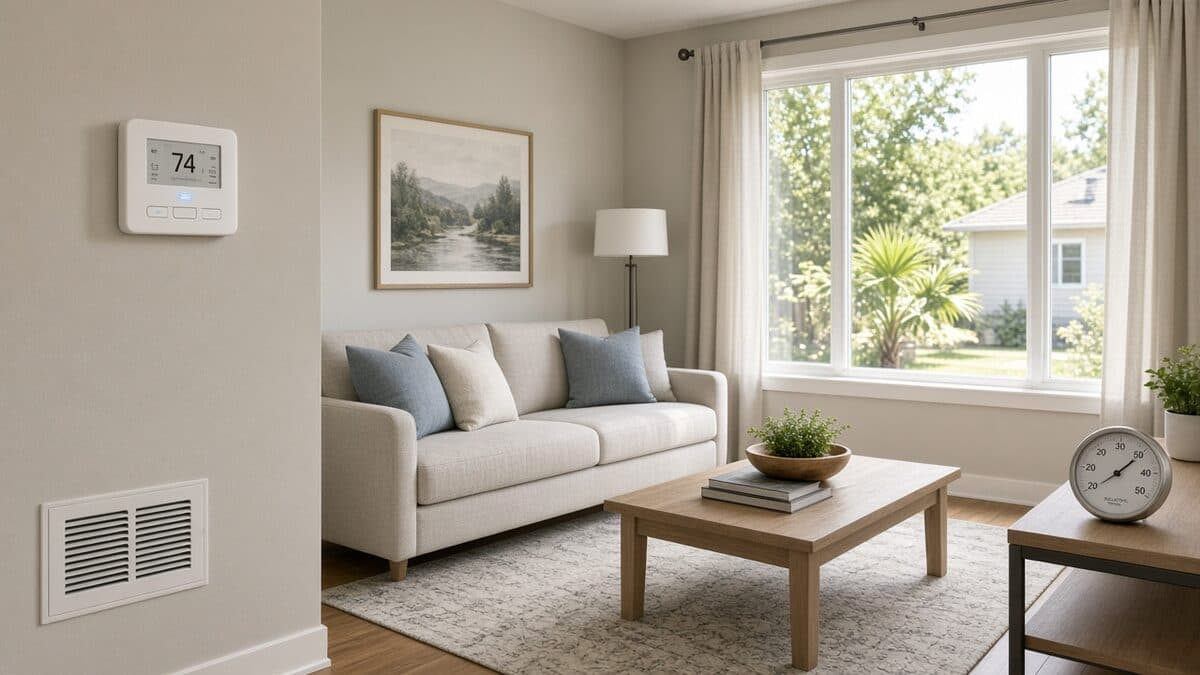
Homes in Carmichael still feel dry and scratchy at AQI 57 because that number tracks outdoor particles, not the moisture left in your rooms. AirNow defines moderate air quality as AQI 51–100, so 57 is still in that band. Long air-conditioning runtime on a 105°F Sacramento-area afternoon wrings water off the coil. Overnight lows near 56°F then make that already-dry air feel even crisper on skin and sinuses. Comfort indoors still hinges on relative humidity; U.S. EPA indoor air quality guidance points to a 30–50% RH comfort band, not on whether smoke smell is gone.
A technician walked a 1970s tract house last September with a 2009 split system that had run nearly nonstop through a 100°+ streak. The filter had not been changed since the last owner. Supply air at the far bedroom register was cool and bone-dry. Static snapped off the hallway runner. The outdoor reading was still only moderate. The coil had done exactly what cooling coils do here: remove heat and, with it, water.
Why Carmichael still feels scratchy when AirNow looks fine
AQI 57 describes outdoor particles, not the moisture in your rooms. Valley heat plus a large day-to-night swing leaves indoor air well below a healthy mid-range humidity even when the map looks acceptable. Cooling hours pile up. Each extra hour of compressor time is extra dehumidification. After sunset the Delta breeze can drop outdoor temperatures into the 50s; that cooler envelope does not put water back into the house. It just makes dry air feel sharper.
Skip treating a moderate AQI day as proof the house is comfortable. Particle counts and water vapor are different problems. Closing windows against dust or smoke also cuts the little outdoor moisture that would have mixed in. Standard AC in this climate is built to dehumidify, not to add moisture. Whole-home humidification is a separate add-on, not a thermostat toggle.
What HVAC can actually control on 105°F days and 56°F nights
Your system mainly controls temperature, fan runtime, and how much moisture the coil removes while cooling. It cannot set outdoor AQI or recreate a humid climate. Sensible settings—steady cooling, avoiding over-drying, and humidity-aware ventilation—are what we tune. A slightly higher setpoint shortens the deepest cool-down cycles so the coil spends less time wringing the last water out of already-dry air. Fan modes that keep circulating that same dry volume after the compressor stops add static without helping temperature.
Do not chase outdoor air quality with indoor fan speed. You will not scrub AQI 57 by running the blower longer. You will move drier air across more surfaces. ASHRAE comfort practice still starts with temperature and humidity together; a house that hits 72°F with very low moisture will feel scratchy no matter what the outdoor index says.
SMUD peak windows in late summer already argue against blasting the house ice-cold at 4 p.m. anyway. Hold a steadier setpoint through the afternoon, then let the system coast as night air falls. That is a bill choice and a moisture choice at the same time: extra afternoon cooling can feel better for a few hours but costs more on-peak and strips more humidity.
Attic duct leaks stretch runtime and wring the rooms you live in
Leaky ducts in a hot attic dump conditioned air where you cannot feel it, so the equipment runs longer and over-dries the rooms you do occupy. On typical 1970s tract construction here, flex and sheet metal sit in the attic, sometimes in a crawl, with returns in hallways and supplies at exterior walls. That attic is a furnace in September. Leaks there are not a humidity strategy; they are wasted runtime that keeps the coil on.
Duct cleaning does not add moisture. Sealing and insulating attic runs can cut the extra compressor hours that strip humidity. That is the real trade-off: pay for tightness once, or keep paying in dry skin every 105°F afternoon.
Thermostat and fan settings that cut static
Shorter deep-cool cycles, a slightly higher setpoint, and fan modes that do not over-circulate already-dry air can ease static. Set the fan to auto unless you have a specific ventilation reason to run it. Continuous fan on a dry coil is a static machine. Raise the cooling setpoint a degree or two during the hottest stretch so the system cycles instead of sitting on the compressor for hours—comfort versus SMUD peak cost in one choice. Change the filter on a real schedule; a packed filter from a prior owner forces longer runtime the same way attic leaks do.
Humidification, if you add it later, belongs on a whole-home unit tied to the supply, not a bowl on the register. Portable trays in one bedroom will not fix a house the coil has dried all afternoon.
When to Call PULSE HVAC
Call when rooms feel scratchy at moderate AQI, when static is new this heat wave, or when one wing of the house is cold-and-dry while another never quite cools—classic signs of runtime and duct problems, not outdoor smoke. PULSE HVAC will check coil operation, filter condition, and attic duct tightness, then set cooling and fan behavior so you stop over-drying the air you live in.
Book online at /book or call (916) 850-2221.
Sources
Need HVAC help in Sacramento?
Same-day service · Free estimates · Licensed & insured