
Reviewed by Paul R., CEO & Installer
When a furnace igniter is not glowing on the first cold morning of fall, the cause is one of two things: the igniter is not getting power, or the igniter has cracked. A burner that sat idle through a Sacramento summer of 100°F streaks is set up for both, even though the blower ran all season for the AC, and the first real heat call in late October is when they show up.
Before you open anything, make sure your carbon monoxide alarm works. The first fire of the season is when a problem in the burner or vent is most likely to surface. The EPA puts typical CO levels in homes without gas stoves at 0.5 to 5 parts per million. Your alarm will not tell you that you are in that range: home alarms sound only at much higher, sustained levels, and the test button checks the horn and battery, not the air. It is a backup warning, so press the test button to know it will sound, then start troubleshooting.
How the Startup Sequence Decides Whether the Igniter Glows
The igniter glows only after every earlier safety step passes. A modern gas furnace follows the same order every time:
- The thermostat calls for heat.
- The inducer fan starts and pulls air through the heat exchanger and out the vent.
- The pressure switch confirms that draft and closes.
- The control board sends power to the hot surface igniter, which glows bright orange.
- The gas valve opens, the burners light, and the flame sensor proves the flame.
- The main blower starts and warm air reaches the vents.
If the igniter stays dark, the failure is at step 4 or earlier. That is the useful part. You can watch the sequence through the small sight glass on the burner door and see exactly where it stops.
Safe Checks Before You Call Anyone
Start with the four things a homeowner can check without tools. We find one of them on a fair share of no-heat calls in the first cold week.
- Thermostat. Set it to heat, with the setpoint at least 3 degrees above the room temperature. Replace the batteries if the screen is dim.
- Service switch and breaker. There is a light-switch-style toggle on or near the furnace. A switch bumped during garage or attic work, or a tripped breaker, shuts down heat and AC alike.
- Door panel. The lower panel presses a safety switch. If the panel is crooked or loose, the board never starts the sequence.
- Filter. A clogged filter will not keep the igniter dark, but it will trip the high limit minutes after the burners light. Change a filter left in since spring before the first cold night.
Then read the blink code. Most furnaces have a small LED on the control board that you can see through a window in the lower panel. Count the flashes before you remove the door, since pulling the panel cuts power and clears the code. Match the count to the chart printed inside the door.
Why a Dark Igniter Usually Means No Power
A dark igniter is more often a power problem than a bad part. When the inducer runs but the igniter never glows, the board is waiting on the pressure switch. In high-efficiency furnaces, the usual reason is water. The condensate drain line dries out and gunks up over a hot, idle summer, or a trap fills with sludge. Water backs up into the inducer housing, the pressure switch never closes, and the igniter never sees voltage.
Vents cause the same thing. On the older homes around Carmichael we still find wasp nests and bird debris in rooftop flues after a quiet summer.
An open rollout or limit switch that has not reset, a failed inducer motor, or a control board with a burned relay also keep power from reaching the igniter. Those are meter jobs, not homeowner jobs.
When the Igniter Itself Has Failed
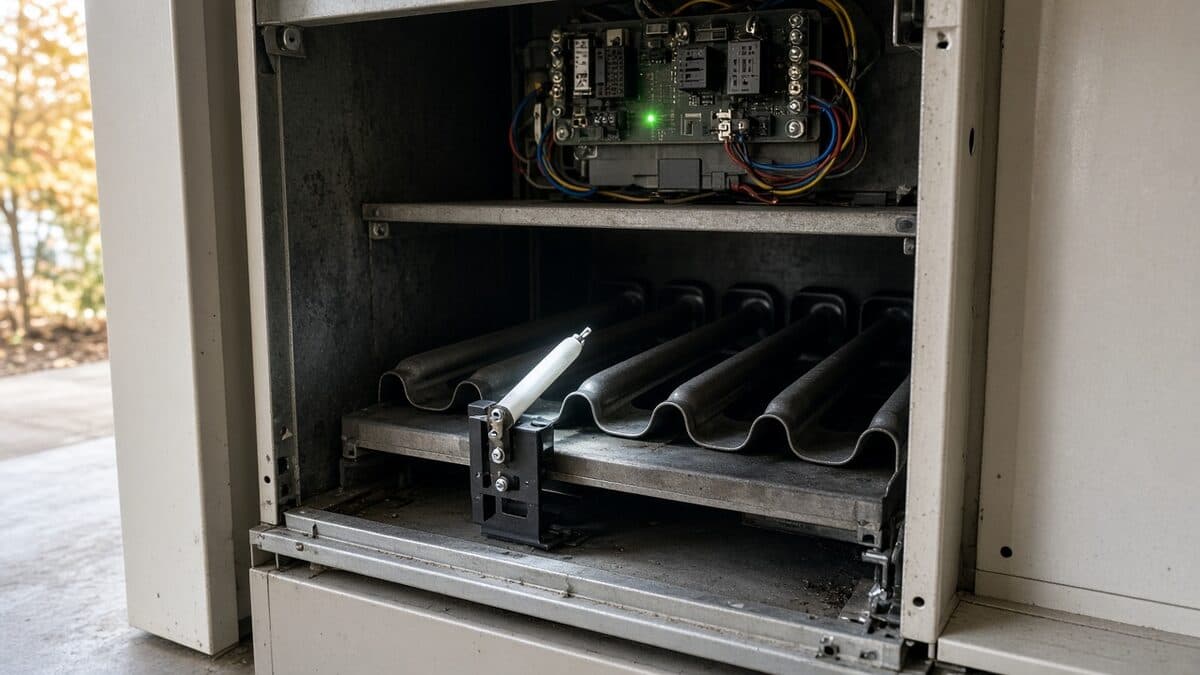
The igniter has failed when it gets power and still does not glow, or when you can see a crack or a white, chalky spot on the element. Older silicon carbide igniters are brittle. They take a thermal shock every time they heat up, and after enough seasons a hairline crack opens. The first cold start after months idle is when that crack finally breaks the circuit.
Newer furnaces often use silicon nitride igniters, which are tougher. They still fail, just less often.
Replace the igniter when a technician's resistance test reads outside the manufacturer's range, or when it glows weak and patchy instead of a bright, even orange. We replace a weak one during a fall tune-up rather than wait for it to strand a family on a 38°F January morning.
Why We Tell Homeowners Not to Swap the Igniter Themselves
Our position: do not replace the igniter yourself unless the old one is visibly cracked. The part is cheap and the swap is two screws and a plug, which is exactly why people try it. The trouble is that a dark igniter is often a symptom. If the real problem is a clogged drain or a failing board, a new igniter changes nothing, and a board sending the wrong voltage will burn out the new one too.
A typical first-cold-morning call goes like this. The homeowner has already bought and installed a new igniter because the old one would not glow, and the new one does not glow either. The inducer runs, shuts down and tries again, over and over. The real problem sits in the condensate trap: the AC drained through it all summer, and the standing water grew a plug of algae sludge. Clear the trap and flush the drain, and the furnace lights on the first try. Put a meter on the old igniter and it often tests within spec. The igniter was never the problem.
If you do replace it, cut power at the service switch and close the gas valve first. Never touch the element with bare fingers. Skin oil creates a hot spot that cracks it early.
If your furnace is old enough that igniters, boards and inducers are all failing, look at the numbers before you keep paying for parts. ENERGY STAR lists the efficiency requirements certified furnaces must meet, which is a fair benchmark when you weigh one more repair against replacement.
When to Call PULSE HVAC
Call us if the safe checks do not bring the igniter to life, if the blink code points to a pressure switch, limit or flame fault, or if the igniter glows but the burners do not stay lit. If your CO alarm sounds or you smell gas, do not troubleshoot. Get everyone outside first, then call 911 or PG&E from outside, and call us once the home is cleared.
PULSE HVAC handles no-heat calls across the Sacramento area. Call (916) 850-2221 or book online, and we will trace the startup sequence, find the step that failed, and fix that instead of guessing at parts.
Sources
Need HVAC help in Sacramento?
Same-day service · Free estimates · Licensed & insured