
Reviewed by Paul R., CEO & Installer
An ERV and an HRV both solve the same problem: a house sealed tightly enough to save energy no longer trades enough air with the outdoors on its own. Each one pulls stale air out, brings the same amount of fresh air in, and passes heat between the two streams so most of it stays inside. The EPA names three basic ways to improve indoor air: control the sources, improve ventilation, and clean the air. An ERV or HRV handles the ventilation part without throwing away your heating. Tight houses are a choice worth making: ENERGY STAR estimates that homeowners save an average of 15 percent on heating and cooling costs by sealing air leaks and adding insulation. A balanced ventilator lets you keep that savings and still get fresh air.
The difference between them is moisture, and in Sacramento that difference usually points to an ERV.
How an ERV or HRV Works
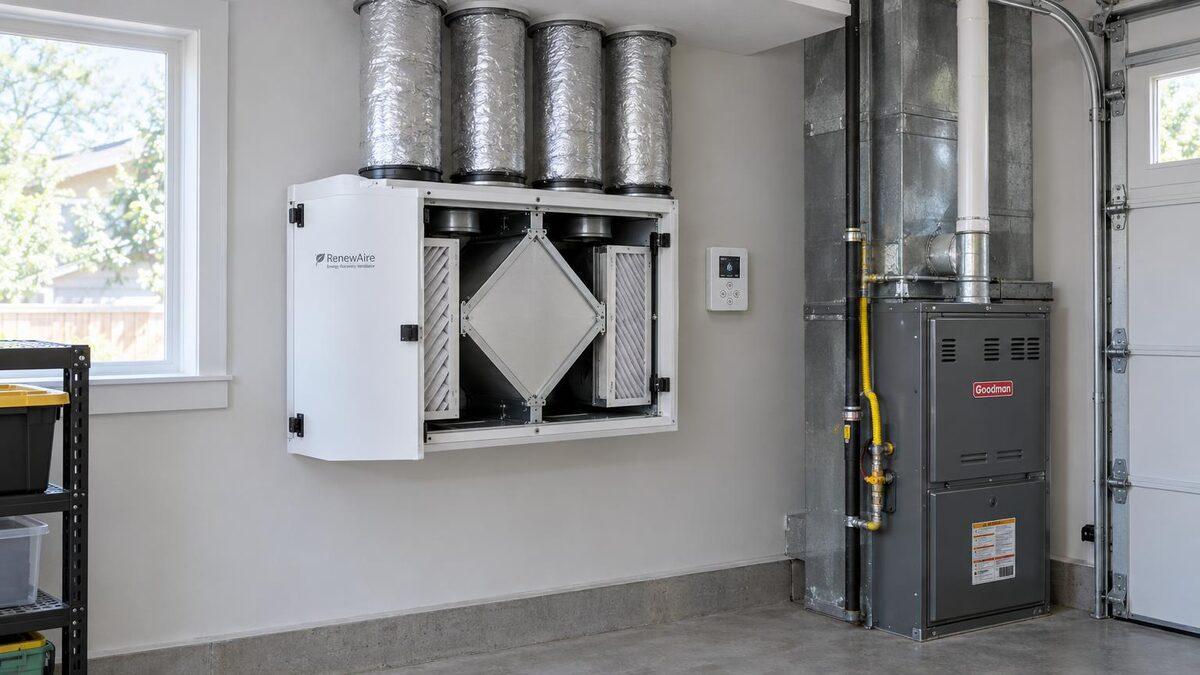
A balanced ventilator works by running two airstreams past each other through a core, without letting them mix. A small fan pulls stale air from kitchens, baths or the return duct and sends it outside. A second fan pulls fresh outdoor air in through its own duct.
The two streams cross inside a heat exchange core made of thin plates or channels. In winter, the warm outgoing air heats the cold incoming air as they pass. In summer it works in reverse, and the cooler indoor air takes some of the heat off the hot air coming in. You get fresh air without opening a window and without paying to heat or cool all of it from scratch.
"Balanced" is the key word. A bath fan only pushes air out, and the house pulls replacement air in through whatever cracks it can find. A balanced ventilator brings the fresh air in on purpose, through a filter, at a known rate.
ERV vs HRV: What Is Actually Different
The difference between an ERV and an HRV is what the core lets through. An HRV, or heat recovery ventilator, moves only heat between the airstreams. An ERV, or energy recovery ventilator, moves heat and some moisture.
That matters in both seasons:
- Winter. An HRV sends indoor moisture outside with the stale air. An ERV holds on to some of it, so the house does not dry out as much.
- Summer. An ERV keeps out some of the moisture in the incoming air. An HRV lets it all through.
Neither one is a dehumidifier or a humidifier. They just decide how much of the moisture already in each airstream stays where it is.
Which One Fits a Sacramento Home
An ERV is usually the better fit in Sacramento. Our winters are mild, but outdoor air warmed up by the furnace loses most of its relative humidity, so a heated house tends to run dry inside. An ERV keeps some of that moisture inside instead of exhausting it with every air change. In summer, both types temper hot incoming air, and dry valley air is not the moisture problem it is on the Gulf Coast, so winter is where the choice is made here.
There is one exception worth naming. A house that already runs damp in winter, with heavy window condensation on cold mornings, can do well with an HRV, because sending some moisture out is exactly what it needs. That is less common here, but we see it in tightly sealed homes with a lot of people, showers and cooking.
Does Your House Need One?
A house needs balanced ventilation when it is sealed tightly enough that ordinary leaks no longer bring in enough fresh air. Newer California homes are built with mechanical ventilation under the state's Building Energy Efficiency Standards, so the question comes up most often in older homes after a big efficiency project.
Here is how it usually looks. A 1970s ranch gets new dual-pane windows, attic air sealing and fresh insulation. The heating bills drop, but by the first winter the house feels different: cooking smells hang around into the next day, bedrooms feel stuffy by morning, and the air feels stale by evening. Nothing is broken. The house just stopped breathing through its old leaks, and nothing replaced them.
If that sounds familiar, a ventilator is worth a look. If your house still has plenty of drafts, seal and insulate first. Adding mechanical ventilation to a leaky house mostly adds a fan.
How It Connects to Your HVAC System
An ERV or HRV can connect to your existing HVAC system in two common ways. The simplest ties the ventilator's fresh-air supply into the return side of the furnace or air handler, so the ducts you already have spread the air through the house. That only works while the furnace blower runs, so this setup pairs the ventilator with a low or intermittent fan setting. It works well in a typical Sacramento ranch where the furnace sits in the garage or a hall closet.
The other setup gives the ventilator its own small ducts, exhausting from baths and the kitchen area and supplying fresh air to bedrooms. It costs more to install but runs independently of the main blower. A technician checks your duct layout, airflow and controls before recommending either.
Keeping It Running
Keeping an ERV or HRV working well takes a few minutes every few months. Check and clean or replace its filters, more often during wildfire season. Keep the outdoor intake hood clear of leaves and debris. The heat exchange core needs a periodic cleaning, following the manufacturer's directions for that core type, since some cores tolerate rinsing and some do not. A yearly HVAC tune-up is a good time to have both units checked together.
When to Call PULSE HVAC
Call us when your house feels stuffy or holds odors after an air-sealing or window project, or when you want fresh air without opening windows on cold days. We can look at your duct layout, recommend an ERV or HRV, and tie it into your system. Our indoor air quality service covers ventilation along with filtration.
Call PULSE HVAC at (916) 850-2221 or book a visit online.
Sources
Need HVAC help in Sacramento?
Same-day service · Free estimates · Licensed & insured