
Reviewed by Paul R., CEO & Installer
An HVAC repair visit follows a predictable order: the technician listens to what the system is doing, rules out the simple causes, then tests the equipment until the fault is clear. You get the diagnosis and a written price before any repair starts. Knowing that order helps you prepare, and it helps you tell a careful technician from a rushed one.
The simple causes matter more than people expect. ENERGY STAR advises checking your air filter every month and changing it at least every three months, because a dirty filter slows airflow and makes the system work harder. A filter packed solid can make a furnace shut off early or an air conditioner freeze up.
What the Technician Checks First
The technician checks the basics first: the thermostat, the power and the filter. That sounds obvious, but on the first cold Sacramento mornings of the season, simple causes like these are a common find.
- Thermostat. Mode, setpoint, schedule and batteries. A thermostat left in cool mode on the first cold morning, or one with dead batteries, looks exactly like a broken furnace.
- Power. The breaker in the panel and the service switch at the furnace or air handler. The furnace switch often looks like a light switch in a hallway or garage, and it gets flipped off by accident.
- Filter. Pulled and looked at. A clogged filter starves the system of air, and many furnaces respond by shutting down on a safety limit.
A good technician checks all three before opening the equipment, even when you say you already did. It takes minutes and saves you paying for a part you did not need.
How the Diagnosis Works
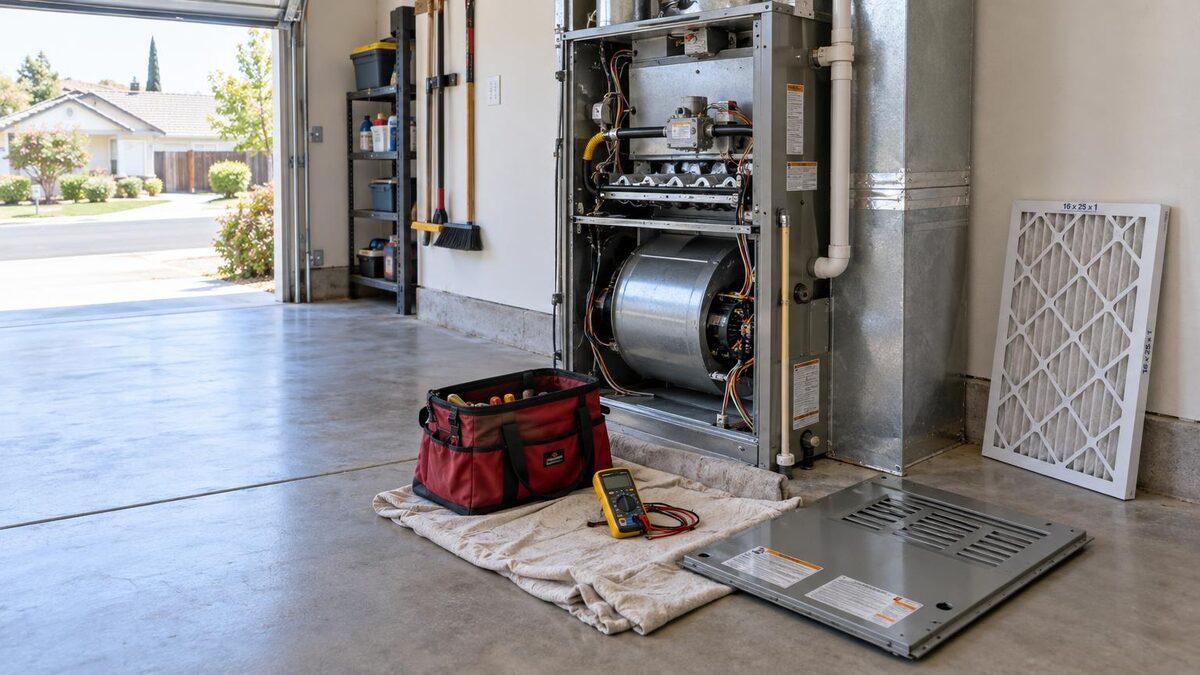
Once the basics check out, the technician works through the system in the order it operates. On a gas furnace that means following the startup sequence: the inducer fan, the igniter, the flame sensor and the blower, watching for the step where it stops. On an air conditioner or heat pump it means the outdoor unit's capacitor, contactor and fan, the refrigerant pressures, and the indoor coil and drain.
Meters do most of the work. A capacitor that looks fine can test well below its rating. A pressure switch can fail to close only when the furnace is warm. Testing, rather than guessing, is what separates a repair that lasts from one that brings the technician back next week.
Here is a typical first-cold-week call. The furnace in a 1980s ranch lights, shuts its burners off a few seconds later, then tries again. The homeowner replaced the thermostat batteries already. The technician pulls a filter that has not been changed since spring, then watches the startup and finds a dirty flame sensor that is not proving the flame. Cleaning the sensor and a new filter fix it in one visit. The filter would have kept causing trouble if only the sensor had been cleaned.
What to Have Ready Before the Visit
The visit goes faster when you have a few details ready. Write these down before the technician arrives:
- What the system is doing. Running but blowing cold air, not starting at all, short cycling, leaking water or making a new noise.
- When it started. After a storm, a power outage, a filter change or a thermostat swap are all useful clues.
- Any error codes. Many furnaces flash a code on a small light behind the lower panel door, and smart thermostats often show one on screen.
- Model numbers. A photo of the label on the furnace or air handler and on the outdoor unit helps the technician check parts and warranty status.
- The last filter change. A rough date is fine.
Clear a path to the equipment, whether it sits in the garage, a hall closet or the attic, and to the outdoor unit in the side yard. Put pets in another room while the doors are open.
How the Quote Should Work
You should get the diagnosis and a written price before any repair starts. That is how PULSE HVAC works: the diagnostic is free with any approved repair, and you get a firm written quote before work begins. If the fix is simple, most visits finish in about one to two hours, and many common parts ride on the truck.
Ask the technician to show you the failed part or the reading that points to it. A capacitor that tests low or a sensor coated in residue is easy to see. When the system is older and the repair is large, ask for the repair price and a rough sense of what replacement would involve, so you can make that call with both numbers in front of you.
Check the Company Before You Book
Checking an HVAC company takes about two minutes on the Contractors State License Board website. Search by name or license number and confirm the license is active. Heating and cooling work falls under the C-20 classification, so look for that on the listing, along with any legal or disciplinary actions.
When to Call PULSE HVAC
Call us when the thermostat, breaker and filter all check out and the system still is not heating or cooling, when it keeps shutting off and restarting, or when it makes a new noise or leaks water. We offer same-day repair across the Sacramento area in most cases.
See our HVAC repair service for what we fix, then call PULSE HVAC at (916) 850-2221 or book a repair online.
Sources
Need HVAC help in Sacramento?
Same-day service · Free estimates · Licensed & insured