
Reviewed by Paul R., CEO & Installer
A Fair Oaks furnace short-cycles on the first cool September night because a summer of idle dust cuts airflow, the heat exchanger overheats, and the high-limit switch opens. The burners shut off. The blower often keeps running. A few minutes later the limit resets, the burners light, and the trip repeats until airflow is restored. That is the fault furnace repair in the Sacramento area should confirm before anyone talks about a new furnace.
ENERGY STAR puts a typical furnace life at 15 to 20 years. A 2009 unit in a 1970s Fair Oaks ranch is already in that window. Short-cycling on its own is not a replacement order. There is no single furnace replacement price here, because size, ducts, and efficiency change the quote. Get a written diagnosis first. Replace the furnace when the heat exchanger is unsafe, the unit is near the end of that life, or the same limit trip returns after airflow is fixed.
Why does the furnace short-cycle after sitting idle all summer?
Dust on the filter, closed registers, or a weak blower cuts airflow, so the heat exchanger overheats and the high-limit switch opens.
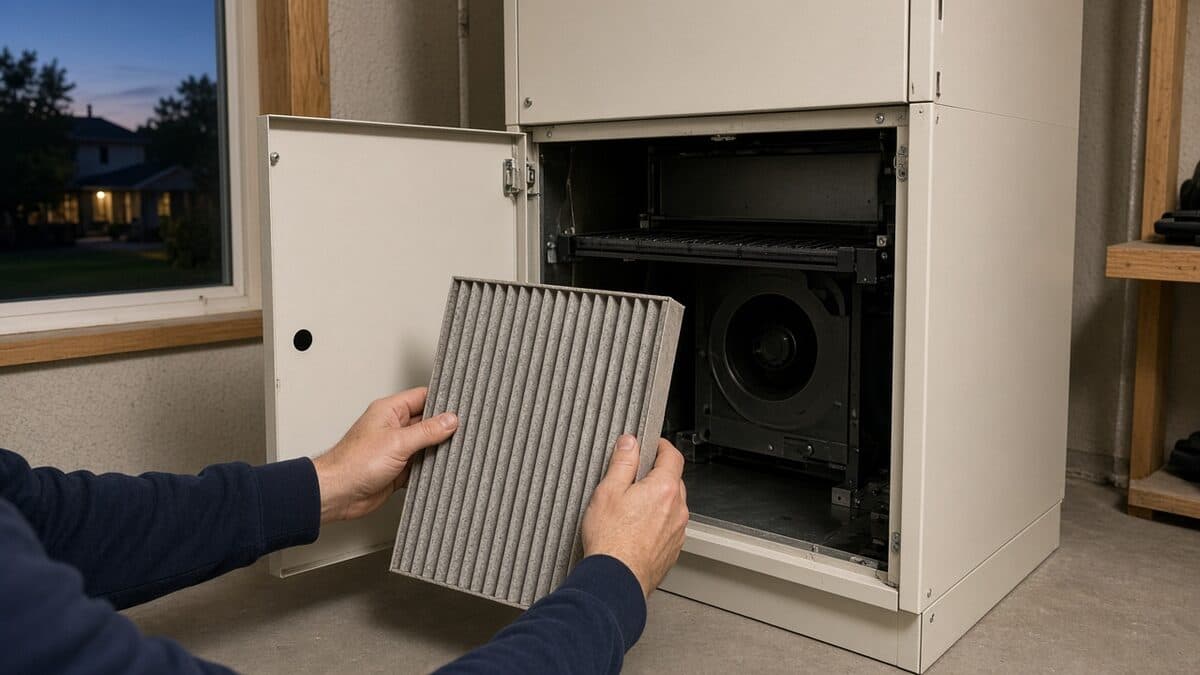
From May into September the furnace barely runs. Afternoons still bake after a run of 100° days. Nights stay warm until the Delta breeze finally drops the low into the 50s. That first call for heat is the test. The blower has not moved real volume since spring. A filter that looked fine in April is gray and bowed. Bedroom registers stay shut because someone closed them in July to push cool air toward the living room. The heat has nowhere to go.
On a call last fall the furnace was a 2009 Carrier in a 1970s Fair Oaks ranch. The 1-inch filter still had the previous owner's note on the frame and had not been changed since spring. Three registers down the hall were closed. The blower wheel was furred with lint. Burners lit, ran a few minutes, and died. The blower stayed on. Then it tried again, every few minutes, until the filter came out and the registers opened. The limit was doing its job. The furnace was not failing that night.
Skip the parts counter until you know which shutdown you have. An ignitor bought because a forum said so wastes the evening if the flame already proved and the limit cut it.
When should you replace the filter before the first cool night?
Replace the furnace filter before the first cool night if it looks gray, bowed, or has not been changed since spring.
Check it in September, before lows reach the low 50s. Match the size printed on the old filter. A loaded filter is the most common reason a furnace overheats and short-cycles on first fire.
Kill power at the furnace switch, pull the filter, and hold it to a window. If light does not come through, it is done. On an older 1-inch slot, a thick high-MERV filter can choke a blower that was set up for a basic pleat. Run the size and type the furnace was built for on this first heating night. Cleaner-air upgrades can wait until a technician measures static pressure. EPA indoor-air guidance is to check filters regularly and replace them as they load, which in this valley means September, not the week after the first cold night.
Open every supply register. A closed register in an unused bedroom does not save money on 1970s ducts. It raises static pressure and helps the limit trip. Check the return too. A sofa, a rug, or a stack of summer bins against the grille does the same job as a dirty filter.
New filter, open registers, and the blower still sounds weak or the wheel is caked: stop. That is a repair visit, not another filter.
How do you tell a limit trip from a flame sensor or ignitor fault?
Heat that runs for several minutes and then stops points to airflow or the limit switch, not a flame sensor.
Watch one cycle. Thermostat calls. Inducer starts. Burners light. After the blower delay, warm air comes out. If that heat holds for several minutes and then the burners quit while the blower keeps going, treat it as a limit trip. Replace or clean the flame sensor when burners light, shut off within a few seconds, and the furnace retries. A dirty sensor after a long idle summer can look like a safety shutdown. The clock is different. Seconds, not minutes.
Call for repair rather than replacing an ignitor if the furnace lights and then short-cycles. A failed ignitor means no flame at all. Clicks and no ignition on that first cool night point to an ignitor or a control fault. Have it diagnosed. Do not guess the part.
A hot smell for a minute or two is dust cooking off the heat exchanger. A smell that stays or a limit that keeps opening is not leftover dust. Shut the furnace off. If a carbon monoxide alarm is sounding, leave the house immediately and call 911. Do not stay inside to arrange service. Contact HVAC only after the property is cleared. The U.S. Environmental Protection Agency flags malfunctioning fuel-burning heaters as a carbon monoxide source in homes, so a repeating trip with people in the house is not a wait-until-Monday problem.
Each trip cuts the burners while the blower tries to dump heat. Letting that repeat all night stresses the exchanger and leaves the house cold. Fix airflow the same night. Do not keep resetting it to see if it settles.
When to Call PULSE HVAC
Call when a new filter and open registers do not stop the short-cycle, when you hear clicks and get no flame, or when the same limit trip returns after airflow is fixed.
Call the same day if the heat exchanger has been flagged unsafe, or if the furnace is near the end of a 15-to-20-year life and the shutdown is not a simple filter problem. If a carbon monoxide alarm sounds, evacuate and call 911 first. Call PULSE HVAC only after the property is cleared. Short-cycling alone does not mean you must replace it. A written diagnosis comes first.
PULSE HVAC handles that check for Fair Oaks and the Sacramento area. Call (916) 850-2221 or book online at /book.
Sources
Need HVAC help in Sacramento?
Same-day service · Free estimates · Licensed & insured