
Reviewed by Paul R., CEO & Installer
When Sacramento AQI sits in the 70s and the AC never shuts off, change an HVAC filter in summer every two to four weeks on a 1-inch pad instead of waiting 90 days. Closed windows plus nonstop cooling load the media faster than a spring week with the Delta breeze. ENERGY STAR tells homeowners to check filters monthly and replace them on a one-to-three-month rhythm; heat, smoke, and all-day runtime push you to the short end of that range.
AQI in the 70s is not a health-emergency number on AirNow, but it is extra fine particles circulating through a sealed house. That dust cakes on the filter sooner than in clean-air weeks. Plan extra changes during smoke, then return to a normal interval when AirNow shows healthier days and the pad stays light-colored.
How often to change the filter when the AC never shuts off
Check it every two to four weeks instead of waiting 90 days. Constant cooling plus closed windows loads media faster, especially 1-inch filters. If the pad looks gray, smells smoky, or airflow at vents feels weak, replace it the same day. A 4-inch filter can often go longer, but still inspect monthly during heat.
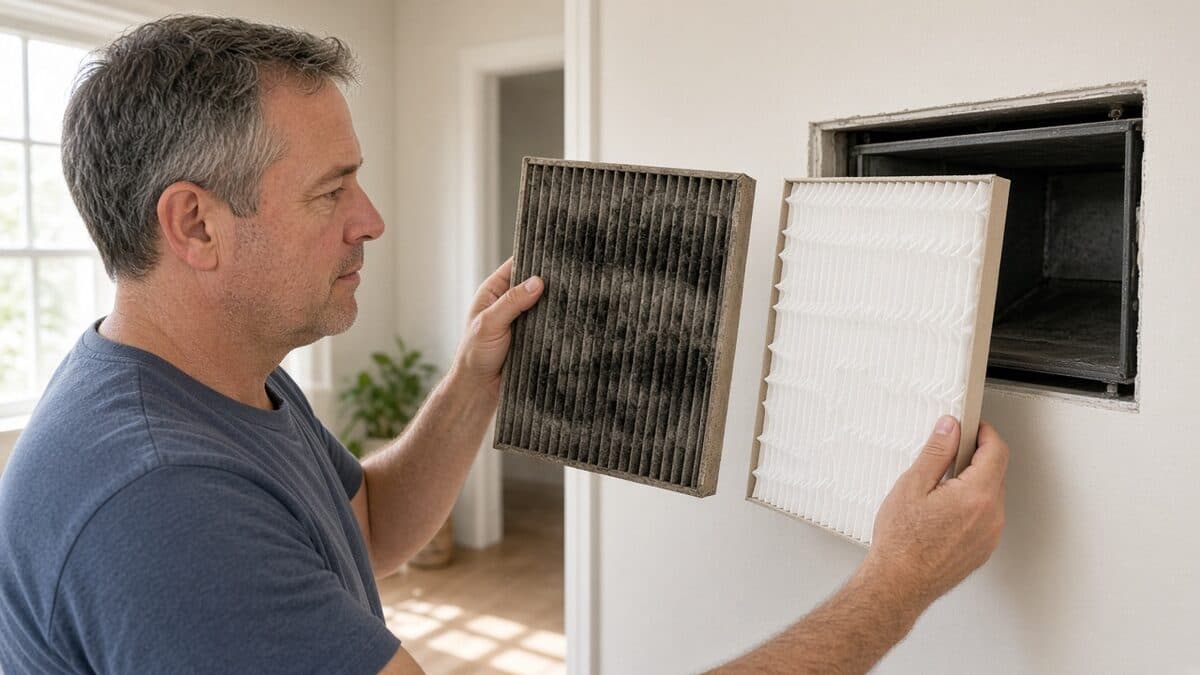
Mark the install date on the cardboard frame with a Sharpie. That habit beats a calendar reminder you ignore after a 100-degree streak. Pull the filter in bright light, hold it up, and look through the pleats. Gray, brown, or sooty media means replace it now.
Weaker supply-vent airflow, a dusty smell, ice on the indoor coil, or longer runtimes with less cooling are the same message. Constant AC plus smoke is enough reason to check weekly even if the last change was recent.
AQI in the 70s and why the pad loads faster
Yes. AQI in the 70s means more fine particles indoors when you keep windows shut and the AC circulating. The U.S. EPA indoor air quality guidance is blunt: outdoor particles become indoor particles once the blower is moving air through a leaky return. Valley inversion days trap that mix overnight. You do not need a wildfire plume on the horizon for a 1-inch filter in a Sacramento ranch to gray out in three weeks.
Treat smoke season as a monthly—or sooner—job at home. 1-inch filters in Sacramento and Roseville homes often need replacement every two to four weeks when the system runs all day. Replace at the first sign of gray loading, not only on a calendar.
Skip the jump to a much higher MERV just because the air looks hazy. Extra restriction on a blower that already runs all afternoon raises static pressure and can ice the coil. Stay with the MERV your air handler was set up for unless a tech has measured pressure drop.
1-inch versus 4-inch media in summer
Usually yes, a 4-inch HVAC filter should be on a different schedule than a standard pad. A 4-inch HVAC filter holds more dust, so it can last longer than a 1-inch pad if static pressure stays in range. Still inspect it monthly in summer. If the media is packed or the blower sounds strained, change it early. Never jump to a much higher MERV without confirming the furnace or air handler can handle the extra restriction.
A 1-inch filter is a thin sponge. In a 1970s tract house with a 2009 air handler, that sponge is often the only thing standing between valley dust and the coil. Last month a tech opened a return in one of those houses and found a 1-inch pad that had not been touched since the previous owner. The media was brown, the blower wheel was furred, and the homeowner thought the thermostat was “just set too high.” The filter was the first fix. Cooling recovered after a same-day change and a coil rinse.
Buy the size printed on the old frame. Do not force a thicker media into a 1-inch slot with a cardboard hack. If you want 4-inch capacity, have the return rack converted so the filter actually sits square.
Clogging signs while the system runs all day
Look at the filter in bright light: gray, brown, or sooty media means replace it now. Other clues are weaker supply-vent airflow, a dusty smell, ice on the indoor coil, or longer runtimes with less cooling. During SMUD peak windows the compressor already works hard; a packed filter makes that work longer for less temperature drop.
Walk the house once a week in September. Feel the nearest supply grille with the back of your hand. If the stream is thin compared with last month, pull the filter that evening. Do not wait for ice. Ice means the restriction already starved the coil.
Skip annual duct cleaning as the answer to a dirty filter. Unless you have had rodents or a remodel, it rarely changes airflow enough to notice. Change the pad. That is the high-leverage job.
Stock two spare filters of the correct size before a heat wave. A closed big-box run on a 105-degree afternoon is how people keep running a clogged pad “until Saturday.”
When to Call PULSE HVAC
Call when the filter is new and airflow is still weak, the blower sounds strained, the indoor coil ices, or you want a 4-inch rack and a MERV check before you buy denser media. PULSE HVAC serves the Sacramento area with the same filter-first diagnosis: we pull the pad, look at the coil, and tell you if restriction—not a dying compressor—is why the house will not cool.
Book online at /book or call (916) 850-2221. Bring the old filter to the appointment if you already changed it; the loading pattern tells us more than a thermostat screenshot.
Sources
Need HVAC help in Sacramento?
Same-day service · Free estimates · Licensed & insured