
Reviewed by Paul R., CEO & Installer
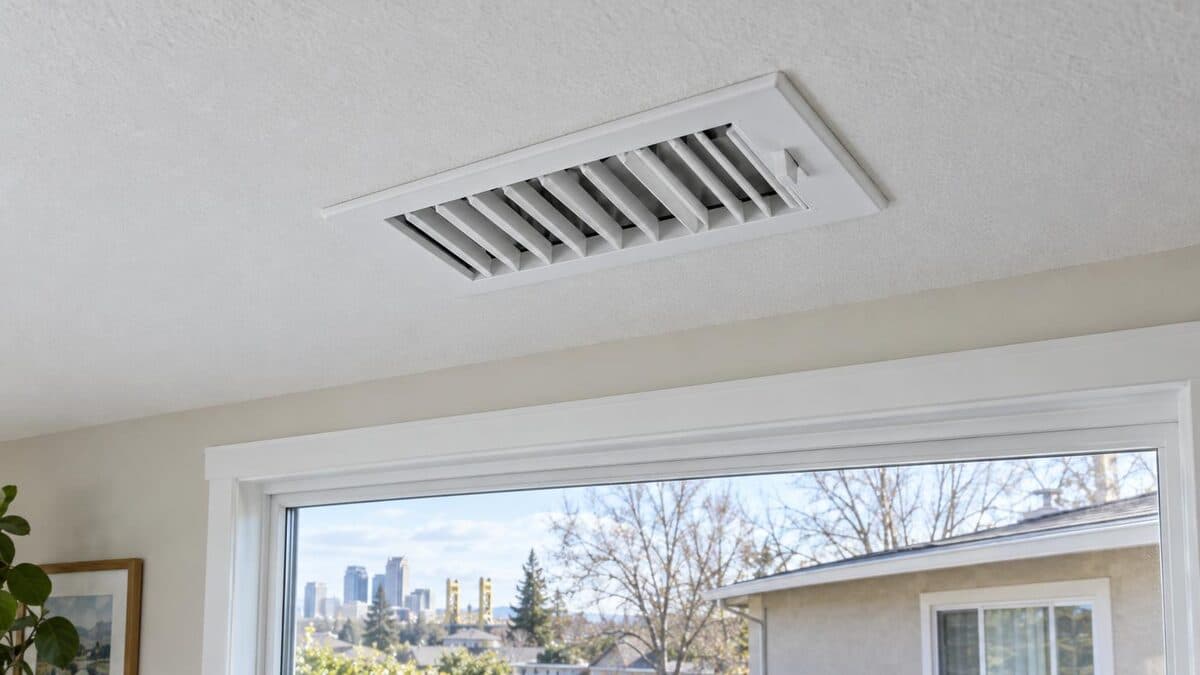
HVAC vent placement changes how evenly a room heats, and in a lot of Sacramento homes the vents are in the ceiling. That is because the ducts run through the attic, and ceiling registers are the shortest path from the duct to the room. They are excellent for cooling. In winter, though, warm air coming out of the ceiling tends to stay near the ceiling. The fix is usually not moving the vents but aiming them, mixing the air and keeping the return path open.
Getting the heat to where you sit matters for the bill as well as comfort. ENERGY STAR notes that as much as half of the energy used in a home goes to heating and cooling. Heat that pools at the ceiling is heat you paid for but cannot feel, so people turn the thermostat up to compensate.
Why Ceiling Vents Work Differently in Winter
Ceiling vents work differently in winter because warm air is lighter than the room air around it. When a ceiling register blows warm air across the ceiling, much of it spreads out up there instead of falling to seat level. The room can read 68°F at the thermostat while the floor and the area near the windows feel noticeably cooler.
Cool air behaves the opposite way, which is why ceiling vents shine in summer. Cold air from the ceiling sinks naturally and mixes through the room on its own.
Floor vents along outside walls do the reverse. Warm air rises from the floor right where the cold comes off the windows, which is why homes in cold climates put supply vents there. In a slab-floor Sacramento ranch or a tract home with attic ducts, that layout usually is not an option, so the job is making ceiling vents heat well.
Aim the Louvers for the Season
Adjustable ceiling registers can be aimed, and the right direction changes with the season.
Winter. Point the louvers toward the outside walls and windows, and angle them down as far as the register allows. That pushes warm air across the coldest surfaces and toward the floor instead of along the ceiling.
Summer. Point them back across the ceiling. Cool air spreads out, then sinks into the room on its own.
Many homeowners set the louvers once when they move in and never touch them again. A two-minute change at each register in October is one of the cheapest comfort fixes there is.
If your registers are the fixed, stamped type that cannot be aimed, replacing them with adjustable registers of the same size is a simple swap.
Mix the Air
Running the system fan mixes the warm layer at the ceiling back down into the room. Many thermostats have a circulate setting that runs the blower part of each hour even between heating cycles. It evens out the floors and the corners without running the fan nonstop.
A ceiling fan helps the same way. Run it clockwise on low in winter so it pushes warm ceiling air out and down the walls without a draft. Our post on ceiling fan direction for winter covers the details.
Supply and Return Placement Work Together
Supply vents push air in, and return vents pull it back to the system. Where the return sits matters as much as where the supply sits.
A room needs a path for air to get back to the return. A bedroom with a ceiling supply, no return of its own and a closed door traps air, so the supply cannot push as much heat in. Leaving the door cracked, or adding a jumper duct or transfer grille, lets the supply do its job.
Keep both clear. A dresser in front of a low return or a curtain hanging over a supply cuts airflow more than most people expect.
When Moving Vents Makes Sense
Moving vents is a duct project, not a quick fix. In most slab-floor homes there is no space under the floor for ducts, so a floor register usually means running a duct down an interior wall. It also means patching drywall and rebalancing the system afterward.
Our position: fix the louvers, the fan setting and the return path first. If one room is still several degrees colder than the rest of the house, the next suspect is the duct feeding it, not the vent location. A crushed or leaking attic run delivers less heat no matter where the register sits. The U.S. Department of Energy rates central systems on how efficiently they deliver heating and cooling, and the ducts are part of how well that heat actually reaches each room.
A Typical Ceiling-Vent Room
Here is how it usually looks: a 1990s Elk Grove single-story with ceiling registers in every room. The family room feels cool at the couch all winter, though the thermostat in the hallway reads 68°F. The family room register has its louvers pointed straight across the ceiling toward an inside wall, set that way for summer years ago. Aiming them down toward the windows and setting the fan to circulate usually takes care of most of it.
When to Call PULSE HVAC
Call us if a room stays cold after you adjust the louvers and run the fan, if your registers cannot be aimed, or if you are wondering whether a duct to one room is crushed or leaking. We will measure the airflow at each register and tell you what will actually change the room.
PULSE HVAC services heating systems and ductwork across the Sacramento area. Call (916) 850-2221 or book online to schedule a visit.
Sources
Need HVAC help in Sacramento?
Same-day service · Free estimates · Licensed & insured