
Reviewed by Paul R., CEO & Installer
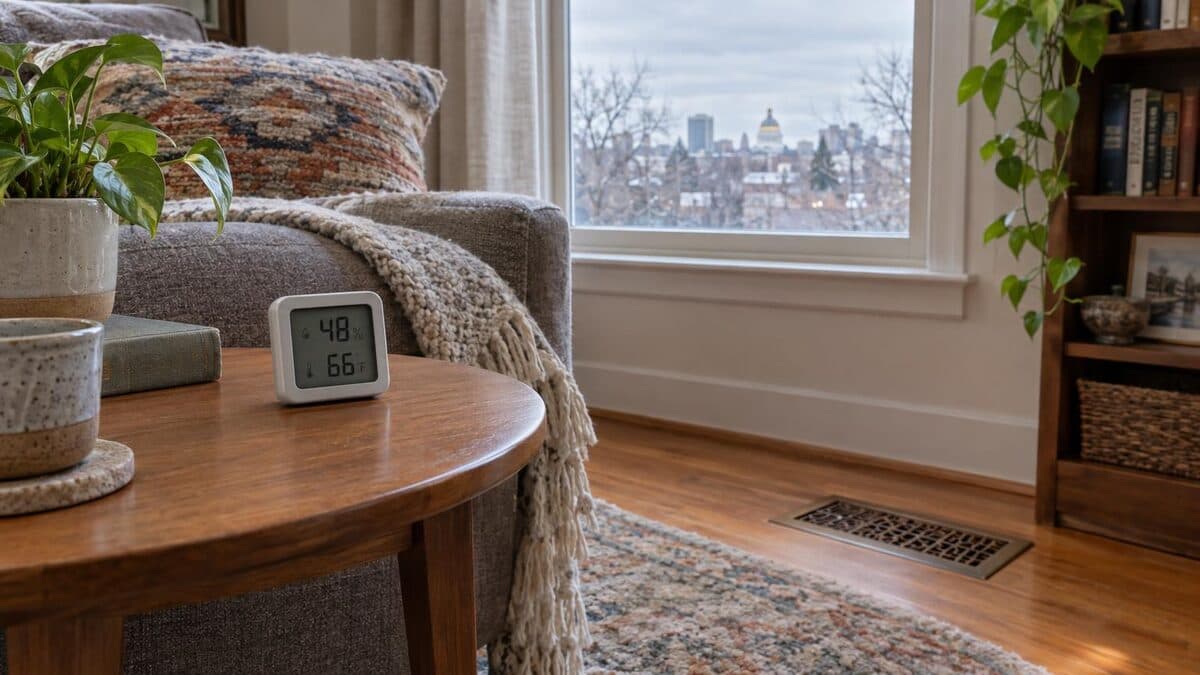
A whole house humidifier is worth it only if your home actually gets dry while the heat is running, and many Sacramento homes do not. Our winters are mild, often foggy, and the furnace or heat pump runs far fewer hours than it does in colder climates. Before you buy anything, put a hygrometer in a main room for two weeks. If it regularly reads below about 30% relative humidity, a whole house humidifier is worth pricing. If it stays in the 30s and 40s, save the money.
That target comes from the moisture side as much as the comfort side. The EPA recommends keeping indoor humidity below 60 percent, ideally between 30 and 50 percent, to limit moisture problems in the house. A humidifier set too high causes its own trouble, so the goal is the low end of that range, not as much as possible.
Why Homes Feel Dry in Winter
Homes feel dry in winter because cold outdoor air holds very little moisture, and when it leaks inside and gets heated, its relative humidity drops sharply. The more outside air a house pulls in, the drier it runs.
That is why two houses on the same street can feel completely different. A newer, tighter home in Roseville may sit at 40% all winter. A drafty 1960s ranch with leaky windows, an open fireplace damper and gaps around the attic hatch can drop into the 20s on a cold, clear stretch, because it is constantly swapping its air for dry outdoor air.
The signs people notice are static shocks, wood floors and furniture shrinking at the joints, and a house that feels cooler than the thermostat says.
Measure Before You Buy
A basic digital hygrometer costs little and answers the question. Put it in the living room or a bedroom, away from the kitchen, bathrooms and supply registers, and check it morning and evening for two weeks while the heat is in regular use.
What the readings tell you:
- Mostly 30% to 45%. Your home is fine. A whole house humidifier would add maintenance without much benefit.
- Often in the 20s on cold, clear days. A humidifier can help, but sealing air leaks may help as much.
- Below 25% most of the heating season. That is the house a whole house humidifier is built for.
Fix the Air Leaks First
Sealing air leaks is often the better first move for a dry house, because it attacks the cause. Less cold outdoor air sneaking in means less dry air to heat. ENERGY STAR estimates that sealing air leaks and adding insulation saves homeowners an average of 15% on heating and cooling costs, and a tighter house holds its humidity better too.
Our position: if your house reads dry and you can feel drafts, seal the attic hatch and the gaps around windows and plumbing, and keep the fireplace damper closed when the fireplace is not in use, then measure again. Add a humidifier only if the house is still dry after that.
The Three Main Types
All whole house humidifiers mount on the furnace or air handler and add moisture to the warm air before it reaches the rooms. A humidistat controls how much they add.
Bypass. A short duct sends some warm air from the supply side through a wet pad and back to the return. It has no motor of its own, so it is the simplest and most common type. It works only while the blower is running.
Fan-powered. Similar to a bypass, but with its own small fan to push air through the pad. It delivers more moisture and needs no bypass duct, which helps where space around the furnace is tight.
Steam. An electric element boils water into steam and injects it into the airstream. It delivers the most moisture and works even with a heat pump's cooler supply air, but costs the most to buy and run.
With a heat pump, ask about this point directly. Its supply air is warm rather than hot, so pad-style humidifiers deliver less moisture than they would on a gas furnace.
Keep It From Causing Problems
A whole house humidifier needs a little care, or it creates the moisture problems it was meant to avoid:
- Set it in the 30% to 40% range and lower it on cold nights if windows start fogging or dripping.
- Replace the pad every heating season, or more often with hard water.
- Shut the water off and turn the unit off at the end of the heating season.
A Typical Dry-House Pattern
Here is how it usually looks: a 1960s single-story with original single-pane windows and a fireplace that never closes tight. The owner gets static shocks all winter, and the hygrometer reads 24% on clear January mornings. Closing up the worst window gaps and getting the damper repaired so it shuts tight brings it into the high 20s. A bypass humidifier on the furnace, set to 35%, keeps it there the rest of the season.
When to Call PULSE HVAC
Call us if your house reads dry even after sealing the obvious drafts, if you want a humidifier added to your furnace or air handler, or if an existing humidifier is leaking or not adding moisture. We will tell you which type fits your system.
PULSE HVAC installs and services furnaces, heat pumps and humidifiers across the Sacramento area. Call (916) 850-2221 or book online to schedule a visit.
Sources
Need HVAC help in Sacramento?
Same-day service · Free estimates · Licensed & insured