
Reviewed by Paul R., CEO & Installer
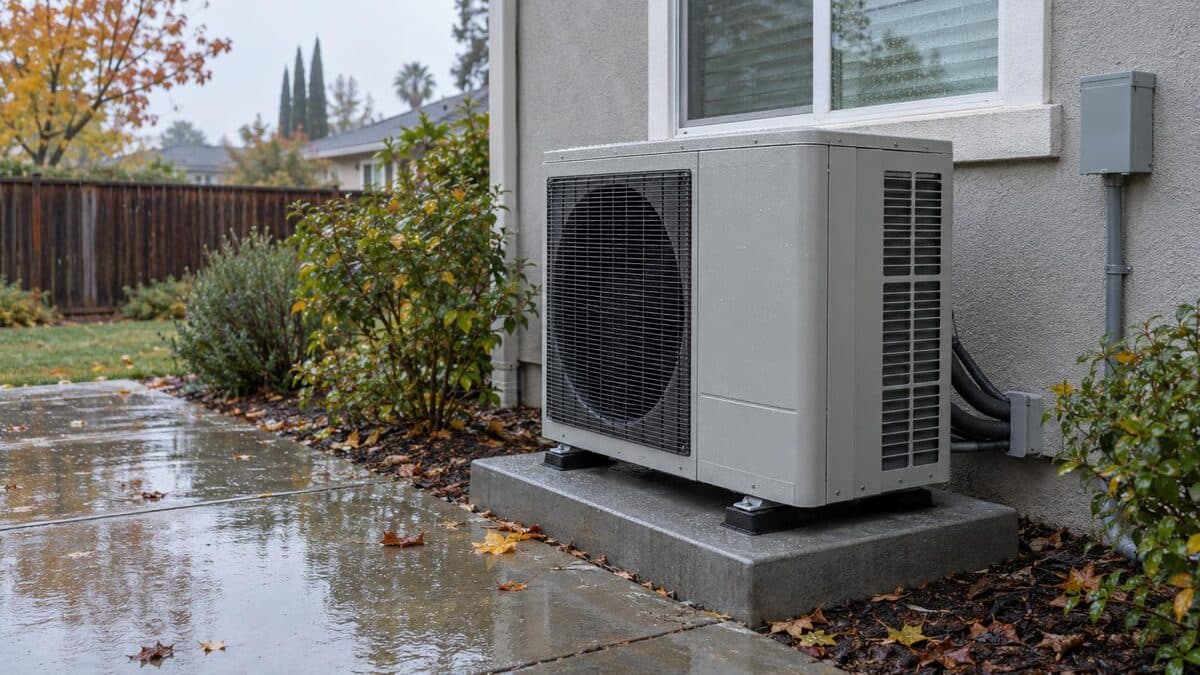
A heat pump is built to run in the rain, so a fall storm is no reason to switch it off or throw a cover over it. The outdoor unit is designed to sit outside year-round, and its coil, fan and controls are made for wet weather. During a cold, rainy stretch you will see it steam now and then and drip water from the base. Both are normal. What matters is keeping leaves and standing water away from the unit once the storm passes.
Keeping it running well matters during the heating season. ENERGY STAR notes that as much as half of the energy used in a home goes to heating and cooling, and for a heat pump home most of that runs through the outdoor unit sitting in the rain.
Why Rain Does Not Hurt a Heat Pump
Rain falls on the outdoor unit the same way it falls on an air conditioner, and both are built for it. The electrical compartment is sealed and covered, the fan motor is designed for outdoor duty, and the coil is just metal tubing and fins that get wet every time it rains.
A heat pump actually deals with more water than an air conditioner, because in heating mode it makes its own. When the outdoor coil is colder than the air around it, moisture from the air condenses and, on cold mornings, freezes on the fins. The unit is designed to shed that water through openings in its base.
So when the first big storm of the season rolls through Sacramento, the right move is to leave the system alone and let it heat the house.
What Steam and Dripping Mean
Steam from the outdoor unit is the defrost cycle at work. In cold, damp weather, frost builds up on the outdoor coil. Every so often the heat pump reverses briefly to warm the coil and melt it. The outdoor fan stops, the coil warms, and the frost turns to water and a cloud of steam for a few minutes. Then the fan starts again and normal heating resumes.
Water dripping or running from the base of the unit afterward is that melted frost draining out. On a rainy day you also get rainwater running off the cabinet. Neither is a problem as long as the water drains away from the unit.
You may notice defrost more during storms because wet, near-freezing air builds frost faster. Our post on heat pump defrost mode covers the sounds and timing in more detail.
Do You Need a Rain Cover or Rain Shield?
Not in the Sacramento area. Rain shields, rain hoods and rain caps are mainly sold for places with heavy snow, freezing rain or ice falling onto the top fan. Our valley storms bring rain and wind, not ice storms, and a heat pump handles rain on its own.
A full cover is the wrong move entirely. A heat pump runs all winter and needs open airflow through the coil on every side and room above the fan to push air out. Covering it starves it of air and interferes with defrost. Our post on covering an outdoor unit for winter explains why even a straight air conditioner is better off uncovered here.
The U.S. Department of Energy rates heat pumps for heating efficiency, and a unit only performs near that rating with air moving freely through a clean coil.
Our position: skip the rain accessories, keep the unit clear, and spend that money on a filter schedule and a fall checkup instead.
What to Check After the Storm
Once the wind and rain have passed, take a quick look at the outdoor unit from the outside:
- Leaves and debris. Storm winds pile leaves, twigs and seed pods against the coil and on the top grille. Clear what you can reach by hand from outside the unit, without opening any panels.
- Drainage. Water should run away from the base, not pool under or around it. A unit sitting in a puddle has a harder time shedding defrost water, which can refreeze on cold nights.
- Level and footing. The unit should still sit level and firmly on its pad. Soil can wash out from under a pad in a heavy storm.
- Nearby plants. Shrubs and grasses pushed over by the wind should be trimmed back so the coil has space to breathe.
Anything beyond that, such as a bent fan, damage from a falling branch or a unit that stopped running after the storm, is a job for a technician.
A Typical First-Storm Morning
Here is how it often looks: an Elk Grove homeowner with a heat pump installed two years ago looks out on the first stormy morning of the season and sees a cloud of steam rising from the side yard, with the outdoor fan stopped. Ten minutes later it is running normally again. That was a defrost cycle. The only thing it needed was a few handfuls of wet leaves cleared from the top grille after the rain stopped.
When to Call PULSE HVAC
Call us if the outdoor unit stays coated in ice for hours, stops running after a storm, sits in standing water you cannot drain, or was hit by a falling branch. We can also check the refrigerant charge and defrost controls during a fall service visit so it handles the rest of the season well.
PULSE HVAC services heat pumps across the Sacramento area. Call (916) 850-2221 or book online to schedule a visit.
Sources
Need HVAC help in Sacramento?
Same-day service · Free estimates · Licensed & insured