
Reviewed by Paul R., CEO & Installer
How Much Are Leaky Ducts Costing You This Sacramento Summer?
Leaky ducts typically waste 20–30% of the conditioned air your AC produces — ENERGY STAR estimates that a typical duct system loses that much air to leaks, holes, and poorly connected joints. In a Sacramento heat wave, that wasted air is exactly what you're paying extra to replace every time your system runs longer to hit the thermostat. The trap is timing: in April a leaky duct is easy to ignore, because your AC barely runs and the attic is mild. Then July arrives, your system runs for hours without a break, and suddenly one room never cools while your energy bill climbs for no obvious reason.
Duct leaks are invisible in mild weather and merciless in a heat wave. Understanding why — and where those leaks live — is the first step to fixing the problem before it costs you a whole summer.
Why Your Ducts Leak (and Why the Attic Makes It Worse)
Most duct leaks don't happen all at once. They develop over years as the flexible connections at registers, plenums, and joints loosen from constant thermal expansion and contraction. In the Sacramento area, that cycling is extreme: attic temperatures can swing from around 40°F on a winter morning to roughly 150°F on a July afternoon. That repeated stress degrades tape and mastic sealant, opening gaps that let your cooled air escape before it ever reaches your rooms.
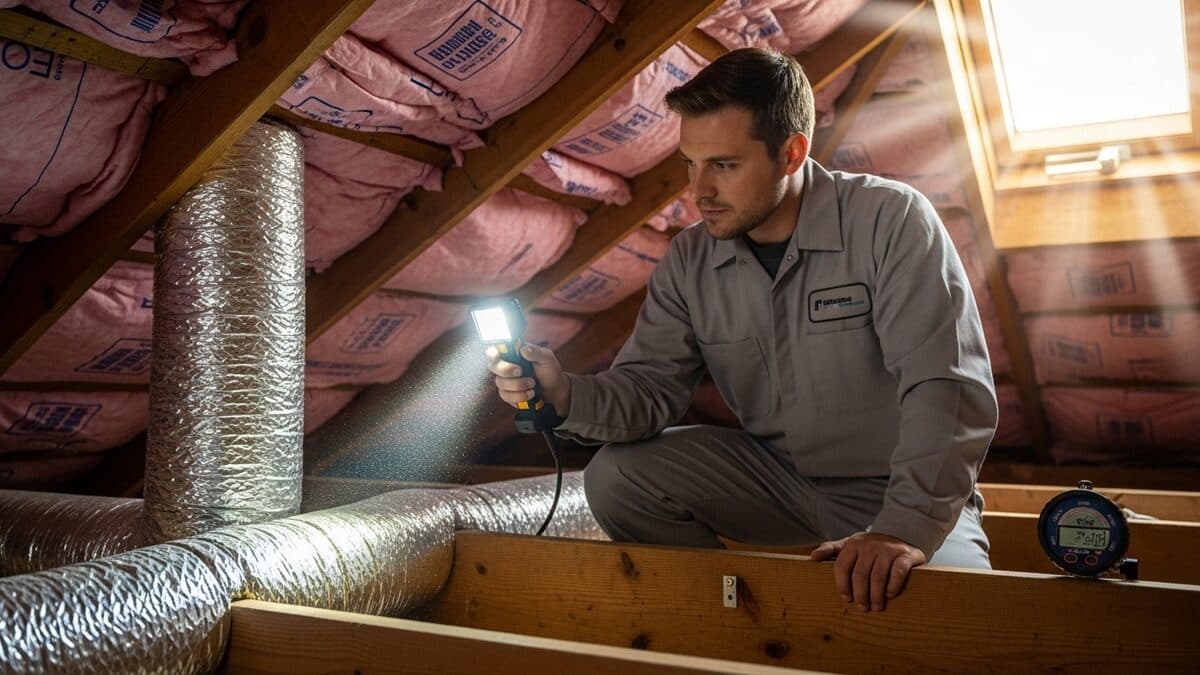
Location is what turns a minor leak into a major crisis. When your ductwork runs through an unconditioned attic — as it does in most homes in Carmichael, Roseville, Citrus Heights, and Folsom — every leak dumps expensive conditioned air into a 150°F oven instead of your living room. Worse, negative pressure can pull that superheated attic air into the return side of your system, forcing your AC to cool the same air twice.
ENERGY STAR notes that sealing ducts can significantly improve heating and cooling efficiency, and the reason is exactly this: in a hot attic, sealed ducts stop the two-way bleed that quietly erases your system's output.
The Signs You're Paying for Leaks Right Now
During a Sacramento heat wave, leaky ducts announce themselves in ways you can feel:
- Rooms that won't cool no matter how low you set the thermostat, especially rooms farthest from the air handler.
- An AC that never cycles off on hot afternoons — a system running non-stop is often fighting leaks, not just the weather.
- Energy bills that jump far more than the temperature alone explains.
- Weak airflow at the registers even though the blower sounds like it's working hard.
These symptoms are mild or absent in spring because your system isn't stressed. The moment it has to run continuously, every gap compounds.
Ductwork Condensation, Popping, and Dripping in Summer
Heat waves also bring noises and moisture that catch homeowners off guard. That popping or ticking sound from your attic is almost always thermal expansion — metal ducts flexing as your system cycles on and off. It's normal and especially noticeable when the attic is extremely hot.
Ductwork condensation is a different story. When cold air inside a duct meets the extreme heat of your attic, moisture in the surrounding air condenses on the outside of the duct, the same way a cold glass sweats on a humid day. Poor insulation on the duct jacket makes it worse. If you hear dripping or find soaked attic insulation, that's a sign your ducts need re-insulating or resealing — persistent sweating can promote mold and should be inspected promptly.
What Leaks Actually Cost — and Your Repair Options
The most expensive path is ignoring the problem all summer while your AC overworks. But the fix is often cheaper than homeowners assume.
Full duct replacement is the high end. The cost to replace ductwork in an attic typically runs $2,000–$6,000 or more, depending on your home's size, the complexity of the duct layout, and the materials used. That's a real number for homes with deteriorating flex duct and multiple failed connections.
However, most Sacramento-area homes don't need a full tear-out. Professional duct sealing — including Aeroseal, which seals leaks from the inside — costs significantly less and can recover a meaningful share of lost airflow without ripping out your existing ducts. For many homeowners in Elk Grove, Rancho Cordova, and Fair Oaks, sealing is the smarter first move.
For comparison, duct cleaning Sacramento cost is a separate service entirely — cleaning removes dust and debris but does nothing for leaks. Don't confuse the two. If your problem is lost airflow and high bills, cleaning won't fix it; sealing or repair will.
The California Energy Commission enforces residential duct leakage standards precisely because leaky ducts waste so much energy statewide, and ENERGY STAR recommends sealing and insulating as one of the most cost-effective home improvements you can make.
When to Repair vs. When to Replace
Ducts generally last 15–25 years, but Sacramento's brutal attic heat accelerates wear. Here's how to think about it:
- Lean toward sealing if your ducts are relatively young, structurally sound, and losing air through joints and connections that a pressure test confirms are sealable.
- Consider replacement if your ducts are over 20 years old, made of deteriorating flex duct with multiple failed connections, or if a pressure test shows leakage so severe that sealing alone won't be cost-effective.
The only reliable way to know when to replace ductwork versus seal it is a professional diagnostic with a pressure test. Guessing wastes money in both directions.
When to Call PULSE HVAC
Call us if a room won't cool during a heat wave, your AC never shuts off, your summer bills spiked without explanation, or you've found dripping, sweating ducts or soaked insulation in your attic. These are the exact symptoms leaks produce once your system is under full summer load.
We'll pressure-test your ductwork, show you where the air is escaping, and tell you honestly whether sealing (including Aeroseal) or replacement makes more financial sense for your home — no upsell, just the numbers.
Don't spend another 105°F afternoon paying to cool your attic. Call PULSE HVAC at (916) 850-2221 or book online, and we'll get your conditioned air back where it belongs — inside your home.
Sources
Need HVAC help in Sacramento?
Same-day service · Free estimates · Licensed & insured