
Reviewed by Paul R., CEO & Installer
Mini split filter cleaning is the one maintenance job every ductless owner can do, and after a Sacramento summer of 100°F streaks and smoky weeks, most filters are overdue. It takes about ten minutes per indoor head. Skip it, and the unit that cooled the bonus room all summer heads into heating season with its airflow choked off.
ENERGY STAR recommends checking your system's filter every month, especially during heavy-use months. A ductless head usually runs long hours at low speed in a single room, pulling that room's air through a small filter all day, so the monthly check matters here too.
Where the Mini Split Filter Is
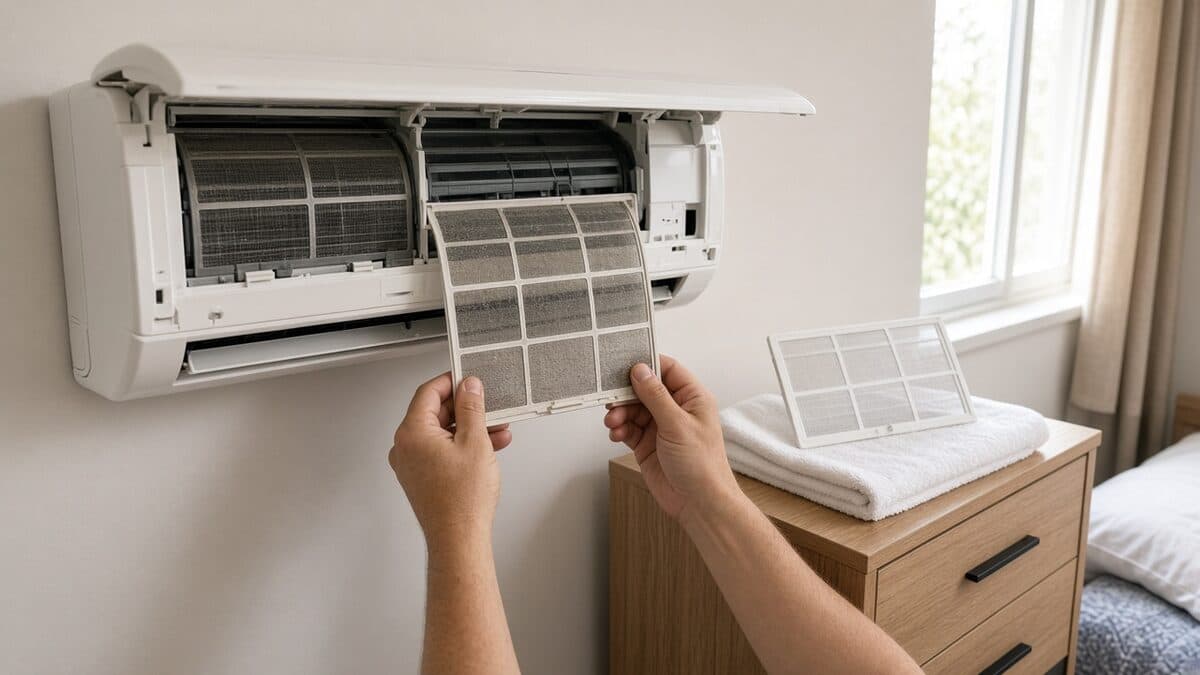
On a wall-mounted head, the filters sit directly behind the front panel. Lift the panel from its bottom edge until it locks open. You will see one or two mesh screens covering the coil, each with a small tab at the bottom.
Ceiling cassettes and floor consoles hide their filters behind the intake grille instead. The owner's manual shows the release tabs for your exact model. If you lost it, the model number on the sticker along the side of the head will pull up the manual online.
Many heads also have a second, thinner filter clipped onto the mesh screen, sold as an odor, ion or fine-particle filter. Those are not washable on most models and get replaced on the manual's schedule.
How Often Should You Clean Mini Split Filters?
Clean them at least once a month while the system runs every day. During wildfire smoke, or in a house with heavy-shedding pets, clean them every two weeks. In the shoulder season, when the head runs a few hours a week, every two to three months is enough.
Smoke is the part people underestimate. The EPA notes that wildfire smoke gets indoors even with windows closed, and a mini split head recirculates that room air through its filter all day. Over a smoky stretch, that steady recirculation loads the mesh faster than a normal month would.
A simple rule works better than a calendar. Filter mesh comes in white, gray, blue or black depending on the brand, so judge it against how it looked clean: visible dust, matting over the mesh or weaker airflow from the louvers means it is overdue.
How to Clean a Mini Split Filter the Right Way
The process is short, but two steps matter more than the rest:
- Turn the unit off with the remote, then switch off its breaker or the outdoor disconnect before you open the panel. The remote alone leaves the head powered, and a timer or app command can restart the fan while your hands are inside.
- Lift the front panel and slide the filters out by their bottom tabs. Pull them down and out gently; the frames are thin plastic.
- Vacuum from the intake side, the side that faced the room. This lifts dust off the mesh instead of pushing it through.
- Rinse with lukewarm water. Add a drop of mild dish soap if the filter is greasy, which is common for heads near a kitchen.
- Let them dry completely, in the shade. Hot water and direct afternoon sun both warp the frame, and a warped filter leaves gaps that let dust straight onto the coil.
- Reinstall and close the panel until it clicks.
Step five is where people go wrong. Putting a damp filter back in traps moisture against the coil and grows the musty smell you were trying to prevent. If you cannot wait an hour for them to dry, keep a spare set. Most brands sell them.
What a Neglected Head Looks Like
A typical version of this problem: a Roseville bonus room over the garage, a wall-mounted head that ran from May through September, and filters nobody opened since spring. The mesh is matted with gray felt. Behind it, the top of the coil has a layer of dust stuck to the fins, and the owners have noticed the room taking longer to cool each week.
Cleaning the filters restores most of the airflow. The dust already on the coil stays there. That is the difference between owner maintenance and a professional cleaning, and it is why the filter schedule matters so much. Every week a clogged filter stays in is a week of dust landing on a coil you cannot easily clean yourself.
Our position: do not spray canned coil cleaner into the head yourself. Inside a mini split, overspray lands on the circuit board and the blower wheel, and the runoff often overwhelms the small drain pan. A proper indoor cleaning uses a bib that bags the head and routes the rinse water to a bucket.
Why It Matters Before Heating Season
A clogged filter hurts a mini split more in heat mode than in cooling. In heat mode, the indoor coil is the hot side of the system. Restricted airflow lets heat build up inside the head, and the unit protects itself by cutting its output. The result is a room that never quite warms up on the first cold mornings of November, with the unit running constantly. Clean filters in October take that problem off the table before the first cold snap.
When to Call PULSE HVAC
Call us when airflow stays weak after the filters are clean, when the head smells musty, when you see black specks blowing out of the louvers, or when water drips from the unit. Those point to a dirty coil, a blower wheel with buildup, or a clogged drain, and each needs a proper cleaning kit and care around the head's electronics.
PULSE HVAC services ductless systems across the Sacramento area. Call (916) 850-2221 or book online to schedule a mini split cleaning before the heating season starts.
Sources
Need HVAC help in Sacramento?
Same-day service · Free estimates · Licensed & insured