
Reviewed by Paul R., CEO & Installer
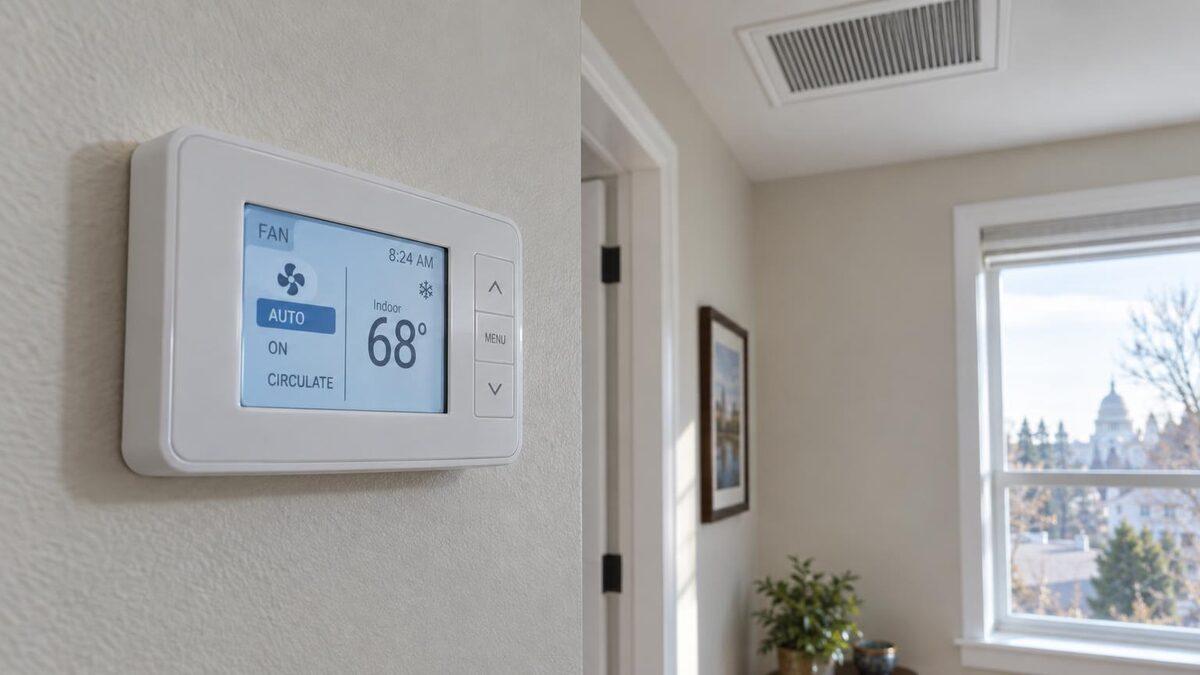
For most homes, the HVAC fan auto vs on question has a simple winter answer: leave it on auto. On auto, the blower runs only while your furnace or heat pump is heating, so the air from the vents feels warm. On the on setting, the blower keeps running between heating cycles and pushes room-temperature air that reads as a draft. ENERGY STAR estimates that heating and cooling make up as much as half of the energy used in a typical home, and the fan setting is one of the small choices that adds to or trims that share.
There is a middle setting too, and in some Sacramento homes it is the best of the three.
What Auto, On and Circulate Actually Do
The three fan settings control only the blower, the big fan that moves air through your ducts. They do not change how much heat the system makes.
- Auto. The blower runs when the thermostat calls for heat and stops shortly after the call ends. Between cycles, the air in the house sits still.
- On. The blower runs all the time, whether the system is heating or not.
- Circulate. Offered on many newer thermostats, it runs the blower for part of each hour even when the system is idle. On some models that works out to about a third of each hour.
Why Auto Wins in Winter
Auto wins in winter because the air coming out of the vents is always warm. With the fan on, the blower keeps running after the burners or the heat pump shut off. The air it moves is room temperature, but moving air on skin feels cooler than still air, so a 68°F room can feel colder with the fan on.
There is also the duct location to think about. In most Sacramento homes, the ducts run through the attic. On a 40°F night, that attic is cold, and every minute the blower pushes air through those ducts between heating cycles, the air loses a little heat on the way. The furnace then runs a little longer to make up for it.
When On or Circulate Makes Sense
On and circulate make sense when you want the air in the house mixed or filtered more than usual.
Uneven floors. In a two-story house, warm air drifts upstairs and the downstairs runs cool. Circulate keeps air moving enough to even that out without the drafty feel of running the fan nonstop. Here is how it usually looks in a typical two-story around Sacramento: the upstairs bedrooms run three or four degrees warmer by evening, and the thermostat downstairs keeps calling for heat. Switching from auto to circulate narrows that gap noticeably, and the system cycles more evenly.
Filtering. Your HVAC filter only cleans air that moves through it. The EPA's guide to air cleaners covers furnace and HVAC filters as one way to clean the air in a home, and running the fan more often sends more air past that filter. On a smoky or dusty day, switching to on for a few hours makes sense. Most winter days, circulate gets much of that benefit with less running time.
One exception. Leave the fan on auto while cooking a big meal, so the blower is not pulling kitchen air through the whole house. Our post on holiday cooking and your ducts explains why.
What Running the Fan Costs
The blower motor decides most of what running the fan costs. Older furnaces often have a PSC motor, which runs at one fixed speed and draws much more power over a full day of running. Newer furnaces and air handlers usually have an ECM motor, which can run slowly and uses far less power at low speed.
If your system is ten or more years old and you are not sure which motor it has, assume the fan setting matters to your bill and use auto or circulate. If your system has a variable-speed blower, running it more is cheaper, and circulate is an easy choice.
If the Fan Never Stops
If the fan runs constantly, check the thermostat first. It is often set to on instead of auto, sometimes by a guest or a child. If the setting is auto and the blower still never stops, the cause is in the system: a fan relay or control board stuck on, or a furnace limit switch holding the blower on. Those need a technician. Our post on thermostat location covers another way the thermostat can confuse the system.
When to Call PULSE HVAC
Call us when the fan runs nonstop on auto, when the blower is noisy or weak, or when you want to know whether your system has a PSC or ECM motor and what that means for your bill. We can check the blower, the controls and the settings in one visit.
Call PULSE HVAC at (916) 850-2221 or book a visit online.
Sources
Need HVAC help in Sacramento?
Same-day service · Free estimates · Licensed & insured