
Reviewed by Paul R., CEO & Installer
Ragweed fall allergies hit hardest indoors when the house lets pollen in and then keeps it. In the Sacramento area, the weed pollen season runs from late summer until the first real cold snaps, and the cool evenings that make you want to throw the windows open are right in the middle of it.
Indoors is where the exposure adds up. The EPA estimates that Americans spend about 90 percent of their time indoors. If pollen is getting into your house, you are breathing it most of the day and all night, not just on the walk to the car.
Why Fall Pollen Follows You Inside
Pollen gets inside through three paths: open windows, leaky return ducts and filters that do not seal. Most homes have at least two of the three.
Windows are the obvious one. After a hot afternoon, a 55°F evening is hard to resist. But a dry north wind that pushes the heat out also carries weed pollen from every vacant lot and levee within miles.
Return ducts are the one nobody sees. The return side of your system runs under suction. Any gap in a return duct, a return plenum or the cabinet around the filter pulls in air from wherever the gap sits. In a garage, that is dust and pollen blown in under the door. In an attic, it is whatever has settled on the insulation.
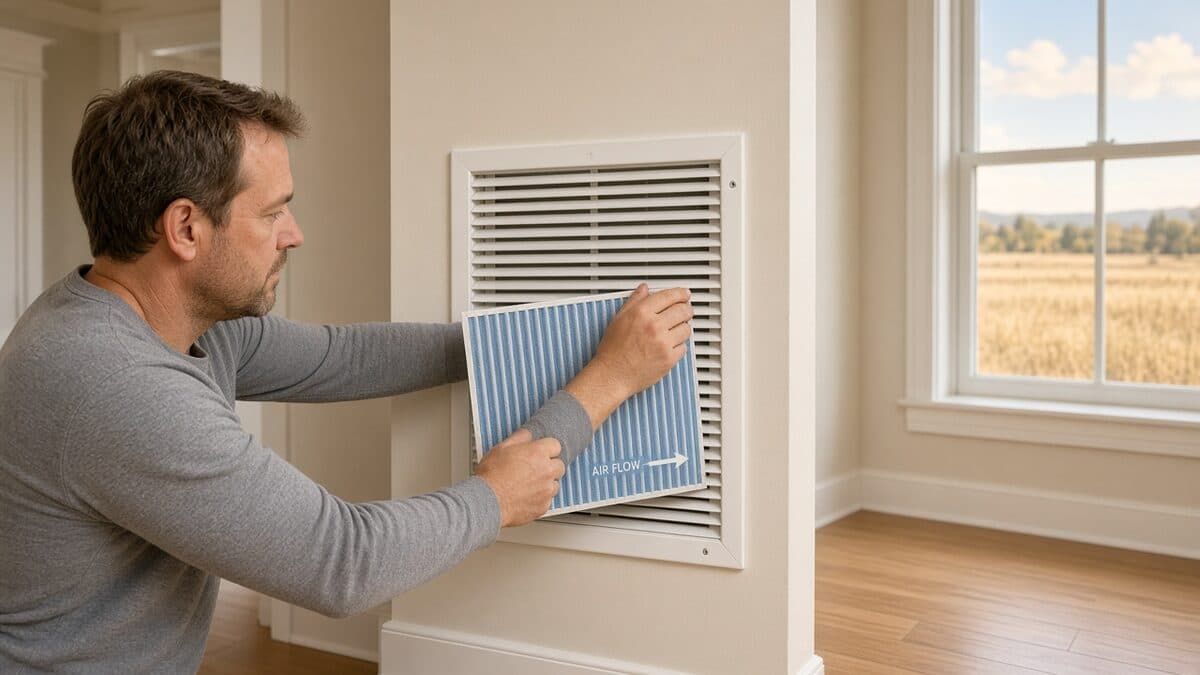
Filters are the last path. A filter that is a half inch too small, bowed in its slot or missing its cover door lets air slip around the edges. That air skips the filter entirely.
Once pollen is in, it settles into carpet, rugs and the couch. Every footstep and every blower start stirs it back into the air. That is why symptoms can stay bad indoors for days after the outdoor count drops.
What Makes Ragweed Counts Run High
Warm, dry, breezy days drive the highest ragweed counts. The plants release pollen in the morning, and the wind carries it through the middle of the day. Rain knocks the count down for a day or two.
In the valley, the classic fall setup is a dry north wind after a warm spell. That is the day to keep the house closed, even if the afternoon feels mild. Ragweed is not the only fall weed pollinating in the Sacramento area, either. Several others overlap with it, so a person who reacts to one often reacts to the rest.
The Filter Fix: Fit Before Rating
A well-fitted MERV 8 to 11 pleated filter handles fall pollen. Pollen grains are large compared with wildfire smoke or fine dust, so you do not need the top of the scale to catch them. The EPA's MERV guidance explains that higher ratings capture progressively smaller particles, and pollen sits at the large end of that range.
Fit matters more than rating. A MERV 13 filter with a gap around its edges lets more pollen through than a snug MERV 8. Check yours:
- Measure the slot, not the old filter. Buy the actual size, not the nearest round number.
- Look for daylight around the edges with the blower running. A strip of foam gasket fixes most gaps.
- Make sure the access door on the filter slot is in place. Many are missing or held on with tape.
During peak season, change the filter monthly if anyone in the house has symptoms. A loaded filter restricts airflow and pushes more air around the edges.
Seal the Return Side Before Buying Anything Else
Our position: seal the return side before you spend money on an air purifier, a whole-house air cleaner or duct cleaning. A leaky return pulls unfiltered air into the ducts past the filter, and the system blows it into every room. A portable purifier only cleans the room it sits in, after the pollen has already arrived. Fixing the leak is usually the cheapest improvement on this list and the one that makes the others work.
A typical version of this problem looks like this. The homeowner's allergies are worse inside than out, even with a new filter every month and the windows shut. The house is a 1970s ranch with the furnace in the garage, and the return plenum under the furnace has a gap along one side where the old platform settled. Every time the blower runs, it pulls garage air, and whatever blew in under the garage door, straight into the ductwork. A garage return leak is also a safety problem: it can draw car exhaust and carbon monoxide into the house, so it belongs at the top of the repair list even without allergies. The fix is to seal the platform and plenum with mastic and give the filter slot a proper gasketed door. Once that leak is closed, the filter finally sees all the air the system moves.
Settings That Help During Peak Season
Keep the house closed on dry, windy days and during late morning and midday, when counts run highest. If you want evening air, wait for a calm night, open only the windows you need and close them before the next morning. Anyone with strong symptoms is better off keeping windows shut all season.
Run the fan on auto rather than on. Constant fan operation keeps pulling on every return leak around the clock, which multiplies the problem if the return side is not sealed. Once it is sealed, running the fan more often keeps air moving through the filter and helps.
Vacuum with a HEPA-rated vacuum during the season. The pollen already in the carpet does not leave on its own.
When to Call PULSE HVAC
Call us if your allergies are worse indoors than outdoors, if you see dust streaks around the filter slot or the return grille, or if your furnace or air handler sits in the garage or attic and you have never had the return side checked. We test for return leaks, fix filter fit and seal the plenum so the filter you pay for actually does its job.
PULSE HVAC serves homeowners across the Sacramento area. Call (916) 850-2221 or book online to schedule an indoor air quality visit.
Sources
Need HVAC help in Sacramento?
Same-day service · Free estimates · Licensed & insured