
Reviewed by Alex J., Lead HVAC Technician, NATE Certified
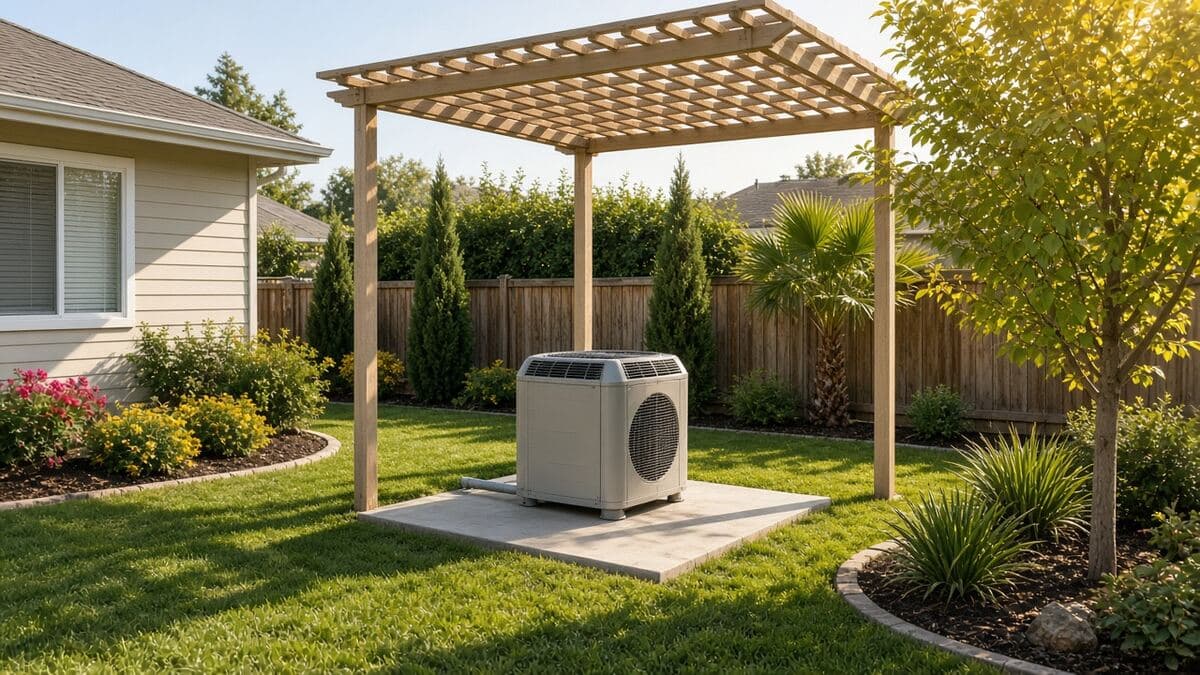
A shade structure for backyard use over the outdoor condenser trims cooling bills only modestly in 104°F Citrus Heights heat if it blocks direct sun without trapping the hot air the fan must dump. Gains vanish if sides are boxed in. A neglected, dirty coil typically wastes more energy than shade can recover, which is why airflow and coil condition come first.
The outdoor coil already rejects heat into extreme ambient air. Extra sun on the cabinet adds load on top of that. The U.S. Department of Energy treats condenser heat rejection as tied to outdoor temperature, so shading the cabinet is a small, conditional assist—not a substitute for a clean coil and open discharge path. In Sacramento-area 100°+ streaks, that distinction shows up on the compressor, not in marketing copy.
Last September a 1970s tract house with a 2009 split system had a lattice “privacy” screen tight against three sides of the condenser. The tech found lint, seed fluff, and a film of dust packed into the fins, plus recirculated exhaust because the fan had nowhere to throw air. Head pressure was high before anyone talked about shade. Clearing the screen, washing the coil, and leaving a high, open overhead shade was the sequence that actually changed runtime. Shade did not fix the fouled coil. It never will.
Does open shade beat wrapping the cabinet while the system runs?
Shading is better; wrapping is harmful while the system runs. Covers, tarps, and tight enclosures trap heat the fan must reject. An open backyard shade structure that still lets air move is the HOA-friendly option. Do not confuse this with winter covers used only when the unit is off and fully accessible. Solid wraps raise head pressure, trip the unit, and shorten compressor life. Lattice or a roof that recirculates hot exhaust does the same thing with nicer lumber.
Keep posts and lattice away from coil fins and the fan discharge path. Follow the manufacturer’s stated side and top clearances—often several feet of unobstructed space, never less than the nameplate allows. In valley heat, blocked airflow costs more than extra sun on a clean, well-ventilated coil.
Will shade help more than a dirty outdoor coil?
Usually no. A fouled coil already acts like insulation, so the compressor works harder in 104°F heat. Shade cannot fix restricted heat transfer. Keep vegetation trimmed and schedule professional coil care; then add open shade if you want a smaller extra boost without blocking airflow. Skip the impulse to “improve” a dirty cabinet with a low roof. Clean first, then shade if the site still gets all-day sun.
A shade structure for patio or deck seating is a different job than shade over equipment. Patio and garden shade can sit lower and closer to people. Condenser shade has to stay high enough that discharge air does not bounce back into the coil. If the two share a backyard, treat the equipment as the one that cannot be enclosed.
How should you build HOA-friendly shade without hurting the unit?
Build it open, elevated, and serviceable. Leave walk-up access on the electrical and service sides. Do not drop a solid lid within the fan’s throw. Do not plant a hedge that will grow into the fins by next July. If the HOA wants screening, use widely spaced slats that still pass air on every side. If you cannot meet nameplate clearance, do not add the structure.
SMUD summer bills track long afternoon runtimes. Shade that slightly lowers the solar load on a clean, open condenser is a small assist during those hours. Shade that recirculates 104°F exhaust is a penalty. That is the trade-off. Take the open overhead option or skip it.
Thermostat replacement is a separate decision. Shading the outdoor unit will not outrun a neglected coil, and it will not replace a failed thermostat. When a thermostat fails in summer, replace it because control is gone—not because shade underperformed. Typical new or smart thermostat cost for a house varies by product and labor; check current pricing rather than treating shade as a substitute.
When to Call PULSE HVAC
Call when you want the outdoor unit measured for real clearance before you pour footings, when the cabinet is packed with debris, or when a low roof or wrap has already caused short cycling in heat. Call if the fan is throwing air into a wall or lattice and the unit trips on high pressure. Do not wait for a compressor to fail to find out the shade boxed it in.
PULSE HVAC will check coil condition, discharge path, and whether an HOA-friendly overhead shade still leaves the nameplate distances. If the coil is dirty, clean it before you spend on lumber. If airflow is already tight, skip the structure.
For a site check in Citrus Heights or elsewhere in the Sacramento area, call PULSE HVAC at (916) 850-2221 or book online at /book.
Sources
Need HVAC help in Sacramento?
Same-day service · Free estimates · Licensed & insured