
Reviewed by Paul R., CEO & Installer
A smoke smell in the house after a week of wildfire smoke comes from two places: odor compounds that soaked into your soft surfaces, and smoke particles packed into your HVAC filter. The outdoor air can clear in a day. The house holds onto it much longer, because carpets, couches and curtains release that odor back into the air slowly. Clearing it takes a short list of steps, done in the right order, and none of them is an expensive gadget.
Start with the outdoor reading, not your nose. AirNow rates an air quality index of 0 to 50 as good and 51 to 100 as moderate, and above 100 the air is unhealthy for sensitive groups. Heavy smoke days in the Sacramento area push readings past 100. Airing out the house only works once the reading outside is back in the good or moderate range. Before that, you are trading indoor smoke for fresh outdoor smoke.
Why the Smell Lingers After the Smoke Clears
The smell lingers because your house absorbed it. During a smoky week, the odor compounds in wildfire smoke settle into anything porous: carpet, upholstery, curtains, bedding, even painted drywall. When the air clears, those surfaces start giving the odor back, a little at a time, for days.
Your HVAC system adds to it. A filter that ran through a smoky week is loaded with fine particles, and every time the blower starts, air passes through that loaded filter on its way to every room. A house can smell worst right after the system kicks on, which is a strong hint the filter is part of the problem.
How to Clear Smoke Smell From the House
Clear it in this order, once the outdoor air is clean:
- Air the house out. Open windows on two sides of the house and run box fans or the whole house fan to push air through. In the Sacramento area, the evening Delta breeze is the best time for it. A few hours on a clean, breezy evening does more than a week of running a purifier with the windows shut.
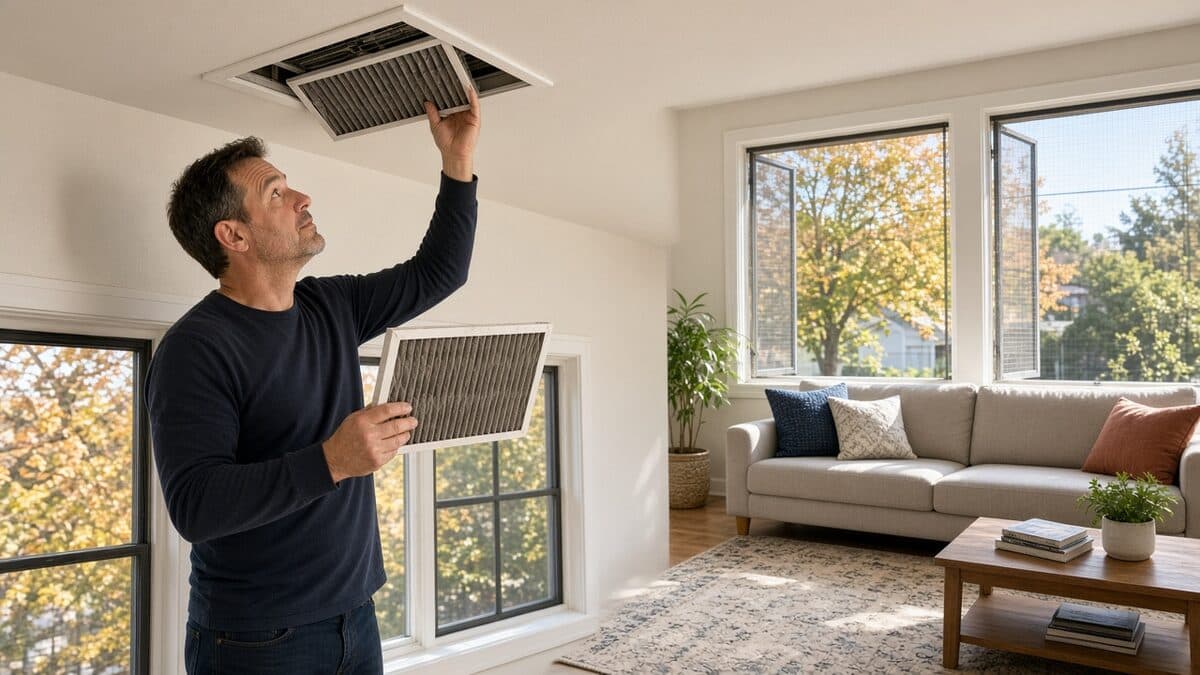
- Replace the HVAC filter. Do this even if the filter looks only slightly gray. Fine smoke particles do not always show up as visible dirt. A MERV 13 filter is a good choice for smoke season if your system handles it; if not, use the highest MERV your system's airflow allows.
- Wipe hard surfaces with a damp cloth: counters, windowsills, blinds and the face of the return grille. Fine smoke residue settles everywhere, and a dry duster just moves it around.
- HEPA-vacuum carpets, rugs and upholstery, and wash curtains, throws and bedding you can put in the machine.
- Run a portable purifier with an activated carbon filter in the room that still smells worst.
The EPA's guidance on wildfires and indoor air covers the same cleanup basics: ventilate once outdoor air improves and clean surfaces where smoke particles settled.
Carbon Does the Odor Work, Not HEPA
Activated carbon is what removes odor. A HEPA filter catches particles, which is exactly what you want during a smoke event, but the lingering smell after the smoke clears is mostly gases. The EPA's guide to air cleaners explains the difference: particle filters and gas-phase filters do different jobs, and gas-phase filters such as activated carbon target certain odors and gases.
A thin carbon-impregnated pad helps a little. A purifier with a thick bed of carbon helps a lot more. Look at the weight or depth of the carbon filter, not the label.
Never run an ozone generator to "deodorize." It covers the smell by adding ozone, a lung irritant, to the air you breathe.
When Duct Cleaning Is Worth It
Duct cleaning rarely fixes a smoke smell. Our position: start with the filter, the airing out and the soft surfaces, and only consider the ducts if the smell survives all of that. In most homes it does not.
Duct cleaning makes sense in three situations: ash or soot visibly blew in through the registers, the ducts are leaky and run through an attic that filled with smoke, or a fire burned close to the house. If you have any of those, our post on duct cleaning after wildfire smoke covers how to tell.
A typical case where the ducts are not the problem: a Carmichael ranch house that smells smoky every time the AC starts, a week after the smoke lifted. The filter in the hallway return is gray, the couch and area rug smell like a campfire, and nobody has opened a window since the smoke arrived. A new filter, a clean breezy afternoon with the windows open and a round of vacuuming and laundry usually clear it within a couple of days.
When the Smoke Smell Is Not From the Wildfire
Treat a new or growing smoke smell as a possible fire if the outdoor air is clean. A burning smell from the furnace or air handler, a hot outlet, or an overheating appliance can smell like smoke. Check quickly. If you cannot find the source, shut the HVAC system off, get everyone outside and call 911.
When to Call PULSE HVAC
Call us if the smell comes back every time the system runs even after a new filter, if you see ash or soot around the supply registers, or if your ducts run through an attic that filled with smoke and you want them checked for leaks. Those point to the system itself, not the furnishings.
PULSE HVAC serves homeowners across the Sacramento area. Call (916) 850-2221 or book online to have a technician check your filter setup, ductwork and return side after smoke season.
Sources
Need HVAC help in Sacramento?
Same-day service · Free estimates · Licensed & insured