Reviewed by Paul R., CEO & Installer
Furnace Repair Sacramento Homeowners Can Avoid With One Summer Check
Furnace repair Sacramento calls spike every October — right when the first cold snap hits and everyone remembers their furnace exists. But the damage that triggers most of those repair calls doesn't happen in fall. It happens right now, during the peak of summer heat, while the furnace sits untouched in an attic, closet, or garage.
Sacramento summers routinely push attic and closet temperatures well above 110°F. Furnaces aren't designed to run in that kind of ambient heat — they're designed to survive it while sitting idle. Most of the time they do. But weeks of extreme heat, combined with zero attention, is exactly the setup that turns a $150 mid-summer check into a $600 fall repair.
Why an Idle Furnace Still Needs Attention
It's tempting to assume that if the furnace isn't running, it can't have a problem. That's backward. An idle furnace in a hot attic is a furnace that's:
- Baking its capacitors and control board in heat that accelerates component wear over time
- Sitting open to dust, pollen, and — during wildfire season — smoke particles pulling through the shared filter
- Offering a dark, warm, undisturbed space that rodents in Carmichael, Fair Oaks, and Rancho Cordova attics find very attractive for nesting, sometimes right inside the heat exchanger
- Accumulating dust on burners and igniters that will cause rough starts or ignition failures the first time you fire it up in the fall
None of this shows up as an emergency in July. It shows up as a failed ignition sequence or a tripped safety switch in November, usually on the coldest night of the month.
What to Actually Check Mid-Summer
You don't need to become an HVAC technician to catch most of these problems early. A few practical steps in August go a long way:
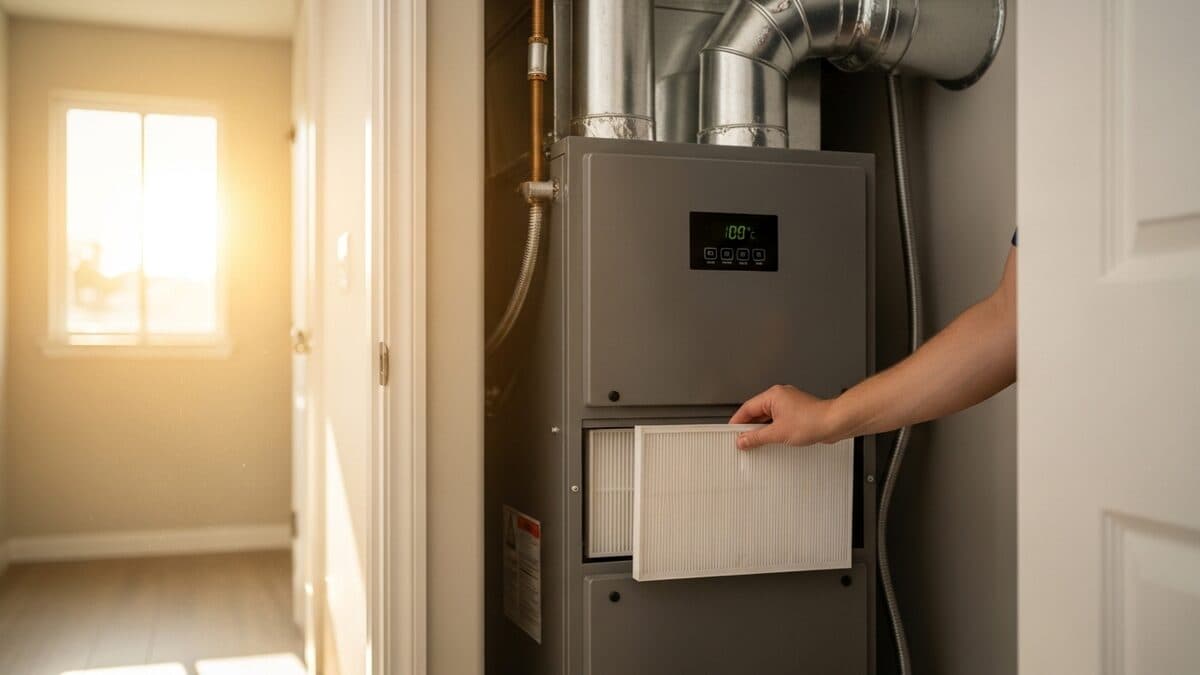
Look at the filter. If your system uses one filter for both heating and cooling — standard in most Sacramento-area homes — it's still filtering air every time your AC runs. A filter that looks gray or matted should be swapped now, not left until fall startup. The EPA notes that clogged filters and poor airflow are directly tied to indoor air quality problems, which matters even when the furnace itself isn't heating anything.
Open the closet or peek in the attic access. Look for obvious signs of pests — droppings, chewed insulation, or a nest near the furnace cabinet. Rodents are a bigger cause of fall ignition failures than most homeowners expect, and catching a problem in August is far easier than during a service call after dark in October.
Listen for new noises. A furnace that hums or whistles while it's off is telling you something. It could be airflow moving through the flue, a loose panel vibrating with duct expansion from heat, or early signs of an inducer motor bearing wearing out. None of these are emergencies in August. All of them are worth having a technician check before you're relying on the system nightly.
Leave electronic ignition systems alone. Most furnaces installed in the last couple decades use electronic ignition — there's no standing pilot light to worry about, so there's nothing to turn off or on. If you do have an older furnace with a standing pilot, switching it off for the summer is a reasonable step that trims a small amount of gas use and reduces heat inside the cabinet, per the U.S. Department of Energy's furnace guidance.
Why September Is the Wrong Month to Wait For
Every HVAC company in the region — Sacramento, Roseville, Citrus Heights, Elk Grove — runs on the same seasonal rhythm. Nobody thinks about their furnace until the first cold morning, which means everybody calls for service in the same two-week window. By mid-September, appointment slots are gone, and if a part needs to be ordered, you could be looking at a cold week before it arrives.
Booking a tune-up in August, while demand is low, gets you an appointment on your schedule instead of whoever has an opening left. It also gives a technician time to source any replacement part — an igniter, a capacitor, an inducer motor — before you actually need heat. ENERGY STAR's home heating guidance points to seasonal maintenance as one of the more reliable ways to avoid mid-season breakdowns, and the logic is simple: it's easier to fix a known issue on your schedule than an unknown one on the furnace's schedule.
When to Call PULSE HVAC
Not every summer observation requires an immediate service call, but a few situations do:
- A musty, sharp, or animal odor near the furnace closet or attic access — possible pest activity near the heat exchanger
- A new hum, whistle, or rattle that wasn't there earlier in the summer
- A filter that's soaked or damp even though your AC seems to be working normally — often a sign of a drainage or condensation issue worth having looked at
- Any furnace that hasn't had a professional inspection in the last year, especially in homes across Folsom, Rancho Cordova, or Fair Oaks with attic-mounted systems exposed to the worst of the summer heat
If any of that sounds familiar, it's worth having a technician look before the system sits through another month of heat untouched.
Get Ahead of Fall Now
A gas furnace that sits quietly through a Sacramento summer isn't necessarily a furnace that's fine — it's a furnace nobody's checked. A filter swap, a quick look for pests, and a professional tune-up in August cost far less than an emergency furnace repair Sacramento homeowners often end up needing in the first cold week of fall.
PULSE HVAC serves Sacramento, Carmichael, Roseville, Citrus Heights, Folsom, Elk Grove, Rancho Cordova, and Fair Oaks. Schedule your fall furnace tune-up now, while appointments are open, by calling (916) 850-2221 or booking online at /book.
Sources
Need HVAC help in Sacramento?
Same-day service · Free estimates · Licensed & insured