
Reviewed by Paul R., CEO & Installer
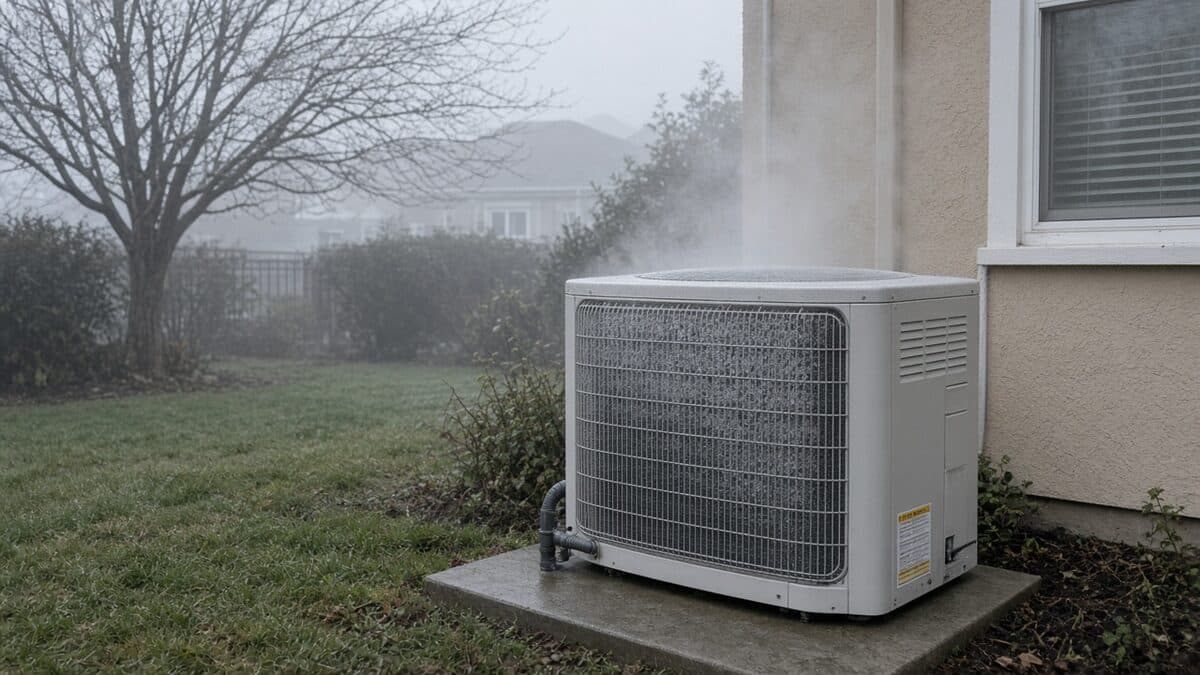
Heat pump defrost mode is the reason your outdoor unit sometimes goes quiet, lets off a cloud of steam and then starts back up with a whoosh on a cold morning. It is a short, automatic cycle that melts frost off the outdoor coil, and on damp Sacramento winter mornings it is completely normal. The heat pump is doing its job, not breaking down.
It matters because frost is a direct hit to heating output, and heating is a big line on the bill. ENERGY STAR estimates that as much as half of the energy used in a typical home goes to heating and cooling. A heat pump that keeps its outdoor coil clear keeps that energy working for you.
Why Heat Pumps Need to Defrost
A heat pump in heating mode pulls heat out of the outdoor air through the outdoor coil. To do that, the coil has to run colder than the air around it. On a cold, damp morning, the moisture in the air freezes onto that cold coil, the same way frost forms on a car windshield.
A thin layer of frost is harmless. A thick one blocks airflow through the coil, and the heat pump starts losing capacity. Defrost mode clears it before that happens.
The Sacramento valley is good at making frost. Clear winter nights drop close to freezing, and tule fog season adds plenty of moisture. Mornings in the mid-30s with fog are close to ideal frost weather for an outdoor coil, which is why defrost cycles stand out most in December and January.
What Happens During a Defrost Cycle
When the heat pump decides the coil needs it, the cycle runs in a few steps:
- The refrigerant flow reverses. The heat pump briefly switches to its cooling direction, which sends warm refrigerant through the outdoor coil.
- The outdoor fan stops. That keeps the heat on the coil instead of blowing it away. This is the sudden quiet people notice.
- The frost melts and steams. Warm coil, cold air: a white plume rising off the unit is just water vapor.
- Backup heat often comes on indoors. Many systems turn on their electric heat strips during defrost so the air from your vents does not feel cool.
- The unit switches back. Once the coil is clear, the heat pump returns to heating, often with a short whoosh as the refrigerant flow changes direction.
The whole cycle usually takes a few minutes. Water dripping or pooling under the outdoor unit afterward is the melted frost and is expected.
How Often a Heat Pump Should Defrost
How often it defrosts depends on the weather and the system's controls. Many newer heat pumps use sensors and defrost only when frost is actually building. On a dry, mild afternoon they may not defrost at all. On a foggy morning near freezing, a cycle every half hour to an hour or so is normal.
Older systems may run on a timer, checking for frost at fixed intervals. They tend to defrost on a steadier schedule regardless of conditions.
Our position: judge defrost by results, not by how often you notice it. If the coil clears after each cycle and the house stays warm, the system is working, even if it seems to defrost a lot on a foggy week. The U.S. Department of Energy's heat pump guidance covers how heat pump efficiency and performance are rated if you want the background.
What Normal Frost Looks Like, and What Is Not
Normal frost is a thin white coating on the outdoor coil that melts away during each defrost cycle. You may see it build up between cycles on a foggy morning. That is fine.
These are signs the defrost cycle is not doing its job:
- The coil stays covered in thick frost or solid ice even after the unit has been running for an hour or more.
- You never see the unit go quiet and steam, even on cold, damp mornings when the coil is visibly frosted.
- Ice builds up on the top or sides of the cabinet, not just on the coil.
- The house struggles to stay warm while the outdoor unit looks frozen.
In those cases, a defrost sensor, the defrost control board, a low refrigerant charge or restricted airflow is a common cause. Switch the thermostat to emergency or backup heat if it has that setting, and have a technician check it. Do not chip at the ice. The coil fins and tubing are easy to damage.
A Typical First-Frost Call
A typical version of this call comes on the first foggy week of the season in Roseville. The homeowner sees steam pouring off the outdoor unit at 7 a.m., hears it go silent, and assumes something has failed. The coil is lightly frosted between cycles, clears completely each time, and the house is warm. Nothing is wrong. That heat pump is defrosting exactly the way it was designed to.
When to Call PULSE HVAC
Call us if the outdoor coil stays encased in ice, if the unit never seems to defrost on cold, damp mornings, or if the house will not stay warm while the heat pump runs. Those point to a defrost control, a sensor or a refrigerant problem that needs a technician.
PULSE HVAC services heat pumps across the Sacramento area. Call (916) 850-2221 or book online to schedule a heat pump check before the cold weather settles in.
Sources
Need HVAC help in Sacramento?
Same-day service · Free estimates · Licensed & insured