
Reviewed by Paul R., CEO & Installer
After a Sacramento summer of 100°F cooling, get a licensed check if heat feels weak, the outdoor unit rattles or shrieks, or the system short cycles before the first cold night. Months of running as an air conditioner hide worn capacitors, fans, and reversing valves until you actually ask for heat. That is when a heat pump needs a post-summer service visit, not after you are already shivering.
ENERGY STAR describes heat pumps as equipment that moves heat with electricity rather than burning fuel for everyday warmth. That is why a hard cooling season loads the same compressor, outdoor fan, and refrigerant circuit you will need on the first cold night. The U.S. EPA Section 608 rules also matter here: only certified technicians may add refrigerant, so a DIY can of “freon” is not a fall tune-up.
Last September we opened a 2009 outdoor unit on a 1970s tract house in Sacramento. The filter had not been changed since the previous owner. The indoor coil was matted with dust, the outdoor fan was chewing a failing capacitor, and the reversing valve stuck until the sun went down. The homeowner had cooled through every 100° streak and assumed heat would just work. It did not.
Why a summer of 100°F cooling wears a heat pump
A Sacramento heat pump that cooled through 100°F days is already tired before you flip it to heat. The compressor, contactor, and outdoor fan ran long hours while valley heat sat over the house and the Delta breeze never quite arrived. Capacitors dry out. Fan motors get noisy. The reversing valve that switches cooling to heating sits unused until October, then it either slides or it does not.
Skip the “wait and see” approach. A no-heat call on the first inversion night costs more time and discomfort than a September diagnosis. Dual-fuel setups still need the heat-pump side checked after cooling duty; the backup furnace is a different machine.
Signs the system is not ready for heat
Call if airflow on heat is weak, ice forms on the outdoor coil in mild weather, a breaker trips, or you hear grinding or buzzing after a hard cooling season. Short cycling after months of 100°F cooling is a red flag, not a quirk. Rattles and shrieks from the outdoor cabinet point to a fan, mount, or capacitor, not “normal summer wear.”
Carmichael homes that ran the unit as an air conditioner all summer should not wait for the first freeze. Ice on the outdoor coil when nights are only cool means airflow or charge is already wrong. A licensed diagnosis beats guessing at capacitors, contactors, or the reversing valve.
Change the filter now if you cannot remember the last date. A packed filter from a 1970s house with original return sizing will starve the indoor coil and make heat feel weak even when the outdoor unit is screaming.
Refrigerant, freon, and leaks
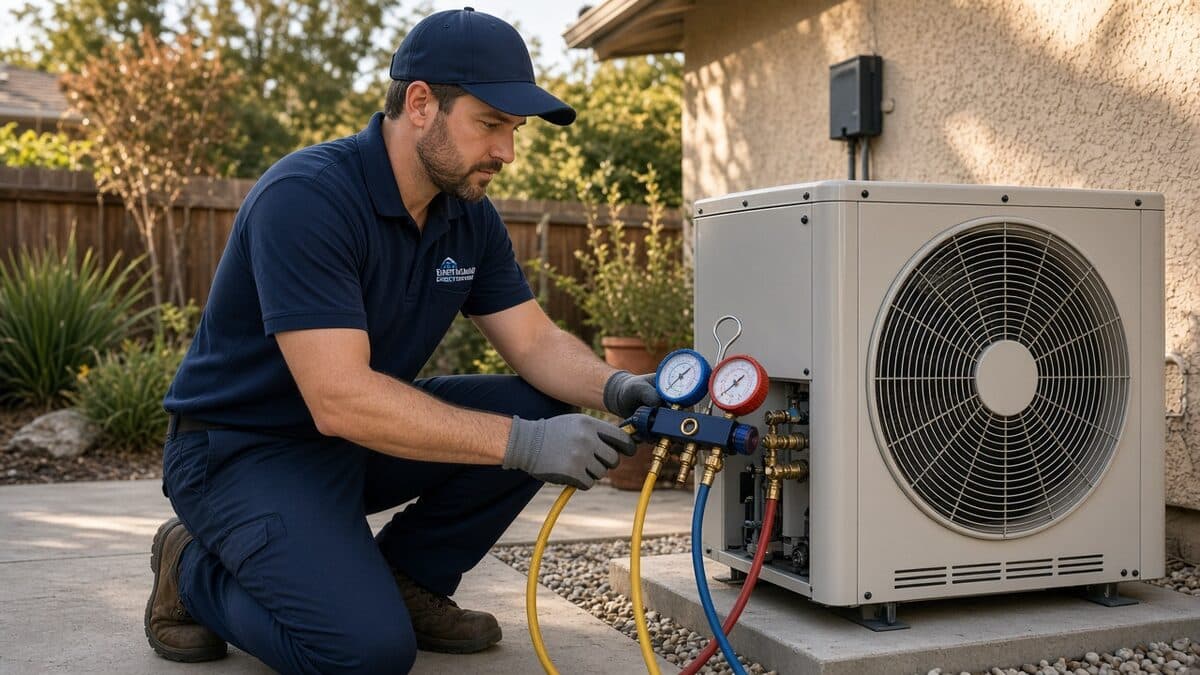
A heat pump does not “use up” refrigerant after heavy cooling. If it needs refrigerant or freon after a long cooling season, there is a leak. Only EPA Section 608 certified techs may add refrigerant. DIY top-offs hide the leak, waste electricity, and can leave you without heat when the Sacramento night finally turns cold.
Do not buy a gauge set and a can at the parts store. Charge is a measured job tied to the leak search. Adding gas to a leaking circuit is how people get a brief cool-down in August and a dead system in November.
Heat pump versus furnace
A heat pump HVAC system does not burn gas for everyday heat; it moves heat with electricity, like an air conditioner in reverse. Gas belongs to a furnace or a dual-fuel backup. If you smell gas or the backup furnace will not fire, that is a furnace issue, not a reason to add fuel to the heat pump itself.
Furnace repair in Sacramento targets burners, igniters, and heat exchangers. Post-summer heat pump work targets the compressor circuit, outdoor fan, reversing valve, and refrigerant charge after cooling duty. Dual-fuel homes may need both checked, but the tasks, parts, and safety steps are different. Hire a contractor licensed for the equipment you actually have; the Contractors State License Board is the place to confirm that license before anyone opens the cabinet.
SMUD peak windows still matter in September: a short-cycling outdoor unit on a hot afternoon is already inefficient, and that same fault will fail in heat mode. Fix the electrical and airflow problems while the weather is still mild.
When to Call PULSE HVAC
Call PULSE HVAC when heating feels weak, the outdoor unit rattles or shrieks, ice shows up on the outdoor coil in mild weather, breakers trip, or the system short cycles after a 100°F cooling season. Do not wait for the first cold night. A licensed check is safer than a no-heat emergency.
We will verify the reversing valve, capacitors, contactors, fan, and charge the right way, and we will not treat a leak as a simple top-off. If you have dual fuel, we will say so clearly when the furnace side is the real problem.
Book online at /book or call (916) 850-2221. PULSE HVAC will get a Sacramento-area heat pump ready for heat before the valley inversion settles in.
Sources
Need HVAC help in Sacramento?
Same-day service · Free estimates · Licensed & insured