
Reviewed by Paul R., CEO & Installer
A dusty house after turning on the heat usually comes from three places: dust that settled in the registers and duct openings over the summer, a filter that is dirty or does not fit, and leaky return ducts pulling in air from the attic or garage. The first one clears up on its own within a few days of regular heating. If the dust keeps coming back week after week, the filter or the return ducts are letting it through.
The filter is the first thing to check. ENERGY STAR recommends checking it every month during heavy use and changing it at least every three months. After a long Sacramento cooling season, many filters are well past that by the time the heat comes on in October.
First-Run Dust Is Normal and Short-Lived
Some dust in the first days of heating season is normal. Over the summer, dust settles on the register louvers, inside the boots where the ducts meet the ceiling, and on the heat exchanger or heat strips. The first few heating runs push it into the rooms.
You will often notice a faint dusty smell for the first hour or two as well, which is that dust warming up. Both should fade within a few days of regular use.
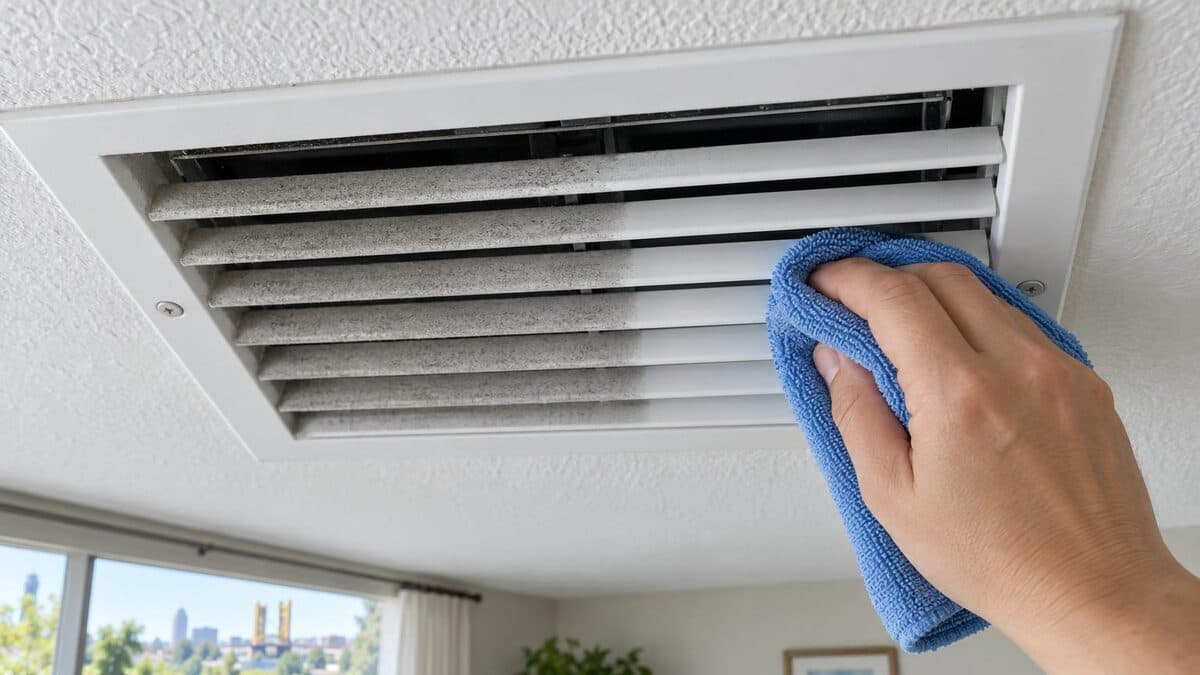
Wipe the registers down with a damp microfiber cloth before the season starts or in the first week. It takes a few minutes per room and removes most of what would otherwise blow back out.
Check the Filter Fit, Not Just the Filter
A filter can be clean and still let dust through if it does not fit. Air takes the easiest path, so a gap around the frame lets unfiltered air go straight to the blower and out the supply vents.
Open the return grille or the filter slot and check three things:
- Size. The filter should match the slot's nominal size exactly. A filter a size too small leaves a gap along one edge. Our post on finding your furnace filter size covers how to check.
- Seating. It should sit flat on all four sides, not bowed or caught on a latch.
- Condition. A gray, matted face means it is overdue. A clogged filter also pushes more air around its edges.
Fixing the fit is often the single biggest change. A cheap filter that fits tight beats a premium one with a gap.
Leaky Return Ducts Pull In Attic Air
A leaky return duct is the most common cause of dust that never goes away. The return side runs under suction, so any gap or torn joint pulls in air from wherever the duct runs.
In many Sacramento-area homes, return ducts run through the attic or along the garage, both dusty places. If a leak sits between the filter and the blower, that dusty air skips the filter entirely and goes straight out the supply vents. In older homes it is common to find a return plenum built from panning or drywall with open seams, or a flex return that has pulled loose at the furnace.
Signs it is a return leak:
- Dust keeps building even with a new, well-fitted filter.
- Dust collects in a gray line along the carpet edge or around supply registers.
- The furnace closet or return grille area whistles or feels like it is pulling air from gaps.
Sealing return leaks with mastic and reconnecting loose runs fixes the source. Our post on duct sealing options compares the methods.
Will Duct Cleaning Help?
Duct cleaning helps less than most people hope. The EPA notes that duct cleaning is not considered necessary on a routine basis, and ducts that are cleaned while a filter leaks or a return duct pulls in attic air simply get dusty again.
Our position: fix the filter fit and the return leaks first. Duct cleaning makes sense after a remodel that put drywall dust into the system, after rodents, or when you can see actual debris in the ducts. Without one of those, it rarely changes how dusty the house feels.
Keep the Air Moving Through the Filter
On mild fall days the system barely runs, so very little air passes through the filter. Using the thermostat's circulate fan setting keeps the filter catching dust between heating cycles without running the fan nonstop. It does not fix a leak, but it helps once the leaks are sealed.
A Typical Fall Dust Pattern
Here is how it usually looks: a 1980s Carmichael single-story where the owner dusts on Saturday and sees a film on the TV stand by Tuesday, every week from October on. The hallway filter is the right size but sits crooked behind a bent latch, and the return plenum in the furnace closet has an open seam along the bottom. Seating the filter properly and sealing the plenum seam usually cuts the dust noticeably within a couple of weeks.
When to Call PULSE HVAC
Call us if dust keeps building with a new, properly seated filter, if you can see gaps or loose ducts at the furnace or return, or if you are considering duct cleaning and want to know whether it will help. We will check the return side for leaks and tell you what will actually reduce the dust.
PULSE HVAC services heating systems and ductwork across the Sacramento area. Call (916) 850-2221 or book online to schedule a visit.
Sources
Need HVAC help in Sacramento?
Same-day service · Free estimates · Licensed & insured