
Reviewed by Paul R., CEO & Installer
A heat pump with a reversing valve that is stuck in cooling-or-heat the wrong way will blow lukewarm air on a 101°F Sacramento afternoon even while the outdoor fan and compressor run. That is not a thermostat “feel,” and it is not a reason to slam emergency heat. The U.S. Department of Energy explains that a heat pump moves heat instead of making it, so the four-way valve has to send refrigerant the right direction. When the slide hangs, you get 101°F-day air that never drops at the register.
August 2026 heat in the Sacramento area stacks 100°+ afternoons with SMUD on-peak windows. Valley inversion holds the heat after sunset. A stuck valve wastes that runtime and hides behind “the unit is on.”
What lukewarm 101°F air actually means
Lukewarm supply air while the outdoor unit runs on a 101°F day is a classic sign the valve is stuck in the wrong mode. You will also hear a hissing or clicking solenoid with no mode change, and the suction and liquid lines will feel similar instead of one clearly colder. A tech confirms with temperatures and pressures, not a guess at the thermostat.
Last August we opened a 2009 heat pump behind a 1970s tract house in Sacramento. The filter had not been changed since the last owner. The owner had already toggled heat, cool, and emergency heat through dinner. The coil clicked. The slide never traveled. Indoor air sat in the low 80s with a 20-degree outdoor swing that never showed up at the vents. Forcing strips only cooked the plenum and masked the sealed-system fault.
Why you should not force emergency heat
Emergency heat is resistance strips, not a repair. Keep cycling modes or hold emergency heat and you overheat those strips and hide the real fault. On a heat-wave afternoon that already feels like lukewarm air from the vents, more strip time raises the bill during SMUD peak and still leaves the valve in the wrong position. Skip it until a licensed tech checks the 24-volt signal and slide travel.
How the reversing valve and solenoid fail
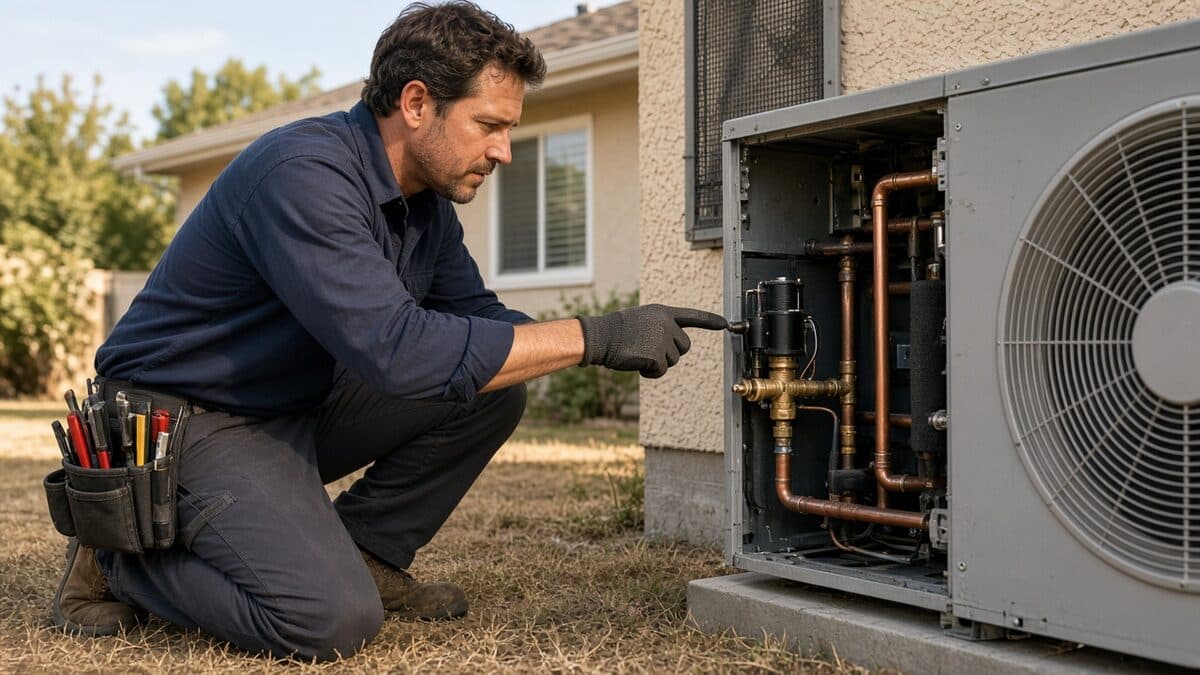
Most residential heat pumps energize the solenoid in one mode only—often heating—and spring back for cooling. If the coil never gets 24 volts, or the slide sticks after it does, you get the wrong mode. That is why lukewarm cooling on a 101°F day can be electrical or mechanical. The part sits on the outdoor unit’s refrigerant piping: a brass four-way valve with a small solenoid coil and thin capillary tubes. Homeowners should not pull panels or probe the coil live. A licensed tech locates it, checks the 24-volt signal, and verifies slide travel without opening the system unless needed.
“Why is my heat pump running in reverse?” is the search people type when the house never cools. It usually is not running backward on purpose. A stuck valve or failed solenoid leaves the system in heat when you want cool, or the opposite. Same-day diagnosis matters because every extra hour of compressor runtime in the wrong mode does not fix the slide.
What replacement actually involves
Replacement is a sealed-system job: recover refrigerant, braze a new valve, evacuate, and recharge. Cost varies with access, refrigerant type, and whether the solenoid alone failed. Ask for a written quote after diagnosis. Skip DIY. CSLB-licensed work protects the compressor and your warranty on Sacramento-area equipment. A solenoid swap is not the same job as a full valve; only pressures and temperatures tell you which one you have.
Do not treat this like a filter or a capacitor. Brazing on a charged line set without recovery is how compressors eat copper and moisture. If the solenoid is open and the slide is free, you do not replace the valve. If the slide is welded in place, you do not “tap it loose” with a wrench and call it fixed.
When to Call PULSE HVAC
Call when supply air stays lukewarm on a 101°F day, the outdoor unit runs, the solenoid clicks or hisses with no mode change, or the two refrigerant lines feel the same. Call the same day if someone already ran emergency heat. We work heat pumps across the Sacramento area, including Folsom, and we will not tell you to keep flipping modes while we drive.
Book online at /book or call PULSE HVAC at (916) 850-2221. We diagnose the valve, quote the sealed-system work in writing if it is needed, and leave emergency heat off until the mode is actually correct.
Sources
Need HVAC help in Sacramento?
Same-day service · Free estimates · Licensed & insured