
Reviewed by Paul R., CEO & Installer
Why Your AC Isn't Enough During a Smoke Event
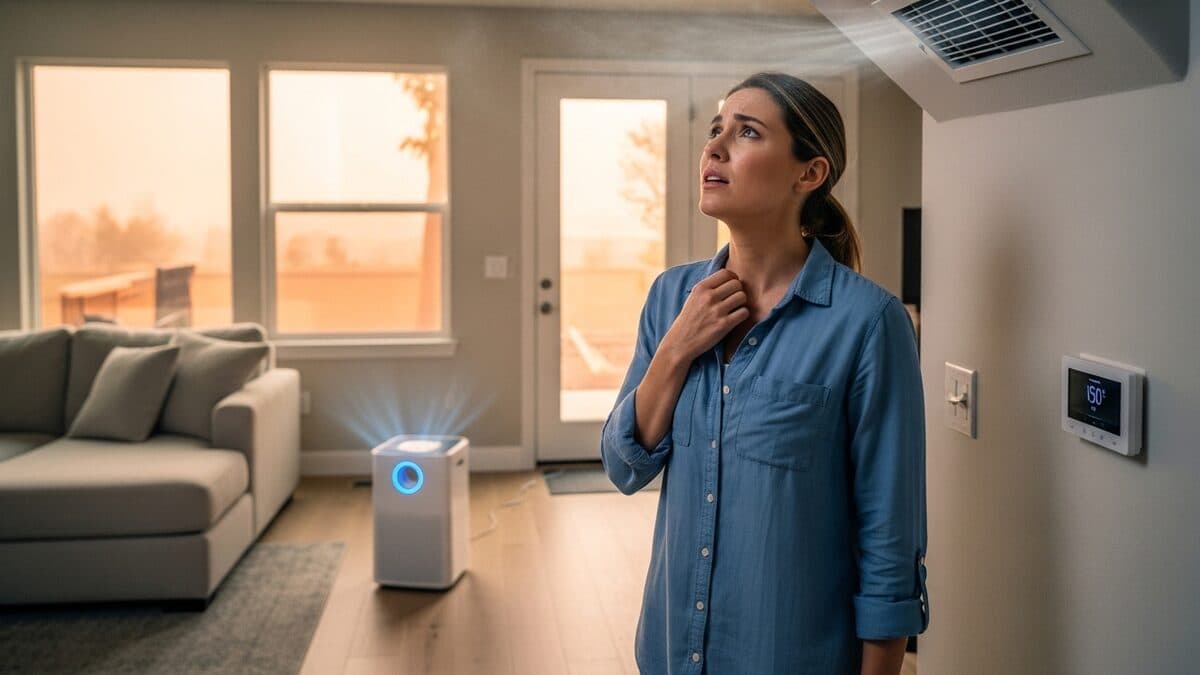
Your AC is designed to cool air, not clean it — so if your home feels smoky with the AC running, that's not a malfunction, it's a mismatch between what the system is built to do and what you need it to do. Sacramento summers bring wildfire smoke that settles over Carmichael, Roseville, Citrus Heights, Folsom, Elk Grove, Rancho Cordova, and Fair Oaks for days at a time, and a running AC can keep lowering the temperature while smoke particles ride right along with the cool air coming out of your vents.
The AC Is Cooling, Not Cleaning
Temperature and air quality are two different jobs, and a running AC only guarantees one of them. During a smoke event, the most common culprits behind that lingering smoky, stuffy feeling are a fresh-air damper or leaky duct pulling in unfiltered outside air, a filter that's too low-grade to catch fine smoke particles, or a thermostat fan set to "ON" that keeps stirring up whatever debris is already sitting inside the ductwork. Any one of these can undo the protection you think your AC is giving you.
Leaky Ducts Are a Direct Path for Smoke
Leaky ductwork lets smoky outside air bypass your filter entirely, which is why a house with a brand-new filter can still smell like smoke. Ducts that run through a hot attic or crawl space — nearly every home in the Sacramento area — are especially vulnerable to gaps, disconnected joints, and worn seals that pull outside air straight into your supply air. The EPA notes that duct leakage is a real pathway for outdoor pollutants to reach your living space, which is one of the biggest reasons two homes running the same AC system can have very different indoor air quality during the same smoke event — one has tight, sealed ducts, and the other doesn't.
Your Filter Might Be Letting Smoke Straight Through
A standard 1-inch filter usually isn't rated to stop wildfire smoke. Most homes still run filters in the MERV 4–8 range, which are fine for dust and pet hair but let the very fine particles in wildfire smoke pass right through like the filter isn't there. ASHRAE recommends stepping up to MERV 13 or higher specifically to capture the fine particulate matter produced by wildfire smoke. Before you swap filters, it's worth having a technician confirm your system can handle the added airflow resistance — older or undersized equipment can struggle to pull air through a denser filter, which hurts both comfort and equipment life.
Duct Condensation and Age Can Compound the Problem
Sweating ductwork and aging duct systems both point back to the same issue: gaps that let in outside air, dust, and smoke. If you notice condensation around ducts in the attic or garage, or your ductwork is original to a decades-old build with visible damage or disconnected sections, those are signs your ducts may no longer be sealed well enough to keep smoky air out — and worth having a technician check alongside your filter.
What to Do Right Now During a Smoke Event
Check AirNow.gov for your current local air quality before deciding how to ventilate. If smoke levels are high, close any fresh-air dampers and set your system to recirculate indoor air instead of drawing in outside air. Switch your thermostat fan setting to "AUTO" so air only moves when it's actively being filtered, not constantly stirring up whatever is sitting in your ducts. If your system can safely handle it, upgrade to a MERV 13 filter, and consider a portable HEPA air purifier for the room where your family spends the most time.
When to Call PULSE HVAC
If you've checked your filter, adjusted your fan setting, and your home still feels smoky or stuffy, the problem is likely in the ductwork itself — leaks, sweating, dust buildup, or age-related wear that a filter change can't fix. That's a job for a professional inspection, not guesswork. If a technician does recommend duct sealing or repair, ask for a written estimate that separates that work from any cleaning, so you know exactly what you're paying for and why. It's also worth a call if you've never had your ducts inspected, if you're noticing dripping or musty smells near vents, or if your ductwork is old enough that you're not sure it's sealed at all.
PULSE HVAC serves homeowners throughout Sacramento, Carmichael, Roseville, Citrus Heights, Folsom, Elk Grove, Rancho Cordova, and Fair Oaks, and we can inspect your ductwork, recommend the right filtration for your system, and get your home breathing cleaner air again before the next smoke event rolls in. Call us at (916) 850-2221 or book online anytime at /book.
Sources
Need HVAC help in Sacramento?
Same-day service · Free estimates · Licensed & insured