
Reviewed by Paul R., CEO & Installer
During a remodel, the trouble for your HVAC system usually starts with sanding, not with the ducts. Drywall and floor sanding throw off dust so fine it hangs in the air, and any return grille nearby pulls it straight into the system. Within days it can load the filter, coat the blower wheel and settle on the indoor coil. ENERGY STAR advises checking your filter every month and changing it at least every three months in normal use. During a remodel, that schedule goes out the window.
The fix is mostly planning: decide when the system runs, cover the openings in the work area, and check things when the job ends.
How Construction Dust Gets Into the System
Construction dust gets in through the return side, because that is where the system pulls air from. Every return grille is an intake. When the blower runs, it draws air from the rooms toward the furnace or air handler, and whatever dust is floating in that air comes along.
Drywall dust is the worst of it. It is far finer than ordinary household dust, so it slips past filters that would stop normal lint and clogs them faster when it does not. Supply registers matter too. With the blower off, dust settles into the open registers in the work area and gets blown back out the next time the system runs.
Turn It Off or Seal It Off
Turn the system off during the dustiest work when the weather allows. Demolition, drywall sanding and floor refinishing are the big three. In a Sacramento fall or spring, a few days without heating or cooling is usually manageable. In a cold snap or a heat wave it is not, which is when sealing matters.
To protect the system while it runs:
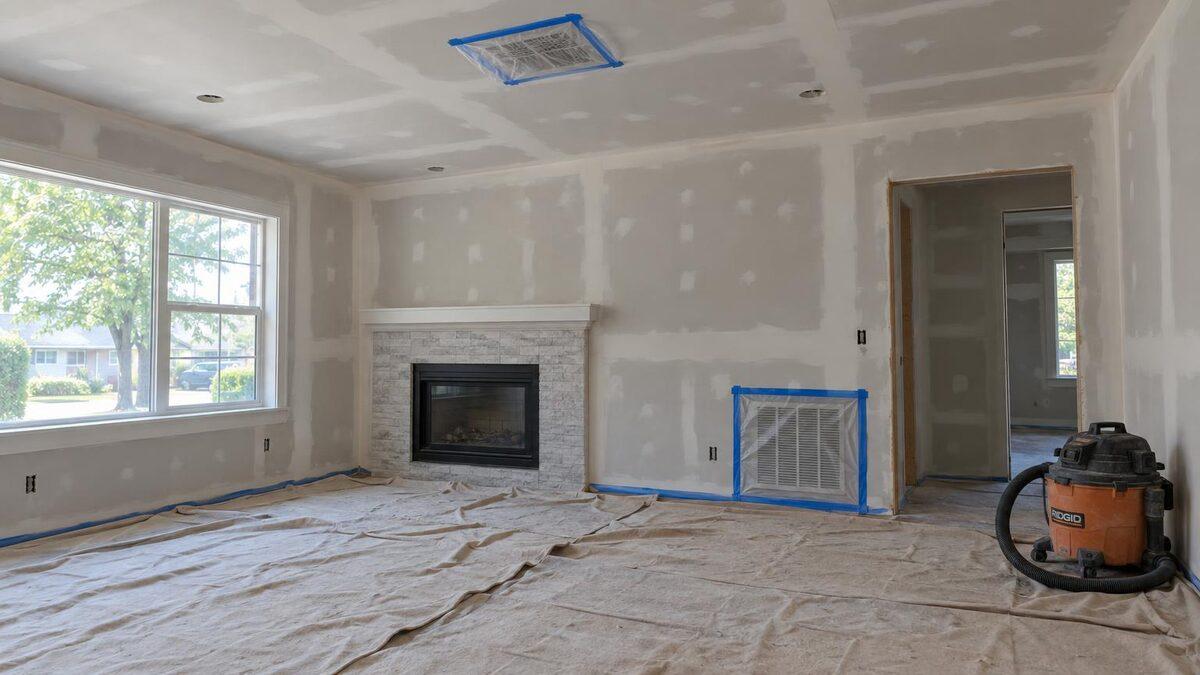
- Cover the supply registers and any extra return grilles in the work area with plastic sheeting and painter's tape. Press the tape all the way around so nothing gets pulled past the edges.
- Seal the room off with plastic sheeting over doorways, so the dust stays where the work is.
- Never seal your only return while the system runs. Many Sacramento ranch homes have a single return grille in the hallway. Covering it starves the blower of air, which can shut a furnace down on its safety limit or ice the AC coil. If the work sits near your only return, keep the system off during sanding, or tape a sheet of filter media over the grille and replace it daily.
- Check the filter every day and change it whenever it looks gray or loaded.
- Move the covers with the work as the crew moves from room to room.
One rule for contractors: never use a return grille as a dust exhaust. Running the system to "pull the dust out of the room" just moves it into your ducts.
What It Looks Like When Nobody Covered the Returns
Here is how it usually looks after a typical kitchen remodel in a 1980s ranch. A wall came out between the kitchen and family room, and the hallway return grille sat a few feet from the drywall work. The system ran through two weeks of mudding and sanding because the weather was cold. The filter was gray after two days and nobody changed it. By the end, the blower wheel had a soft gray coating on every blade, and the airflow at the far bedrooms had dropped noticeably.
A dirty blower wheel moves less air, and a dusty coil passes less heat, so the system runs longer for the same comfort. Cleaning them is a service visit. Preventing it is a roll of plastic and a few filters.
What to Check When the Work Is Done
When the work is done, check three things before you go back to normal:
- The filter. Put in a fresh one. Then go back to checking it monthly, as ENERGY STAR advises.
- The registers and returns. Remove the covers, vacuum the grilles and the first few inches of duct behind them, and look for drywall dust settled inside.
- The system itself. If it ran unprotected during sanding, have the blower wheel and coil inspected.
Duct cleaning is worth it after some remodels and not others. The EPA suggests considering duct cleaning when ducts are clogged with an excessive amount of dust and debris. An unprotected remodel is one of the common ways that happens. If the system was off or sealed, a new filter is usually enough, and our position is to skip the cleaning in that case.
Plan Vent Changes Before the Drywall
Moving a wall, ceiling or floor often means moving a supply register or return. The duct boot behind the register has to be relocated and sealed to the new surface, and the duct run may need extending. Plan it with your HVAC contractor before the drywall goes up, so the opening lands in the right spot and the boot gets sealed while it is still easy to reach. A remodel that changes ductwork may also need a permit.
When to Call PULSE HVAC
Call us before the remodel when registers or returns need to move, or after it when the system ran during the dusty work and airflow seems weaker. We can relocate vents, inspect the blower and coil, and tell you honestly whether the ducts need cleaning.
Call PULSE HVAC at (916) 850-2221 or book a visit online.
Sources
Need HVAC help in Sacramento?
Same-day service · Free estimates · Licensed & insured