
Reviewed by Paul R., CEO & Installer
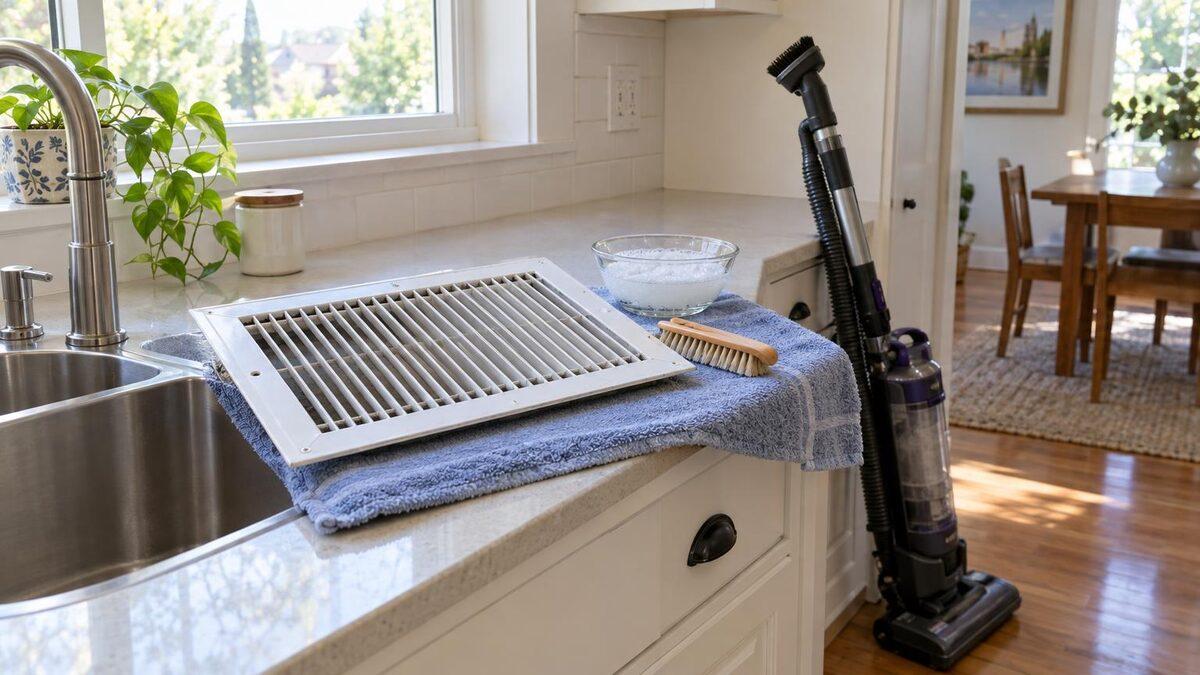
Cleaning the air vents in your house takes about an hour and a few household supplies: turn the system off, take down the supply registers, wash them, vacuum the first few inches of each duct, and clean the return grille. Twice a year is enough for most Sacramento homes. It will not replace a good filter, though. ENERGY STAR advises checking your air filter every month and changing it at least every three months, and the filter does far more to keep the vents clean than any scrubbing does.
Here is how to do it without spreading the dust around the room.
What You Need
The supplies are simple:
- A screwdriver that fits the register screws
- A vacuum with a brush attachment and a crevice tool
- A bucket or sink with warm water and a little dish soap
- A soft brush or old toothbrush, and a towel
- A step stool for ceiling vents
Step by Step
- Turn the system off at the thermostat. You do not want the blower pushing dust out while the registers are off.
- Vacuum the register in place first. A quick pass with the brush attachment pulls off the loose dust before you unscrew it, so less of it falls on you or the floor.
- Remove the supply registers. Most ceiling and wall registers come off with two screws. Floor registers usually lift straight out.
- Wash them. Soak the registers in warm, soapy water for a few minutes, scrub the louvers with a soft brush, rinse, and let them dry completely on a towel.
- Vacuum the duct boot. With the register off, use the crevice tool to vacuum the first few inches inside the opening, where dust and debris settle. Do not push the vacuum deep into the duct.
- Clean the return grille. Vacuum the louvers. If the grille holds your filter, check the filter and replace it if it looks dirty.
- Put everything back and turn the system on.
Painted metal and plastic registers clean up well this way; skip harsh cleaners. Wood grilles should not soak, so wipe them with a damp cloth instead.
How Often to Do It
Twice a year is enough for most homes: in spring before cooling season and in fall before the heat comes on. Homes with dogs or cats, smokers, a recent remodel or a lot of foot traffic need it more often. In between, a quick vacuum of the grilles when you check the filter each month keeps the buildup from getting ahead of you.
Sacramento adds a little extra work in two seasons. Long, dry summers leave fine dust everywhere, and the first heating cycles in the fall push that summer dust out of the registers. Our post on a dusty house after turning on the heat covers that first-week burst.
What Dark Marks Around a Vent Mean
Dark smudges on the ceiling around a register usually mean air is leaking past the register, not that the register is dirty. The gap between the duct boot and the drywall lets attic air or duct air slip around the edges, and fine dust in that air sticks to the ceiling.
Here is how it usually looks in a typical older Sacramento ranch. The register itself cleans up fine, but a gray halo comes back on the ceiling around it within a few months. In the attic, the boot behind it was never sealed to the drywall, and the gap is wide enough to slip a finger into. Cleaning removes the marks. Sealing that gap stops them. Our post on duct sealing options covers sealing the boots along with the rest of the system.
Vent Cleaning vs Duct Cleaning
Vent cleaning and duct cleaning are different jobs. Vent cleaning covers the registers, grilles and the first few inches of duct you can reach. Professional duct cleaning uses equipment to clean the full length of the duct runs.
Our position is that most homes do not need routine duct cleaning. The EPA suggests considering it when ducts are clogged with an excessive amount of dust and debris, which is uncommon in a system with a good filter that gets changed on time. After a remodel or a rodent problem, the answer changes. Our duct cleaning guide explains when it earns its cost.
When to Call PULSE HVAC
Call us when the vents get dusty again within weeks of cleaning, when dark marks keep returning around ceiling registers, or when one room's vent blows weak air. Those point to leaks or airflow problems in the ducts, and we can find and fix them.
Call PULSE HVAC at (916) 850-2221 or book a visit online.
Sources
Need HVAC help in Sacramento?
Same-day service · Free estimates · Licensed & insured