Reviewed by Paul R., CEO & Installer
A high electric bill in winter in a heat pump home usually traces back to one thing: backup electric heat running more than it should. A heat pump moves heat from the outdoor air into the house and delivers more heat than the electricity it uses. Its backup heat, the electric strips in the air handler, turns electricity into heat one for one. When the system leans on those strips, the bill climbs fast. ENERGY STAR estimates that heating and cooling make up as much as half of the energy used in a typical home, so heating is the first place to look when a winter bill jumps.
Here are the usual causes, roughly in the order we check them.
1. Emergency Heat Left On
Emergency heat left on is the most expensive mistake and the easiest to fix. The emergency heat setting, labeled EM HEAT or E-HEAT on many thermostats, shuts off the heat pump and runs only the backup strips. It exists for the rare day the outdoor unit fails. Someone switches it on during a cold snap, the house warms up, and nobody switches it back.
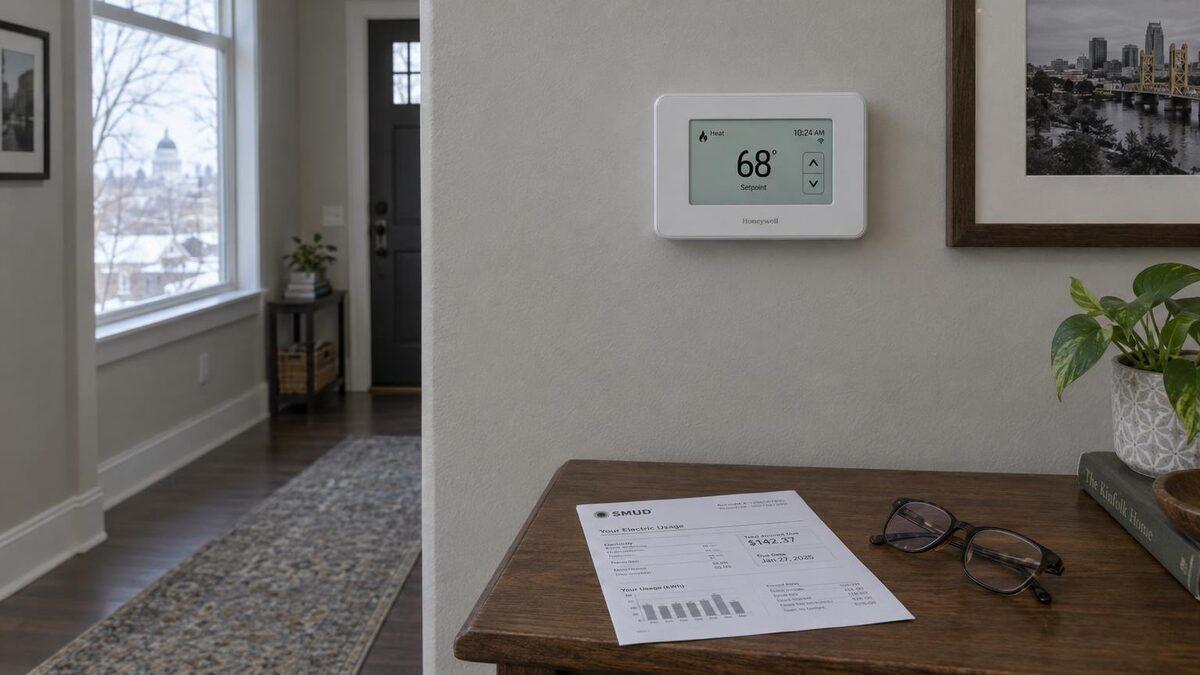
Look at the thermostat now. If it says emergency heat, set it back to normal heat.
2. Deep Setbacks That Trigger Backup Heat
Deep setbacks are the second common cause. Dropping the setpoint six or eight degrees overnight sounds like it saves money. In a heat pump home, the morning recovery often costs more than the setback saved, because many thermostats call for backup heat when the house is far below the setpoint.
Keep setbacks small, two degrees or so, and let the heat pump recover slowly. A smart thermostat with heat pump settings that limit backup heat during recovery helps a lot. Our post on AUX heat at dawn explains how to set it up.
3. A Dirty Filter or Coil
A dirty filter or coil cuts airflow, and a heat pump short on airflow delivers less heat and runs longer. On some systems it also pushes the thermostat into calling for backup heat to keep up. Check the filter first. If it is gray and packed, replace it. ENERGY STAR advises checking it every month and changing it at least every three months.
Outside, look at the outdoor coil. Leaves packed against it in fall cut its airflow too. Our post on leaves in the outdoor unit covers clearing them safely.
4. Leaky Attic Ducts
Leaky ducts in the attic lose heated air before it reaches the rooms, so the heat pump runs longer and the house still feels cool. In a Sacramento home where most ducts run through a cold winter attic, that loss shows up on every bill. A duct leakage test measures it. Our post on the duct leakage test explains what the numbers mean.
5. Running Hard During the Evening Peak
On SMUD's residential rates, the price of electricity changes with the time of day, and the weekday evening peak costs the most. Running the heat pump hard during those hours, especially with backup heat, raises the bill more than the same heat earlier in the day. Warm the house a degree or two before the peak and let it coast gently through. Our post on SMUD time-of-day rates in winter covers the schedule.
When It Is the Heat Pump Itself
Sometimes the system itself is the cause. Here is how it usually looks on a typical January call. The bill doubled from December, the thermostat is set right, the filter is new, and the house is comfortable. But the thermostat shows AUX for long stretches on 50-degree afternoons. At the outdoor unit, the coil stays frosted after a defrost cycle, and the refrigerant charge reads low. With less refrigerant, the heat pump cannot keep up, so the backup strips carry the load.
Low refrigerant, a failing defrost control or a stuck reversing valve all push the system onto backup heat. Those need a technician.
A Quick Check Before You Call
Before you call, rule out the simple causes:
- The thermostat is on normal heat, not emergency heat.
- Setbacks are small, two degrees or so.
- The filter is clean.
- The outdoor coil is clear of leaves and frost clears after defrost.
Also remember that December and January are the coldest months and the longest nights, and holiday guests mean more hot water and cooking. A higher bill is normal in midwinter. A bill that doubles is not.
When to Call PULSE HVAC
Call us when the bill stays high after you have checked the thermostat and filter, when AUX heat runs on mild days, or when the outdoor unit stays iced over. We can check the refrigerant charge, the defrost controls and the ducts, and tell you what is driving the bill.
Call PULSE HVAC at (916) 850-2221 or book a visit online.
Sources
Need HVAC help in Sacramento?
Same-day service · Free estimates · Licensed & insured