
Reviewed by Paul R., CEO & Installer
Weather stripping doors and windows closes the gaps where storm wind pushes cold air into the house and warm air slips out. In a Sacramento winter, when a storm front brings a day of steady wind and rain, those gaps are where you feel it: a cold stripe across the floor by the front door, a whistle at the slider, a curtain that moves on its own. Your furnace or heat pump feels it too, because every cubic foot of cold air that leaks in has to be heated. ENERGY STAR estimates that homeowners save an average of 15 percent on heating and cooling costs by sealing air leaks and adding insulation.
Doors and windows are only part of that, but they are the part you can fix yourself in an afternoon.
How to Find the Drafts
Find the drafts on a cold, windy day, when the pressure outside pushes air through every gap. Two simple tests cover most of the house:
- The hand or paper test. Run a damp hand, or hold a thin strip of paper, slowly along the edges of each door and window. A cool spot on your hand or a fluttering strip marks a leak.
- The closed-door test. Close an exterior door on a sheet of paper. If it slides out with no resistance, the seal at that spot is not touching the door.
Check the bottom of every exterior door, the hinge side and the latch side, the meeting rail where two window sashes overlap, and the track of any sliding door. Mark each leak with painter's tape so you know what to buy.
Which Weatherstripping Goes Where
The right weatherstripping depends on the gap, and most homes need two or three types:
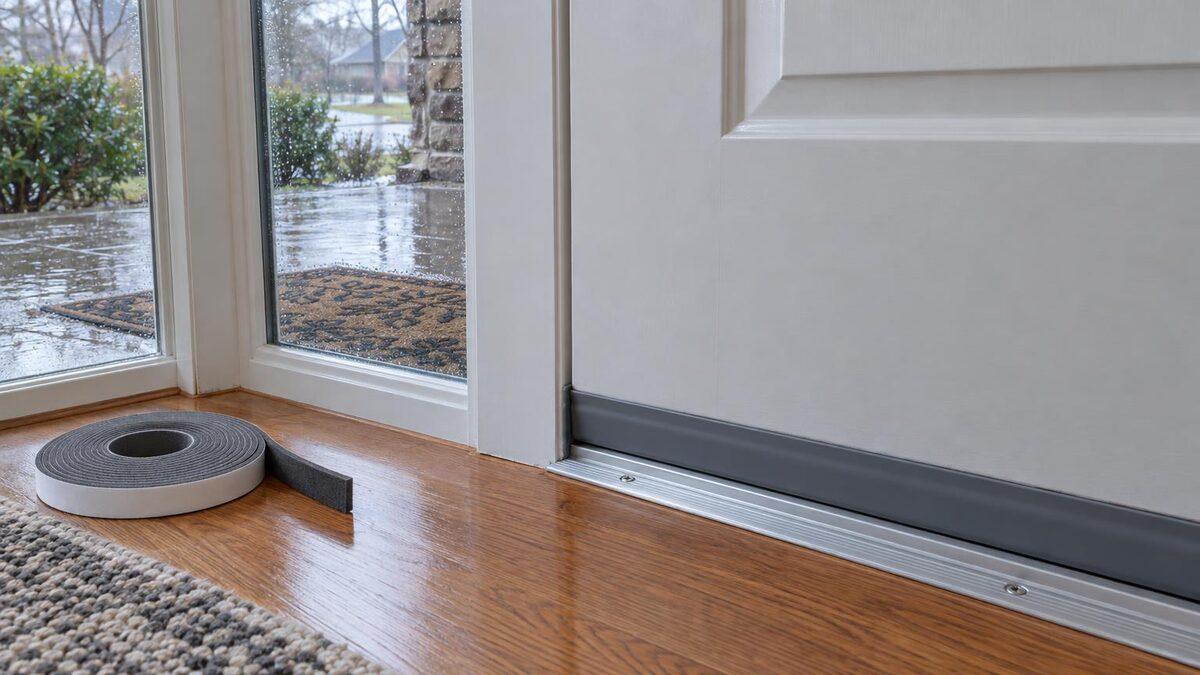
- Door sweep. A strip of rubber or brush that attaches to the bottom edge of the door. It seals the gap over the threshold, which is usually the biggest single leak in an older door.
- Compression bulb seal. A soft, hollow rubber or vinyl strip along the door stop that squeezes flat when the door closes. Many modern exterior doors press it into a slot in the frame.
- V-strip. A folded strip of plastic or metal that springs open to fill the gap. It works well along the sides of a door and on window sashes that slide.
- Foam tape. Adhesive-backed foam for irregular gaps on windows and doors that do not open often. It is quick and cheap but wears out sooner than the others.
Avoid over-sealing a door so it no longer latches without a shove. A seal that makes the door hard to close gets left open, and that does more harm than the original gap.
How to Weatherstrip a Door and Window
Weatherstripping goes on best over a clean, dry surface, so start on a dry day between storms. Wipe the frame, let it dry, then work in this order:
- Threshold first. Fit a door sweep, or adjust the threshold if it has height screws, until the bottom of the door just brushes the seal.
- Door frame next. Replace a flattened or torn bulb seal, or add V-strip along the stop on the hinge and latch sides.
- Windows last. Add V-strip or foam to the sash where your paper test found leaks. On sliding windows and patio doors, check the pile weatherstripping in the track and replace any that is worn flat.
- Test everything. Close and latch each door and window to make sure it still works smoothly.
To replace a slotted bulb seal on an exterior door, pull the old strip out of its groove, take it to the hardware store to match the profile, and press the new one in from the top down.
What It Means for Your Heating System
Sealing doors and windows means your heating system runs less, because it is no longer heating air that leaks straight back out. Heating and cooling account for as much as half of the energy used in a typical home, according to ENERGY STAR, so the leaks you seal show up every month the heat is on.
Drafts also fool the thermostat. Here is how it usually looks in a typical 1970s ranch around Sacramento. The thermostat hangs in the hallway a few feet from the front door, and the door's bulb seal has gone flat after decades of sun. Every windy storm day, cold air rolls down the hall and across the thermostat, so the furnace runs long while the back bedrooms overheat. A new seal and a door sweep fix the draft, and the furnace settles into normal cycles. Our post on thermostat location covers that problem in more detail.
One note on sealing a very drafty house tight: a home that loses its leaks also loses some of its fresh air. In most older homes, door and window weatherstripping alone will not make the house too tight. If you also seal the attic and add insulation, keep bath and kitchen fans in use, and read our guide to balanced ventilation.
When to Call PULSE HVAC
Call us when the drafts are sealed and some rooms still run cold, or when your heating bills stay high after you have weather stripped the doors and windows. The cause is then usually somewhere you cannot reach easily, such as leaky attic ducts or a return pulling air from the attic. We can find it and fix it.
Call PULSE HVAC at (916) 850-2221 or book a visit online.
Sources
Need HVAC help in Sacramento?
Same-day service · Free estimates · Licensed & insured