
Reviewed by Paul R., CEO & Installer
A heat pump installation in Sacramento usually runs in four stages: a home visit and load calculation, a written quote and permit, one day of installation for a typical central system, and the startup checks and paperwork that follow. Knowing the order helps you plan the week and ask the right questions before anyone touches your old furnace. ENERGY STAR estimates that heating and cooling account for as much as half of the energy used in a typical home, so the equipment you choose and how well it is installed show up on every bill after.
Here is what each stage involves, and what you need to do along the way.
The Home Visit and Load Calculation
The home visit sets the size and the scope of the job. A technician looks at the existing furnace, air handler and outdoor unit, the duct runs, the electrical panel and where the new equipment will sit. Then comes a load calculation, which uses your home's insulation, windows, air leakage and orientation to find how much heating and cooling it really needs.
That number decides the equipment size. In most Sacramento homes, the summer cooling load is the bigger one, so it sets the size. Our post on heat pump sizing explains why. The visit should also cover the ducts. A new heat pump only performs as well as the ducts that carry its air, so crushed or leaky runs are worth fixing in the same job.
PULSE HVAC does the estimate on site for free and gives you a firm written quote before any work begins.
The Quote, Permit and Rebates
The quote should list the equipment model numbers, the scope of the work, the warranty terms and the price. Replacing a central heating and cooling system needs a permit, and California's Building Energy Efficiency Standards, known as Title 24, apply to the job. Depending on the project, a HERS rater may verify items such as duct leakage and airflow before the permit closes.
This is also the time to line up rebates. SMUD offers rebates for qualifying heat pump installations, and the amounts change, so check the current page. PULSE HVAC handles the permit and Title 24 compliance in-house and files the SMUD rebate paperwork for you. Have your utility account number ready.
Install Day
Install day for a typical central heat pump replacement takes about one day on site. Here is how it usually goes in a typical single-story Sacramento ranch with a gas furnace in the garage and an old AC on a pad in the side yard:
- Removal. The crew recovers the refrigerant from the old system, shuts off and caps the gas line to the old furnace, then takes out the outdoor unit and the furnace.
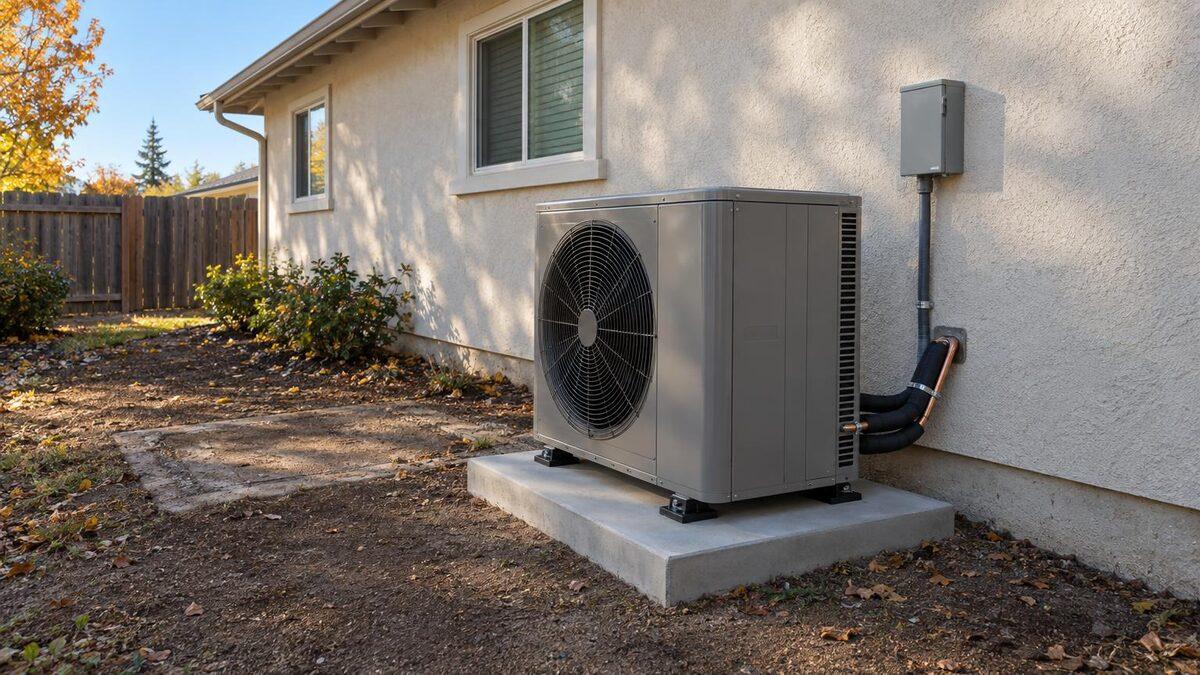
- Setting the new equipment. The new outdoor unit goes on a level pad, with clearance around it. The indoor air handler or coil goes where the furnace sat, connected to the existing ducts.
- Lines and wiring. Refrigerant lines connect the two units. The air handler's backup electric heat usually needs its own 240-volt circuit, which a gas furnace never had, so that circuit goes in along with the new thermostat.
- Pressure test and evacuation. The refrigerant lines are pressure tested for leaks and pulled into a deep vacuum before the system is charged.
Jobs that add ductwork or a second system take longer. Whether your electrical panel has room for the new circuits is checked at the estimate, not on install day.
One decision worth making at the estimate is the refrigerant lines. Our position: replace them unless they are recent and correctly sized for the new system. Lines from an older system can be the wrong size or carry leftover oil, and a heat pump runs year-round, so the line set works harder than it did under an old summer-only air conditioner. Reusing them saves money on day one and risks problems that cost more later.
Before the crew arrives, clear a path to the furnace and the outdoor unit, move cars out of the garage or driveway if the equipment lives there, and keep pets away from open doors.
Startup and the Walkthrough
At startup, the technician runs the system in heating and cooling, checks the refrigerant charge, measures airflow and temperature at the registers, and confirms the defrost controls and backup heat work. Then they set up the thermostat.
At the end of the day, you get a walkthrough: how the thermostat works with a heat pump, what the outdoor unit does on a cold morning, the filter size and schedule, and the warranty documentation. Plan to be home for it. Our posts on AUX heat at dawn and heat pump defrost mode cover the two things new owners ask about most.
After the Install
After the install, the permit inspection and any HERS verification get scheduled, and the rebate paperwork goes in. Register the equipment with the manufacturer, if your installer has not already, and keep the confirmation with the contract and permit. Our replacement warranty guide explains why that matters.
When to Call PULSE HVAC
Call us when you are ready for a free on-site estimate, when you want a second look at a heat pump quote, or when you have questions about SMUD rebates. We install central and ductless heat pumps across the Sacramento area.
Call PULSE HVAC at (916) 850-2221 or book a visit online.
Sources
Need HVAC help in Sacramento?
Same-day service · Free estimates · Licensed & insured